March 2026 Marathi Calendar: Your Comprehensive Guide to Festivals, Auspicious Dates & Cultural Traditions
Are you a Marathi speaker living in the USA, eager to stay connected with your roots and observe traditional festivals, even thousands of miles away? Or perhaps you’re simply curious about the rich cultural tapestry woven into the Marathi calendar?
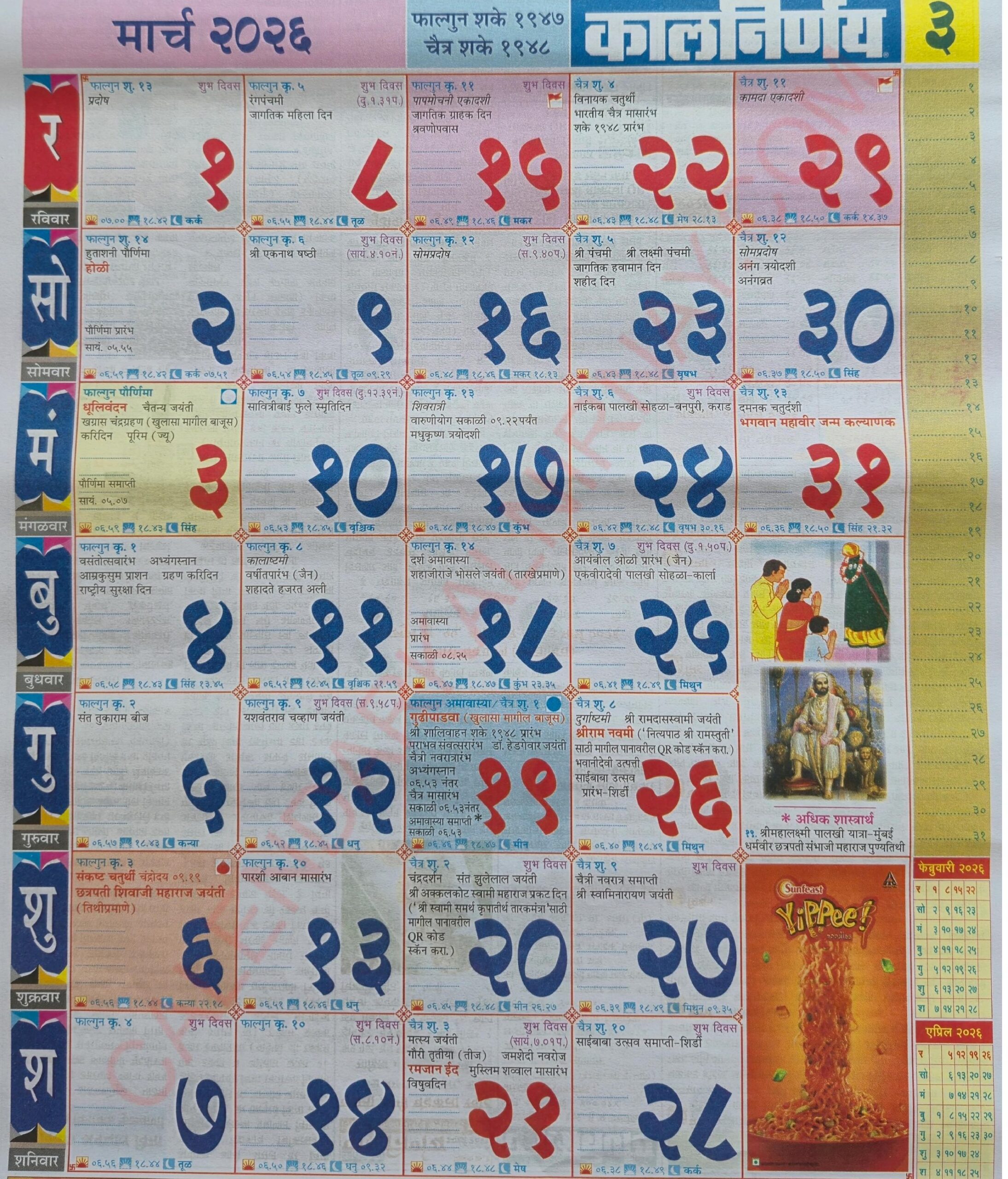
March 2026 is a particularly vibrant month in the Marathi calendar, brimming with significant festivals like Holi, the Marathi New Year (Gudi Padwa), and the start of Chaitra Navratri. But finding accurate, culturally rich, and easily digestible information can be a challenge, especially when juggling different time zones and cultural contexts.
This guide is your definitive resource. We’re breaking down the March 2026 Marathi calendar, explaining the significance of each major event, and offering practical insights for observing these traditions, no matter where you are in the world. Get ready to embrace your heritage!
Unlocking the Marathi Calendar: More Than Just Dates
Before we dive into the specifics of March 2026, let’s understand what makes the Marathi calendar, or ‘Panchang,’ so unique and vital to Marathi culture. It’s far more than just a list of days; it’s a celestial guide that influences everything from festivals and auspicious ceremonies to daily rituals and agricultural practices.
What is a Marathi Calendar (Panchang) and Why is it Important?
The term Panchang (पंचांग) literally means ‘five limbs’ or ‘five attributes.’ These five key elements are:
- Tithi (तिथि): The lunar day, representing the angular distance between the Sun and Moon. There are 30 Tithis in a lunar month, divided into two phases: Shukla Paksha (waxing moon) and Krishna Paksha (waning moon).
- Nakshatra (नक्षत्र): The lunar mansion or constellation, signifying the position of the Moon in the zodiac. There are 27 Nakshatras, each with its unique characteristics.
- Yoga (योग): Derived from the combined longitudes of the Sun and Moon, influencing the nature of the day.
- Karana (करण): Half of a Tithi, providing further astrological insights.
- Vaar (वार): The day of the week (Sunday, Monday, etc.).
Together, these elements help determine auspicious timings (Muhurats) for significant life events, the observance of fasts (Vrats), and the dates of all major festivals. For Marathi speakers, the Panchang is a spiritual compass, ensuring that life’s important moments are aligned with cosmic energies.
The Unique Charm of March 2026 in the Marathi Calendar
March 2026 is a bridge month, beginning in the latter part of the Marathi month of Phalguna (फाल्गुन) and transitioning into Chaitra (चैत्र). This transition is incredibly significant, as Chaitra marks the beginning of the Marathi New Year, Gudi Padwa. This makes March a period of cleansing, celebration, and new beginnings, embodying themes of renewal, devotion, and community spirit.
Your Full March 2026 Marathi Calendar: Day-by-Day Overview
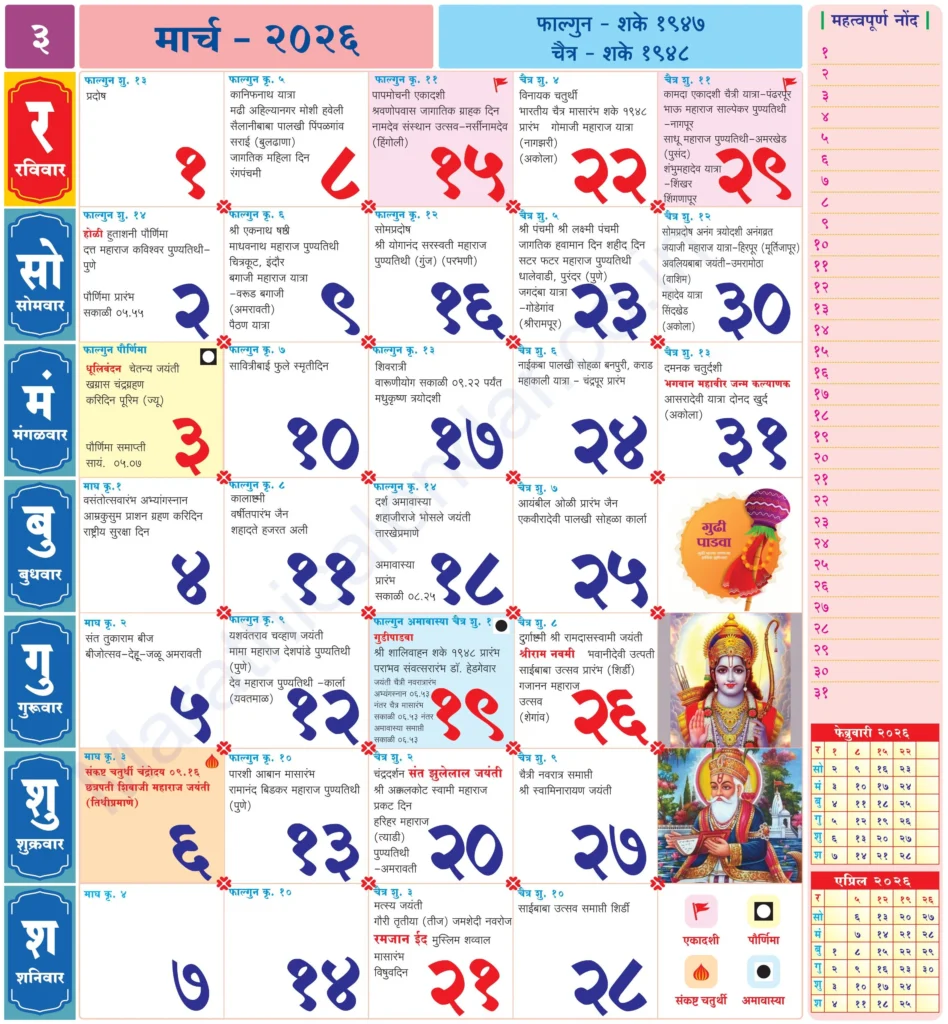
Here’s your detailed day-by-day breakdown of the March 2026 Marathi Calendar, featuring all the important festivals, Tithis, and observances. We’ve presented it in a clear, easy-to-read table format for your convenience. Keep this handy!
| Gregorian Date | Day | Marathi Month & Paksha | Tithi | Key Event/Festival |
|---|---|---|---|---|
| March 1, 2026 | Sunday | Phalguna, Shukla Paksha | Ekadashi | Amalaki Ekadashi (fasting day) |
| March 2, 2026 | Monday | Phalguna, Shukla Paksha | Dwadashi | Govinda Dwadashi |
| March 3, 2026 | Tuesday | Phalguna, Shukla Paksha | Trayodashi | Pradosh Vrat, Holika Dahan |
| March 4, 2026 | Wednesday | Phalguna, Shukla Paksha | Purnima | Rang Panchami (Holi), Phalguna Purnima Vrat |
| March 5, 2026 | Thursday | Chaitra, Krishna Paksha | Pratipada | Chaitra Krishna Paksha Begins |
| March 6, 2026 | Friday | Chaitra, Krishna Paksha | Dwitiya | |
| March 7, 2026 | Saturday | Chaitra, Krishna Paksha | Tritiya | |
| March 8, 2026 | Sunday | Chaitra, Krishna Paksha | Chaturthi | Sankashti Chaturthi |
| March 9, 2026 | Monday | Chaitra, Krishna Paksha | Panchami | |
| March 10, 2026 | Tuesday | Chaitra, Krishna Paksha | Shashthi | |
| March 11, 2026 | Wednesday | Chaitra, Krishna Paksha | Saptami | Sheetala Saptami |
| March 12, 2026 | Thursday | Chaitra, Krishna Paksha | Ashtami | Kalashtami |
| March 13, 2026 | Friday | Chaitra, Krishna Paksha | Navami | |
| March 14, 2026 | Saturday | Chaitra, Krishna Paksha | Dashami | |
| March 15, 2026 | Sunday | Chaitra, Krishna Paksha | Ekadashi | Papmochani Ekadashi (fasting day) |
| March 16, 2026 | Monday | Chaitra, Krishna Paksha | Dwadashi | |
| March 17, 2026 | Tuesday | Chaitra, Krishna Paksha | Trayodashi | Shivaratri |
| March 18, 2026 | Wednesday | Chaitra, Shukla Paksha | Pratipada | Gudi Padwa (Marathi New Year), Chaitra Navratri Begins |
| March 19, 2026 | Thursday | Chaitra, Shukla Paksha | Dwitiya | Chandra Darshan, Sindhara Dooj |
| March 20, 2026 | Friday | Chaitra, Shukla Paksha | Tritiya | Gangaur, Matsya Jayanti |
| March 21, 2026 | Saturday | Chaitra, Shukla Paksha | Chaturthi | Gauri Puja, Vinayak Chaturthi |
| March 22, 2026 | Sunday | Chaitra, Shukla Paksha | Panchami | Lakshmi Panchami |
| March 23, 2026 | Monday | Chaitra, Shukla Paksha | Shashthi | Skanda Shashti |
| March 24, 2026 | Tuesday | Chaitra, Shukla Paksha | Saptami | Yamuna Chhath |
| March 25, 2026 | Wednesday | Chaitra, Shukla Paksha | Ashtami | Durga Ashtami |
| March 26, 2026 | Thursday | Chaitra, Shukla Paksha | Navami | Ram Navami, Chaitra Navratri Concludes |
| March 27, 2026 | Friday | Chaitra, Shukla Paksha | Dashami | |
| March 28, 2026 | Saturday | Chaitra, Shukla Paksha | Ekadashi | Kamada Ekadashi (fasting day) |
| March 29, 2026 | Sunday | Chaitra, Shukla Paksha | Dwadashi | |
| March 30, 2026 | Monday | Chaitra, Shukla Paksha | Trayodashi | Pradosh Vrat |
| March 31, 2026 | Tuesday | Chaitra, Shukla Paksha | Chaturdashi |
Deep Dive into March 2026’s Key Marathi Festivals & Observances
Now, let’s explore the stories, traditions, and significance behind the major Marathi festivals happening in March 2026. Understanding these deeper meanings enriches your connection to your heritage.
Holika Dahan & Holi (March 3-4, 2026)
Holika Dahan (होळीका दहन) on March 3rd marks the eve of Holi, symbolizing the victory of good over evil. Bonfires are lit to commemorate the burning of Holika, a demoness, and the salvation of Prahlad, a devotee of Lord Vishnu. For Marathi families, this is a time for prayers, small pujas, and preparing for the joyous celebration that follows.
The next day, March 4th, is Rang Panchami (Holi) (रंग पंचमी – होळी), the vibrant ‘Festival of Colors.’ It’s a day of uninhibited joy, friendship, and forgetting past grievances. People playfully throw colored powders (gulal) and water at each other, share sweets like Puran Poli, and visit friends and family. It’s a spectacular expression of community and happiness.
Celebrating in the USA: While large public bonfires might be less common, you can organize smaller, symbolic Holika Dahan ceremonies (if local regulations permit outdoor fires) or simply gather with family for prayers. On Holi day, gather with Marathi friends or community groups for a splash of colors, music, and traditional food. Many Indian community centers host Holi events, providing a fantastic opportunity to celebrate!
Gudi Padwa (March 18, 2026) – The Marathi New Year!
March 18, 2026, is Gudi Padwa (गुढी पाडवा), the most significant festival for Marathi people, marking the start of the Marathi New Year (Shalivahana Shaka). This day commemorates the creation of the universe by Brahma, the victory of Lord Rama over Ravana, and the onset of spring. It’s a day of profound new beginnings, prosperity, and joy.
Key Traditions:
- Gudi Hoisting: Families hoist a ‘Gudi’ (गुढी) outside their homes – a stick adorned with a bright silk cloth, neem leaves, mango leaves, a garland of flowers, and a silver or copper pot inverted on top. It symbolizes victory and prosperity.
- Puran Poli: The traditional sweet flatbread, Puran Poli (पुरणपोळी), is a highlight of the Gudi Padwa feast, along with Shrikhand and other delicacies.
- Neem-Jaggery Paste: Consuming a paste of neem leaves and jaggery (गुळ) is customary, symbolizing that life is a mix of bitter and sweet experiences, to be accepted with grace.
- Toran and Rangoli: Decorating homes with mango leaves (Toran) and intricate Rangoli designs at the entrance.
Celebrating in the USA: This is a festival you can truly celebrate at home! Hoist a Gudi (even a symbolic one indoors or on a balcony if outdoor space is limited), prepare traditional Marathi dishes, wear new clothes, and connect with family back home via video calls. Many Marathi mandals (cultural organizations) in the USA organize community events for Gudi Padwa, offering a wonderful way to experience the festive spirit together.
Chaitra Navratri & Ram Navami (March 18-26, 2026)
Coinciding with Gudi Padwa, Chaitra Navratri (चैत्र नवरात्री) also begins on March 18th and spans nine auspicious nights, culminating in Ram Navami on March 26th. This festival is dedicated to the worship of the nine forms of Goddess Durga, invoking her blessings for strength, prosperity, and well-being.
During Navratri, many devotees observe fasts, perform pujas, and sing devotional songs (bhajans). Each day is dedicated to a different manifestation of the Goddess. The fasts are often strict, with specific dietary restrictions, emphasizing purification and devotion.
Ram Navami (राम नवमी) on March 26th celebrates the birth of Lord Rama, the seventh avatar of Vishnu. Temples are beautifully decorated, and special pujas, bhajans, and kirtans are performed. Many people observe a fast on this day and break it after sunset with a festive meal. The day signifies righteousness, courage, and devotion.
Celebrating in the USA: Fasting during Navratri is a personal observance that can be done anywhere. For community worship, seek out local Hindu temples or Marathi/Indian cultural centers that often organize special Navratri programs and Ram Navami celebrations. These events provide an invaluable opportunity to participate in communal prayers and cultural performances.

Kamada Ekadashi (March 28, 2026)
The Ekadashi (एकादशी) fasts are observed on the 11th day of each lunar fortnight. March 28th brings Kamada Ekadashi (कामदा एकादशी), an Ekadashi of particular significance as it falls in the Shukla Paksha of Chaitra month. It is believed that observing a fast on Kamada Ekadashi helps fulfill desires and absolves sins.
Devotees abstain from grains, pulses, and certain spices, consuming only fruits, milk, and specific vegetables. The fast is usually broken the following day during the ‘Parana’ period. Reciting Vishnu Sahasranama and chanting ‘Om Namo Bhagavate Vasudevaya’ are common practices.
Other Important Dates
While Holika Dahan, Holi, Gudi Padwa, Chaitra Navratri, Ram Navami, and Kamada Ekadashi are the major highlights, the Marathi calendar for March 2026 also includes other significant observances:
- Sankashti Chaturthi (March 8, 2026): Dedicated to Lord Ganesha, observed with fasting and moon sighting.
- Papmochani Ekadashi (March 15, 2026): Another important fasting day in the Krishna Paksha of Chaitra.
- Amavasya (New Moon) and Pournima (Full Moon): These days hold specific spiritual significance for various rituals and prayers, marking the end and beginning of lunar cycles. Phalguna Purnima is on March 4th, marking Holi.
Auspicious Muhurats for March 2026: Planning Your Important Moments
In Marathi tradition, choosing an auspicious time, or Muhurat (मुहूर्त), is crucial for major life events. A Muhurat is a propitious moment or period determined by astrological calculations, ensuring that actions taken during this time yield positive results. This applies to everything from weddings and housewarmings (Griha Pravesh) to starting new businesses and performing specific ceremonies.
Understanding Muhurat: What it is and why it matters
The Marathi Panchang extensively details Muhurats based on the positions of the sun, moon, and other planets. Observing a Muhurat is believed to harness positive cosmic energies, bringing success, harmony, and blessings to the endeavor. Ignoring an inauspicious time (Rahu Kaal, Yamaganda Kaal) is equally important.
General Auspicious Periods in March 2026
While precise Muhurats require personalized astrological consultation based on specific birth details and location, we can highlight general auspiciousness in March:
- Gudi Padwa (March 18, 2026) itself is considered an Abujh Muhurat (अबूझ मुहूर्त), meaning it is inherently auspicious for starting any new venture, buying property, or performing ceremonies, needing no further astrological consultation for the general day. It’s a day when the energies are naturally aligned for success.
- The days following Gudi Padwa during Chaitra Shukla Paksha (March 18-31), particularly the Pratipada, Dwitiya, Tritiya, Panchami, and Saptami, are generally favorable for various auspicious activities. For instance, the start of Chaitra Navratri from March 18th is considered highly auspicious for spiritual practices and embarking on new projects.
- Ram Navami (March 26, 2026), being the birth of Lord Rama, is another powerful and auspicious day for spiritual activities, charity, and initiating virtuous endeavors.
For specific events like weddings, naming ceremonies, or Griha Pravesh, it is always recommended to consult a qualified Marathi astrologer who can calculate the precise Muhurat considering your specific circumstances and geographical location in the USA. Time zone differences are critical here.
Celebrating Marathi Culture in the USA: Practical Tips for March 2026
Living abroad doesn’t mean disconnecting from your heritage. Here’s how you can seamlessly integrate Marathi traditions into your life in the USA during March 2026:
Bridging Time Zones: How to Sync Your Celebrations
One of the biggest challenges is aligning festival timings. Most Marathi calendars and Panchangs are based on Indian Standard Time (IST). Here’s how to navigate this:
- Convert IST to Your Local Time: Use online time zone converters to adjust prayer timings, fast breaking times, and festival start/end times. For example, if a puja is scheduled for 9 AM IST, convert that to your local EST, CST, MST, or PST.
- Local Panchangs: Many online Marathi calendar resources now offer options to adjust for specific locations in the USA. Look for these functionalities or apps.
- Flexible Observance: While traditional timings are ideal, sometimes flexibility is key. If a specific ritual is at an inconvenient hour due to time differences, adapt it to the closest practical time that respects the spirit of the observance.
Finding Your Community: Marathi Mandals and Associations
The USA has a vibrant Marathi diaspora, and many cities boast active Marathi Mandals (मंडळ) or Indian cultural associations. These groups are fantastic resources for:
- Collective Celebrations: Participating in community Holi, Gudi Padwa, or Navratri events.
- Cultural Exchange: Learning from others, sharing traditions, and making new friends who understand your heritage.
- Support Systems: Finding guidance on traditional practices, recipes, and resources.
A quick online search for ‘Marathi Mandal [Your City/State, USA]’ will often yield results. Facebook groups and community forums are also great places to connect.
Resources for Observance: Online Tools, Groceries, & Cultural Items
Modern conveniences make celebrating easier than ever:
- Online Panchangs & Apps: Use reliable Marathi calendar apps (like the ones mentioned in SERP) that can customize dates for your location.
- Indian Grocery Stores: Most major cities in the USA have Indian grocery stores where you can find essential ingredients for festive cooking (e.g., specific dals, spices for Puran Poli, ingredients for Prasad).
- Online Retailers: Websites like Amazon or specialty Indian stores online can deliver puja items, traditional clothing, and decorations right to your door.
- Digital Content: YouTube and streaming platforms offer endless resources for bhajans, spiritual discourses, and even cooking tutorials for traditional Marathi dishes.
Your Printable March 2026 Marathi Calendar: Quick Reference Guide
We’ve created this guide to be your go-to reference. The comprehensive table above provides all the key dates for March 2026. Feel free to print this page or bookmark it on your device for quick access throughout the month. Having a physical copy can be incredibly useful for daily reference, especially when planning your festivals, fasts, and auspicious activities.
Whether you’re meticulously planning your Gudi Padwa feast or simply wanting to know when to observe an Ekadashi fast, this calendar will keep you informed and connected.
Embrace Your Heritage This March!
March 2026 is an exceptionally rich month in the Marathi calendar, offering numerous opportunities to celebrate, reflect, and connect with profound cultural traditions. From the joyous colors of Holi to the auspicious new beginnings of Gudi Padwa and the devout days of Chaitra Navratri, there’s a wealth of heritage to embrace.
We hope this comprehensive guide empowers you, wherever you are, to participate fully in these vibrant Marathi celebrations. May your March be filled with blessings, joy, and a strong connection to your cultural roots!
Frequently Asked Questions
What are the major Marathi festivals in March 2026?
March 2026 is a significant month for Marathi festivals. Key celebrations include Holika Dahan (March 3), Holi/Rang Panchami (March 4), Gudi Padwa (Marathi New Year) and the start of Chaitra Navratri (March 18), and Ram Navami (March 26). Kamada Ekadashi falls on March 28.
When is Gudi Padwa in 2026?
In 2026, Gudi Padwa, the Marathi New Year, falls on Wednesday, March 18th. It marks the first day of the Chaitra month and is celebrated with traditional Gudi hoisting, Puran Poli, and prayers for prosperity.
How can Marathi speakers in the USA observe festivals like Holi and Gudi Padwa?
Marathi speakers in the USA can celebrate by converting IST festival timings to their local time, preparing traditional foods, decorating their homes, and connecting with local Marathi Mandals or Indian cultural associations for community events. Online resources and video calls with family back home also help bridge the distance.
What is a Panchang and why is it important for the Marathi calendar?
A Panchang is the traditional Hindu calendar that calculates five key elements: Tithi (lunar day), Nakshatra (lunar mansion), Yoga, Karana, and Vaar (day of the week). It’s crucial for determining auspicious dates (Muhurats), festival timings, fasting days, and aligning life events with cosmic energies according to Marathi tradition.
Are there any auspicious dates (Muhurats) for new beginnings in March 2026?
Yes, Gudi Padwa on March 18, 2026, is considered an ‘Abujh Muhurat,’ meaning it’s inherently auspicious for starting any new venture, buying property, or performing ceremonies, requiring no specific astrological consultation for the general day. The entire Chaitra Shukla Paksha (March 18-31) also holds general auspiciousness.
When does Chaitra Navratri begin and end in March 2026?
Chaitra Navratri begins on March 18, 2026, coinciding with Gudi Padwa, and concludes with Ram Navami on March 26, 2026. It’s a nine-day festival dedicated to the worship of Goddess Durga.
