Your Essential Guide to the March 2026 Kannada Calendar for the USA
Are you a Kannadiga living in the USA, eager to stay connected with your cultural roots? Or perhaps you’re simply curious about the rich traditions and auspicious timings that govern life in Karnataka? Whatever your reason, understanding the March 2026 Kannada Calendar is your key to planning festivals, observing important rituals, and embracing a heritage that transcends borders.

Forget generic calendars. This guide is specifically crafted for you, providing not just the dates, but the deep cultural context and practical insights needed to navigate March 2026 from anywhere in the United States. We’ll unpack the unique elements of the Kannada calendar, highlight major festivals, and offer actionable advice for celebrating traditions far from home.
What Makes the Kannada Calendar Unique? Understanding Its Core Elements
The Kannada Calendar, deeply rooted in the Hindu lunisolar system, is far more than just a list of days. It’s a sophisticated framework that intertwines celestial movements with earthly events, dictating everything from festival dates to auspicious timings for life’s significant moments. Unlike the Gregorian calendar, which is purely solar, the Kannada calendar considers both the sun (for months) and the moon (for Tithis or lunar days).
The Lunar-Solar Dance: How Kannada Calendars Work
At its heart is the Panchangam, meaning ‘five limbs’ – the five crucial elements that define each day: Tithi (lunar day), Nakshatra (lunar mansion), Yoga (lunar conjunction), Karana (half-lunar day), and Vaara (day of the week). These elements are meticulously calculated to determine auspicious periods (Shubha Samaya) and inauspicious ones (Ashubha Samaya) for various activities.
Key Components You’ll See in March 2026
- Tithi (ತಿಥಿ): This is the lunar day, and there are 30 Tithis in a lunar month, divided into two phases: Shukla Paksha (waxing moon, bright fortnight) and Krishna Paksha (waning moon, dark fortnight). Each Tithi has its own spiritual significance, influencing rituals and observances.
- Nakshatra (ನಕ್ಷತ್ರ): These are the 27 lunar mansions or constellations through which the moon passes. Each Nakshatra spans 13 degrees and 20 minutes, playing a significant role in Vedic astrology, determining personal characteristics, and influencing auspicious timings for specific events like marriages or housewarmings.
- Rashi (ರಾಶಿ): Similar to Western zodiac signs, these are the 12 signs of the zodiac that the moon passes through. Your birth Rashi is determined by the moon’s position at your time of birth, influencing personality and destiny.
- Auspicious & Inauspicious Timings: Every day has specific periods that are considered more favorable or unfavorable for certain actions. For planning your March 2026, keep an eye on:
- Rahukalam (ರಾಹುಕಾಲ): An inauspicious period, typically avoided for starting new ventures or important tasks.
- Yamagandam (ಯಮಗಂಡ): Another inauspicious period, often associated with negative outcomes.
- Gulika Kalam (ಗುಳಿಕ ಕಾಲ): Considered a neutral to semi-inauspicious period, good for buying assets that you wish to keep, but not ideal for starting new ventures.
- Abhijit Muhurta (ಅಭಿಜಿತ್ ಮುಹೂರ್ತ): A highly auspicious period, considered a powerful time for starting any new endeavor, as it’s believed to be free from doshas (negative influences).
- Amrita Kalam (ಅಮೃತಕಾಲ): Another very auspicious period, favorable for most activities.
Remember, these timings are specific to your geographical location and change daily, so always consult a local Panchang or app for precise timings in your USA timezone.
Your Detailed March 2026 Kannada Calendar (USA Focus)
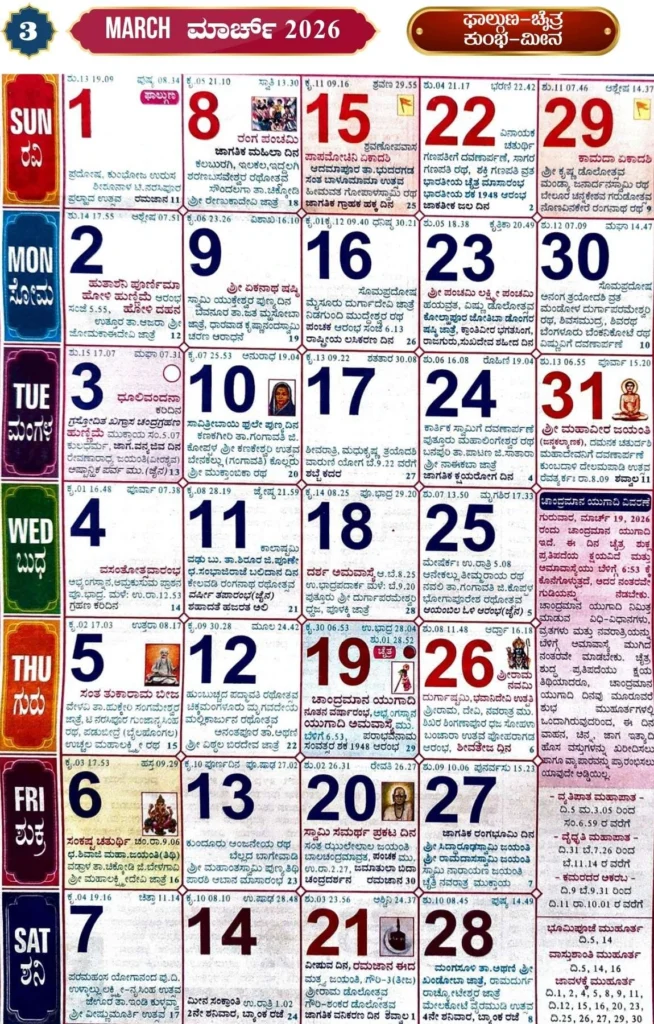
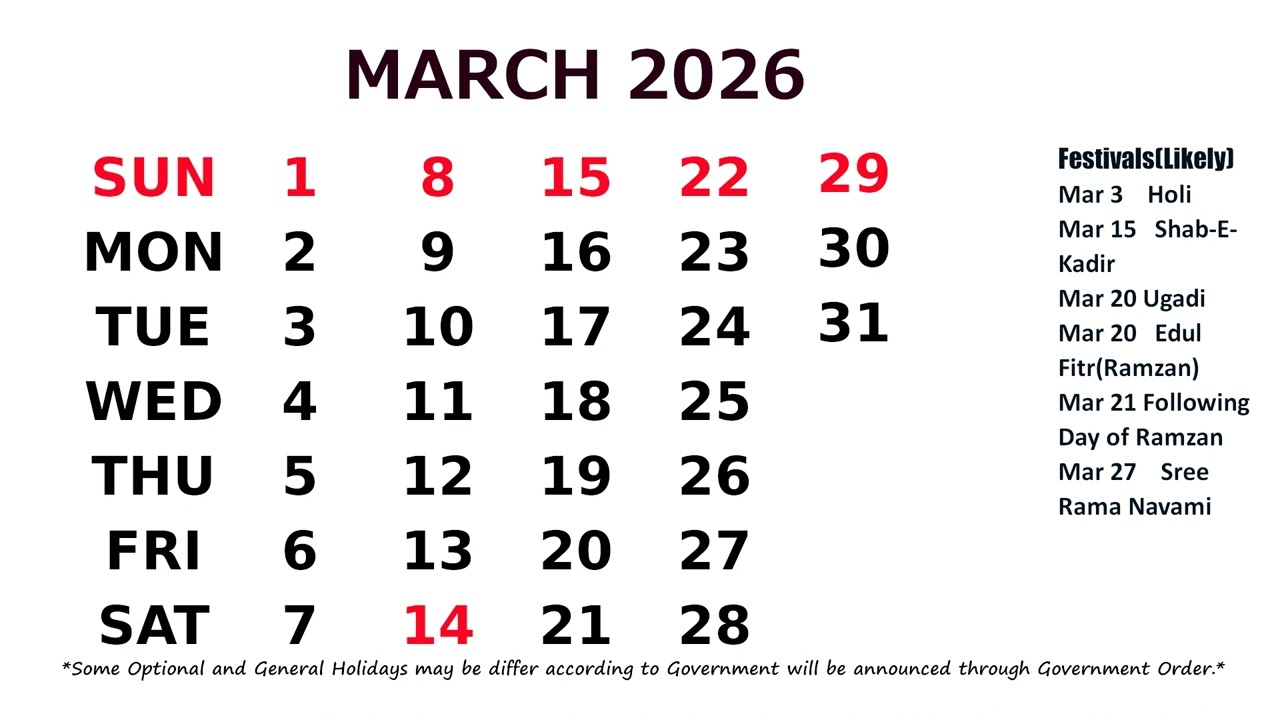
Here’s your comprehensive look at March 2026, combining Gregorian dates with key Kannada calendar details and significant observances. This table is designed to help you plan your month, whether you’re celebrating a festival or scheduling an important event, keeping your USA location in mind.
Note: While this calendar provides key information, specific timings like Rahukalam and Yamagandam vary by your exact location and timezone in the USA. For precise daily timings for rituals, always cross-reference with a local Drik Panchang or a reliable Kannada calendar app adjusted for your specific city.
| Date (Gregorian) | Kannada Tithi (Paksha) | Nakshatra | Major Observances/Festivals | Key Timings (Conceptual for USA) |
|---|---|---|---|---|
| Sunday, March 1 | Phalguna Krishna Saptami | Moola | Check local Panchang for precise Rahukalam/Amrita Kalam | |
| Monday, March 2 | Phalguna Krishna Ashtami | Purva Ashadha | Avoid Yamagandam for important tasks | |
| Tuesday, March 3 | Phalguna Krishna Navami till evening, then Dashami | Uttara Ashadha | Holika Dahan (ಹೋಳಿಕಾ ದಹನ) | Observe Holika Dahan Muhurta locally |
| Wednesday, March 4 | Phalguna Krishna Dashami | Shravana | Holi (ಹೋಳಿ) | Day of celebration and joy |
| Thursday, March 5 | Phalguna Krishna Ekadashi | Dhanishta | Vijaya Ekadashi | Fasting day, spiritual observances |
| Friday, March 6 | Phalguna Krishna Dwadashi | Shatabhisha | Good for creative endeavors | |
| Saturday, March 7 | Phalguna Krishna Trayodashi | Purva Bhadrapada | Pradosh Vrata | Evening Shiva Puja, check local sunset times |
| Sunday, March 8 | Phalguna Krishna Chaturdashi | Uttara Bhadrapada | ||
| Monday, March 9 | Phalguna Amavasya | Revati | Amavasya (ಅಮಾವಾಸ್ಯೆ) | Ancestor worship, charity |
| Tuesday, March 10 | Chaitra Shukla Pratipada | Ashwini | Chaitra Navaratri Begins (Northern India) | |
| Wednesday, March 11 | Chaitra Shukla Dwitiya | Bharani | ||
| Thursday, March 12 | Chaitra Shukla Tritiya | Krittika | Gauri Tritiya (Gangaur begins) | |
| Friday, March 13 | Chaitra Shukla Chaturthi | Rohini | Avoid Rahukalam | |
| Saturday, March 14 | Chaitra Shukla Panchami | Mrigashira | Skanda Sashti | |
| Sunday, March 15 | Chaitra Shukla Shashthi | Ardra | ||
| Monday, March 16 | Chaitra Shukla Saptami | Punarvasu | ||
| Tuesday, March 17 | Chaitra Shukla Ashtami | Pushya | Durga Ashtami | Goddess Durga worship |
| Wednesday, March 18 | Chaitra Shukla Navami | Ashlesha | Rama Navami (ರಾಮ ನವಮಿ) | Celebration of Lord Rama’s birth |
| Thursday, March 19 | Chaitra Shukla Dashami | Magha | Chaitra Shukladi / Hindu New Year (ಚೈತ್ರ ಶುಕ್ಲಾಧಿ) | New beginnings, spiritual observances |
| Friday, March 20 | Chaitra Shukla Ekadashi | Purva Phalguni | Kamada Ekadashi | Fasting day |
| Saturday, March 21 | Chaitra Shukla Dwadashi | Uttara Phalguni | ||
| Sunday, March 22 | Chaitra Shukla Trayodashi | Hasta | Pradosh Vrata | Evening Shiva Puja |
| Monday, March 23 | Chaitra Shukla Chaturdashi | Chitra | ||
| Tuesday, March 24 | Chaitra Purnima | Swati | Hanuman Jayanti (ಹನುಮಾನ್ ಜಯಂತಿ) | Celebration of Lord Hanuman’s birth |
| Wednesday, March 25 | Chaitra Krishna Pratipada | Vishakha | ||
| Thursday, March 26 | Chaitra Krishna Dwitiya | Anuradha | ||
| Friday, March 27 | Chaitra Krishna Tritiya | Jyeshtha | ||
| Saturday, March 28 | Chaitra Krishna Chaturthi | Moola | Sankashti Chaturthi | Ganesha worship, observe moonrise (local time) |
| Sunday, March 29 | Chaitra Krishna Panchami | Purva Ashadha | ||
| Monday, March 30 | Chaitra Krishna Shashthi | Uttara Ashadha | ||
| Tuesday, March 31 | Chaitra Krishna Saptami | Shravana |
March 2026: Significant Kannada Festivals & Observances Explained
March 2026 is a vibrant month, marking the transition from the end of one lunar year into the beginning of another. Here’s a closer look at the key festivals and observances:
Holi Hunnime (Phalguna Purnima): A Celebration of Colors and Renewal
Observed around March 3-4, 2026, Holi is one of the most joyous and colorful festivals in India. In Karnataka, it’s celebrated with great enthusiasm, often referred to as ‘Holi Hunnime’ (Full Moon of Phalguna). The evening of March 3rd sees Holika Dahan, where bonfires are lit to symbolize the burning of evil (Holika, the demoness) and the triumph of good (Prahlad’s devotion). The following day, March 4th, is the main day of Holi, where people playfully smear each other with colored powders (gulal) and water, sharing sweets and joy.
For Kannadigas in the USA, Holi is a wonderful opportunity to gather with family and friends, organize community events, and share the vibrancy of Indian culture with others. Many temples and cultural organizations in major US cities host Holi celebrations, making it easier to participate.

Chandramana Ugadi (Hindu New Year): Ushering in New Beginnings
Chandramana Ugadi, the New Year for Kannadigas and many other South Indian communities, falls on Thursday, March 19, 2026. This day marks the beginning of the Chaitra month and the start of a new lunar year (Vikrama Samvat 2083 and Saka Samvat 1947). It’s a day of profound significance, symbolizing new beginnings, prosperity, and reflection.
Key traditions for Ugadi include:

- Oil Bath (Abhyanga Snana): A traditional ritual bath.
- House Cleaning & Decoration: Homes are thoroughly cleaned and adorned with fresh mango leaves (Torana) and Rangoli designs.
- Bevu-Bella (ಬೇವು-ಬೆಲ್ಲ): A unique Ugadi delicacy made from neem leaves (bitter) and jaggery (sweet), symbolizing life’s mixture of joy and sorrow, which must be accepted with equanimity.
- Panchanga Shravana: Listening to the annual forecast (Panchanga) from priests, which includes predictions for the coming year.
- Special Foods: Preparing traditional dishes like Puliogare (tamarind rice), Holige (sweet flatbread), and various payasams.
In the USA, Ugadi is a cherished occasion for families to come together, cook traditional meals, visit temples, and exchange greetings. Many Kannada Sanghas (associations) host cultural programs and feasts to celebrate.
Other Key Observances and Vratas
- Ekadashi (ಏಕಾದಶಿ): Occurs twice a month (March 5 and March 20). These days are dedicated to Lord Vishnu, with devotees often observing fasts (Vrata) to purify mind and body and seek blessings.
- Amavasya (ಅಮಾವಾಸ್ಯೆ): The new moon day (March 9). This day is significant for performing ancestral rites (Pitru Karya) and charitable deeds.
- Purnima (ಪೂರ್ಣಿಮಾ): The full moon day. While March’s full moon coincides with Holi, other Purnimas throughout the year hold importance for various observances.
- Pradosh Vrata (ಪ್ರದೋಷ ವ್ರತ): Observed twice a month (March 7 and March 22), these are auspicious fasts dedicated to Lord Shiva and Parvati, observed during the twilight period (Pradosha Kala).
- Sankashti Chaturthi (ಸಂಕಷ್ಟಿ ಚತುರ್ಥಿ): Dedicated to Lord Ganesha (March 28), devotees fast and break it after sighting the moon in the evening, seeking blessings to overcome obstacles.
- Rama Navami (ರಾಮ ನವಮಿ): Celebrated on March 18, this day marks the birth of Lord Rama, an incarnation of Vishnu. Devotees observe fasts, sing bhajans, and recite the Ramayana.
- Hanuman Jayanti (ಹನುಮಾನ್ ಜಯಂತಿ): Observed on March 24, this day celebrates the birth of Lord Hanuman, the epitome of strength, devotion, and selfless service.
Navigating Kannada Traditions in the USA: Practical Tips for March 2026
Living thousands of miles from Karnataka doesn’t mean you have to miss out on your cultural heritage. With a little planning and the right resources, you can keep the spirit of these traditions alive and thriving in the USA.
Connecting with Local Kannada Sanghas and Temples
One of the best ways to celebrate festivals and observe traditions is by joining your local Kannada community. Many major cities across the USA (like San Francisco, New York, Dallas, Atlanta, Chicago) have active Kannada Sanghas and Hindu temples that cater to the South Indian diaspora. These organizations often host events for Ugadi, Holi, and other festivals, providing a sense of community and a space for collective celebration. A quick online search for “Kannada Sangha [Your City/State]” or “Hindu Temple [Your City/State]” is a great starting point.
Embracing Digital Tools: Apps and Online Resources
The digital age makes it incredibly easy to access real-time Kannada calendar information. Look for reputable Kannada calendar apps on Google Play or the Apple App Store. Many offer daily Panchang updates, festival reminders, and even personalized astrological insights based on your location. Websites like Drikpanchang.com or Prokerala.com also provide detailed calendars that can be adjusted for USA time zones. These digital tools are indispensable for planning your day according to auspicious timings.
Adapting Traditions: Balancing Culture and Western Life
Observing traditional timings and rituals can sometimes be challenging with a demanding work or school schedule in the USA. Don’t stress! It’s okay to adapt. For example:
- If you can’t observe a full fast on an Ekadashi due to work, you can opt for a partial fast or simply dedicate the day to spiritual reflection.
- For festivals like Ugadi, even if you can’t take a day off, you can still perform essential pujas in the morning, prepare a smaller Bevu-Bella, and share a special meal with family in the evening.
- For specific Rahukalam or Yamagandam, if you absolutely must perform an important task, a simple prayer or mantra can often mitigate negative influences.
The essence is to maintain the spirit of the tradition, even if the execution needs to be flexible.
Planning Ahead: Why the 2026 Calendar Matters Now
Having access to the March 2026 Kannada Calendar now allows you to plan your year effectively. This means:
- Travel Planning: If you’re considering a trip to India or visiting family, knowing festival dates helps you align your travel.
- Community Engagement: You can coordinate with your local Kannada Sangha for festival preparations and events.
- Personal Observances: For weddings, housewarmings, or starting new ventures, knowing auspicious dates well in advance is crucial.
- Children’s Education: Teach your children about these traditions by involving them in the planning and celebration.
Beyond March 2026: Looking Ahead with Your Kannada Calendar
The March 2026 Kannada Calendar is just one piece of a beautiful, continuous cycle. By understanding its components and embracing the spirit of its observances, you can forge a deeper connection with your heritage throughout the entire year.
Keep exploring, keep celebrating, and let the timeless wisdom of the Kannada calendar guide you, no matter where in the world you are.
Frequently Asked Questions
What is the main difference between the Kannada Calendar and the Gregorian Calendar?
The Gregorian Calendar is purely solar, based on the Earth’s orbit around the sun. The Kannada Calendar, like other Hindu calendars, is lunisolar, meaning it considers both the sun’s movements (for months) and the moon’s phases (for Tithis/lunar days). This results in different date systems and the placement of festivals varying year to year relative to the Gregorian calendar.
Which major festivals occur in March 2026 according to the Kannada Calendar?
March 2026 is a significant month, featuring major festivals like Holi Hunnime (March 3-4, 2026) and Chandramana Ugadi, which is the Hindu New Year for Kannadigas, observed on March 19, 2026. Other important observances include Rama Navami (March 18) and Hanuman Jayanti (March 24).
How can I find out the auspicious timings (Shubha Samaya) for a specific day in March 2026 in my USA location?
Auspicious timings like Rahukalam, Yamagandam, and Amrita Kalam are highly location-dependent and change daily. For precise timings in your USA city, consult reliable online Panchang websites (e.g., Drikpanchang.com) or download a reputable Kannada calendar app that allows you to set your specific location and timezone.
Is the Kannada Calendar used primarily for religious purposes, or does it have other uses?
While deeply rooted in religious and spiritual practices, the Kannada Calendar also serves broader cultural and astrological purposes. It’s used for planning significant life events (weddings, housewarmings), understanding personal astrology (based on Nakshatra and Rashi), and maintaining a connection to traditional agricultural cycles and seasonal changes.
Where can Kannadigas in the USA find local community support for cultural observances?
Kannadigas in the USA can connect with local Kannada Sanghas (associations) or Hindu temples. These organizations often host cultural events, festival celebrations, and community gatherings, providing a vital platform to preserve and celebrate Kannada traditions. Searching online for ‘Kannada Sangha [Your City/State]’ is a great starting point.
Are there reliable mobile apps for the Kannada Calendar 2026?
Yes, there are several reliable mobile applications available on both Google Play and Apple App Store for the Kannada Calendar. These apps typically offer daily Panchang details, festival lists, and options to adjust for local time zones, making it convenient to follow the calendar in the USA. Always check reviews and ratings before downloading.
