March 2026 Hindu Calendar in Hindi: Your Essential Guide for Planning & Festivals (USA Edition)
Navigating cultural and religious traditions while living thousands of miles away from home can be a unique challenge. If you’re looking for the March 2026 Hindu Calendar, specifically with a focus on Hindi observances and their relevance for those in the USA, you’ve landed in the right place. Forget those generic calendar listings. We’re diving deep to give you not just dates, but context, meaning, and practical guidance.

March 2026 is a particularly auspicious and vibrant month in the Hindu calendar. It marks the transition from the lunar month of Phalguna to Chaitra, heralding major festivals like Holi, Ugadi, and Rama Navami. For Hindu families across the United States, understanding these dates and their significance is key to maintaining spiritual connections and celebrating heritage. Let’s unlock the wisdom of the Vedic calendar together, tailored for your life here.
March 2026: A Month of Vibrant Festivals and New Beginnings
As the Gregorian calendar moves into spring, the Hindu calendar cycles through its own rhythms of nature and devotion. March 2026 primarily encompasses the latter half of the lunar month of Phalguna (फाल्गुन) and the beginning of Chaitra (चैत्र). These months are known for their spiritual energy, marking the end of winter and the rejuvenation of spring, which is beautifully reflected in the festivals celebrated.
This month brings forth opportunities for introspection, joyous community gatherings, and profound religious observances. From the playful colors of Holi to the solemn fasting of Ekadashi and the celebratory New Year festivities of Ugadi and Gudi Padwa, March offers a rich tapestry of Hindu traditions. Understanding the specific dates and their underlying spiritual significance allows you to participate fully, even when far from your ancestral lands.

Your Detailed March 2026 Hindu Calendar (Hindi & Gregorian Dates)
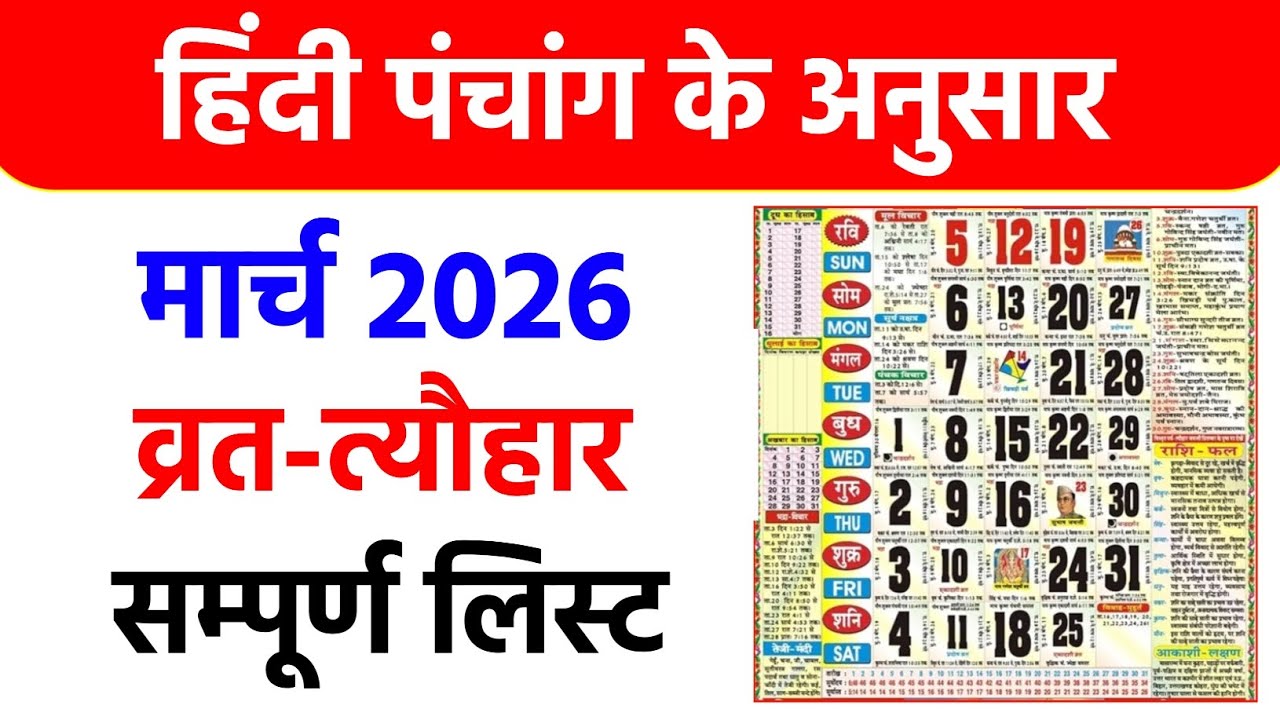
Here’s your comprehensive guide to March 2026, integrating Gregorian dates with the essential Hindu calendar components like Tithi (तिथि) and Nakshatra (नक्षत्र). This table is designed to give you a clear, day-by-day overview, highlighting key festivals and observances.
| Gregorian Date | Day | Hindu Tithi (तिथि) | Nakshatra (नक्षत्र) | Key Festivals/Observances (प्रमुख त्यौहार/व्रत) |
|---|---|---|---|---|
| March 1 | Sunday | Shukla Dwadashi | Ashlesha | |
| March 2 | Monday | Shukla Trayodashi | Magha | |
| March 3 | Tuesday | Shukla Purnima | Purva Phalguni | Holika Dahan (होलिका दहन), Phalguna Purnima (फाल्गुन पूर्णिमा) |
| March 4 | Wednesday | Krishna Pratipada | Uttara Phalguni | Holi (Rangwali Holi) (रंगवाली होली) |
| March 5 | Thursday | Krishna Dwitiya | Hasta | |
| March 6 | Friday | Krishna Tritiya | Chitra | |
| March 7 | Saturday | Krishna Chaturthi | Swati | |
| March 8 | Sunday | Krishna Panchami | Vishakha | |
| March 9 | Monday | Krishna Shashthi | Anuradha | |
| March 10 | Tuesday | Krishna Saptami | Jyeshtha | Basoda / Sheetala Saptami (बसोड़ा / शीतला सप्तमी) |
| March 11 | Wednesday | Krishna Ashtami | Moola | |
| March 12 | Thursday | Krishna Navami | Purva Ashadha | |
| March 13 | Friday | Krishna Dashami | Uttara Ashadha | |
| March 14 | Saturday | Krishna Ekadashi | Shravana | Papmochani Ekadashi (पापमोचनी एकादशी) |
| March 15 | Sunday | Krishna Dwadashi | Dhanishta | |
| March 16 | Monday | Krishna Trayodashi | Shatabhisha | |
| March 17 | Tuesday | Krishna Chaturdashi | Purva Bhadrapada | |
| March 18 | Wednesday | Krishna Amavasya | Uttara Bhadrapada | |
| March 19 | Thursday | Shukla Pratipada | Revati | Ugadi (उगादी), Gudi Padwa (गुड़ी पड़वा), Cheti Chand (चेती चांद) |
| March 20 | Friday | Shukla Dwitiya | Ashwini | |
| March 21 | Saturday | Shukla Tritiya | Bharani | |
| March 22 | Sunday | Shukla Chaturthi | Krittika | |
| March 23 | Monday | Shukla Panchami | Rohini | |
| March 24 | Tuesday | Shukla Shashthi | Mrigashira | |
| March 25 | Wednesday | Shukla Saptami | Ardra | |
| March 26 | Thursday | Shukla Ashtami | Punarvasu | |
| March 27 | Friday | Shukla Navami | Pushya | Rama Navami (रामनवमी) |
| March 28 | Saturday | Shukla Dashami | Ashlesha | |
| March 29 | Sunday | Shukla Ekadashi | Magha | |
| March 30 | Monday | Shukla Dwadashi | Purva Phalguni | |
| March 31 | Tuesday | Shukla Trayodashi | Uttara Phalguni |
Please Note: The exact timings for Tithi and Nakshatra can vary slightly based on your specific geographical location within the USA. Always consult a local Panchang or temple for the most precise timings for your city.
Key Festivals and Observances in March 2026
March 2026 is bustling with spiritual energy. Let’s delve into the significance and celebrations of the most prominent festivals:
Holika Dahan & Holi (होलिका दहन और होली)
Dates: Holika Dahan – March 3, 2026; Rangwali Holi – March 4, 2026
Holi, the Festival of Colors, is arguably one of the most vibrant and joyful Hindu festivals. It celebrates the triumph of good over evil, signified by the burning of the demoness Holika. Holika Dahan (होलिका दहन) takes place on the eve of Holi, where bonfires are lit to symbolize the destruction of evil. People gather around the pyre, offering grains and coconuts, praying for the victory of dharma in their lives. The following day, Rangwali Holi (रंगवाली होली), is a riot of colors, where people playfully smear each other with dry and wet colors, exchange sweets, and visit friends and family. It’s a day of forgetting grievances and renewing relationships.
For those in the USA, many Hindu temples and community organizations host public Holika Dahan events and Holi celebrations. Look for local Indian cultural centers or temples that organize gatherings. It’s a fantastic way to introduce children to their heritage and connect with the wider community.
Phalguna Purnima (फाल्गुन पूर्णिमा)
Date: March 3, 2026
Phalguna Purnima (फाल्गुन पूर्णिमा) marks the full moon day of the Phalguna month. This day holds significant religious importance, particularly as it coincides with Holika Dahan. For many, it’s a day for fasting, prayer, and performing specific rituals to honor various deities, including Lord Vishnu. It’s considered an auspicious time for spiritual practices and seeking blessings.
Basoda / Sheetala Saptami (बसोड़ा / शीतला सप्तमी)
Date: March 10, 2026
Also known as Sheetala Ashtami in some regions, Basoda (बसोड़ा) or Sheetala Saptami (शीतला सप्तमी) is a festival dedicated to Goddess Sheetala Devi, believed to protect people from various diseases. On this day, devotees observe a unique tradition of consuming only stale food cooked a day prior. No fresh food is cooked, and fires are not lit in the kitchen. It’s a day for prayers, offering cool water, and seeking blessings for good health and protection from illnesses, particularly prevalent as the weather changes.
Papmochani Ekadashi (पापमोचनी एकादशी)
Date: March 14, 2026
Ekadashi (एकादशी) is a significant fasting day observed twice a month by devout Hindus, dedicated to Lord Vishnu. Papmochani Ekadashi (पापमोचनी एकादशी) falls during the Krishna Paksha (waning phase) of the Chaitra month. The name ‘Papmochani’ translates to ‘one that frees from sins’. Observing a fast on this day, with sincere prayers and meditation, is believed to cleanse one of their sins and lead to spiritual upliftment. Many devotees abstain from grains, legumes, and certain spices, consuming only fruits, milk, or specific Ekadashi-friendly foods.
Ugadi / Gudi Padwa / Telugu New Year (उगादी / गुड़ी पड़वा / तेलुगु नव वर्ष)
Date: March 19, 2026
March 19 marks the Hindu New Year for several communities in India, celebrated with different names but similar fervor. In Karnataka, Andhra Pradesh, and Telangana, it is known as Ugadi (उगादी), signifying the beginning of a new age. In Maharashtra, it is celebrated as Gudi Padwa (गुड़ी पड़वा), marked by the raising of a ‘Gudi’ (a decorated stick with a silk cloth, garland, and kalash) outside homes, symbolizing victory and prosperity. Both festivals involve traditional feasts, cleaning and decorating homes, and offering prayers for a prosperous year ahead. A unique dish, Ugadi Pachadi, which combines six tastes (sweet, sour, salty, bitter, pungent, and spicy), symbolizing life’s various experiences, is a highlight of Ugadi. For those from these regions in the USA, community events and temple celebrations are common to mark this auspicious new beginning.
Cheti Chand (चेती चांद)
Date: March 19, 2026
Coinciding with Ugadi and Gudi Padwa, Cheti Chand (चेती चांद) is the New Year celebration for the Sindhi community. It marks the birth anniversary of their patron saint, Jhulelal. On this day, Sindhis offer prayers, distribute sweets, and participate in processions, expressing gratitude and seeking blessings from Lord Jhulelal. For Sindhis in the USA, this day is an important cultural and religious touchstone, often celebrated with community gatherings and devotional singing (bhajans).
Rama Navami (रामनवमी)
Date: March 27, 2026
Rama Navami (रामनवमी) is one of the most significant Hindu festivals, celebrating the birth of Lord Rama, the seventh incarnation of Vishnu. It falls on the ninth day of the Shukla Paksha (waxing phase) of the Chaitra month. Devotees observe fasts, recite sacred texts like the Ramayana or Ramcharitmanas, perform puja, and visit temples to offer prayers to Lord Rama, Sita, Lakshman, and Hanuman. The day culminates with elaborate celebrations, especially in Ayodhya, the birthplace of Lord Rama. For many, it’s a day to reflect on the ideals of righteousness, dharma, and devotion embodied by Lord Rama.
Demystifying the Panchang: Understanding Your Hindi Calendar
The term ‘Hindi Calendar’ often refers to the Panchang (पंचांग), a traditional Hindu calendar that calculates auspicious and inauspicious times based on five core elements. Understanding these elements helps you grasp the deeper astronomical and astrological significance behind the dates and festivals.
Tithi (तिथि): The Lunar Day
A Tithi (तिथि) is a lunar day, defined by the angular distance between the Sun and the Moon. There are 15 Tithis in each lunar fortnight (Paksha), making 30 Tithis in a full lunar month. Each Tithi has its own specific energy and significance, dictating which days are auspicious for certain activities. For instance, Ekadashi (the 11th Tithi) is traditionally observed with fasting, while Purnima (the Full Moon) and Amavasya (the New Moon) hold unique spiritual weight.
Nakshatra (नक्षत्र): Lunar Mansions
The Nakshatras (नक्षत्र) are lunar mansions, essentially constellations or divisions of the ecliptic through which the Moon travels. There are 27 Nakshatras, each spanning 13 degrees and 20 minutes of the zodiac. Each Nakshatra has its own unique characteristics, ruling deity, and influence on individuals and events. When you consult a Hindu calendar, the Nakshatra for a given day provides insights into its inherent qualities and potential for various undertakings.
Yoga (योग) & Karana (करण): Astrological Influences
Beyond Tithi and Nakshatra, the Panchang includes Yoga (योग) and Karana (करण). A Yoga is determined by the combined longitudes of the Sun and the Moon, while a Karana is half of a Tithi. There are 27 Yogas and 11 Karanas. These elements offer further layers of astrological detail, influencing the auspiciousness of timings for ceremonies, travel, or starting new ventures. While less commonly discussed in daily use, they are crucial for detailed astrological calculations for horoscopes and muhurats.
Ritu (ऋतु): The Six Seasons of the Hindu Calendar
The Hindu calendar recognizes six seasons, or Ritus (ऋतु), each lasting approximately two lunar months. March 2026 typically falls within the transition period from Shishira Ritu (late winter) into Vasanta Ritu (spring). Understanding these Ritus provides a deeper connection to the natural cycles that underpin many Hindu festivals and agricultural practices, even if the weather patterns in the USA differ from India.
Rahu Kaal and Other Inauspicious Timings
The Panchang also highlights certain periods considered inauspicious for starting new work, travel, or important ceremonies. The most well-known is Rahu Kaal, a specific duration each day (approximately 90 minutes) believed to be influenced by the shadow planet Rahu. While spiritual activities like puja or meditation are generally unaffected, people often avoid initiating new projects or making significant decisions during Rahu Kaal. Checking for Rahu Kaal in your local time zone is a practical application of the Panchang for daily planning.
Navigating the Hindu Calendar in the USA: Practical Tips
Observing the Hindu calendar in the USA comes with its own set of considerations. Here’s how to make it seamless:
Time Zone Adjustments and Local Panchang
This is perhaps the most critical point. Festival dates and auspicious timings (like the start of a Tithi or Nakshatra) are calculated based on sunrise and sunset for a specific geographical location. A calendar generated for Delhi, India, will have different precise timings than one for New York, Houston, or Los Angeles. Always look for a Panchang that provides calculations for your specific city or a nearby major city in your time zone within the USA. Many online resources and temple websites offer this localized information.
Finding Hindu Temples and Community Events
The USA boasts a vibrant Hindu diaspora with numerous temples and community organizations. These centers are invaluable resources for celebrating festivals, attending pujas, and connecting with fellow devotees. Check their websites, newsletters, or social media for announcements regarding Holi gatherings, Ugadi celebrations, Rama Navami programs, and other events. Participating can fill your life with the collective energy of celebration, mirroring the experience back home.
Sourcing Puja Items and Ingredients
Worried about finding specific puja items or traditional ingredients for your festival dishes? The USA has a growing number of Indian grocery stores, online ethnic markets, and specialized puja supply stores. Most major cities with an Indian population will have easy access to essentials like specific flowers, incense, ghee, traditional sweets, and spices. Plan ahead, especially for major festivals, to ensure you have everything you need.
Balancing Traditions with Western Life
Celebrating Hindu festivals in the USA often requires a creative balance. School and work schedules might not align with traditional festival dates. This is where adaptation comes in. You might observe main rituals on the actual day but celebrate with extended family or community on the nearest weekend. Involve your children by explaining the significance of each festival in a way that resonates with their experiences, fostering a sense of pride in their heritage.
How to Use Your March 2026 Calendar for Spiritual & Personal Planning
Beyond just marking festival dates, your March 2026 Hindu calendar is a powerful tool for holistic planning:
Daily Spiritual Practice
Use the calendar to align your daily spiritual practices. Knowing the Tithi, Nakshatra, or specific auspicious days (like Ekadashi) can guide your meditation, mantra chanting, or even choice of deity to focus on for the day. It helps you attune to the cosmic energies and maximize your spiritual efforts.
Planning Auspicious Events (Weddings, Griha Pravesh)
For significant life events like weddings, housewarmings (Griha Pravesh), or starting a new business, consulting the Panchang for an auspicious Muhurat (मुहूर्त – an auspicious time) is a long-standing tradition. While this calendar provides a general overview, for such important milestones, always consult an experienced astrologer or priest who can calculate the most precise and beneficial timings based on your birth details and specific location.
Fasting and Dietary Observances
The calendar clearly highlights fast days like Ekadashi. Knowing these in advance allows you to plan your diet and schedule accordingly. Many Hindus observe specific fasts for personal devotion, health, or to seek blessings. This calendar empowers you to prepare both physically and mentally for these observances.
Conclusion: Embrace the Vibrancy of March 2026
March 2026 is more than just a month on the Gregorian calendar; it’s a window into the rich spiritual and cultural tapestry of Hinduism. By understanding the March 2026 Hindu Calendar in Hindi, its festivals, and the underlying Panchang principles, you’re not just marking dates – you’re actively participating in a tradition that connects you to generations of wisdom and devotion. Whether you’re celebrating Holi with vibrant colors, observing fasts, or welcoming a new year with Ugadi and Gudi Padwa, this calendar empowers you to integrate these profound experiences into your life in the USA. Embrace the vibrancy, plan with purpose, and let your heritage flourish, no matter where you are in the world.
Frequently Asked Questions
What are the major Hindu festivals in March 2026?
March 2026 is packed with significant festivals. The major ones include Holika Dahan (March 3), Rangwali Holi (March 4), Papmochani Ekadashi (March 14), Ugadi / Gudi Padwa / Cheti Chand (March 19), and Rama Navami (March 27). These dates are based on calculations for the USA and may vary slightly by specific location.
Why is it important to use a localized calendar for the USA, not just an Indian one?
A localized calendar for the USA is crucial because Tithi and Nakshatra timings, which determine festival dates and auspicious periods, are calculated based on sunrise and sunset. These vary significantly across different time zones and longitudes. Using a calendar specific to your city or region in the USA ensures you observe festivals and rituals at the correct local times.

What is the Panchang and why is it important in the Hindu calendar?
The Panchang (पंचांग) is the traditional Hindu calendar that provides five key elements: Tithi (lunar day), Nakshatra (lunar mansion), Yoga (astrological combination), Karana (half of a Tithi), and Vaar (weekday). It’s important because it helps determine auspicious and inauspicious timings for daily activities, rituals, and ceremonies, offering a deeper understanding of the cosmic influences on each day.
How can I celebrate Holi in the USA in March 2026?
Many Hindu temples and Indian community organizations across the USA host public Holika Dahan and Holi celebrations. Look for announcements from your local temple or cultural center. These events often include bonfires, color play, traditional food, and cultural performances, providing a vibrant community experience.

What is the significance of Ugadi and Gudi Padwa?
Ugadi (for South Indian states like Karnataka, Andhra Pradesh, Telangana) and Gudi Padwa (for Maharashtra) mark the Hindu New Year on March 19, 2026. They symbolize new beginnings, prosperity, and the triumph of good. Celebrations involve cleaning homes, decorating with fresh mango leaves and rangolis, preparing special dishes, and performing pujas for a blessed year ahead. A ‘Gudi’ is hoisted in Maharashtra as a symbol of victory.
What is Rama Navami and how is it observed?
Rama Navami, falling on March 27, 2026, celebrates the birth of Lord Rama. Devotees observe fasts, recite the Ramayana, perform elaborate pujas in homes and temples, and sing devotional hymns. It’s a day to reflect on Lord Rama’s virtues of righteousness, courage, and compassion. Many temples in the USA organize special prayer services and discourses.
Where can I find puja items or traditional food ingredients in the USA?
You can typically find puja items and traditional food ingredients at Indian grocery stores, specialty ethnic markets, or online stores that cater to the Indian diaspora. Major cities with a significant Indian population will have a wide array of options for everything from incense and idols to fresh produce and sweets for your observances.
