March 2026 Telugu Calendar Marriage Dates: Your Definitive Guide to Auspicious Muhurats
Planning a wedding is a monumental task, and for Telugu families, ensuring the marriage takes place on an auspicious date (Vivah Muhurat) is paramount. It’s not just about picking a pretty day; it’s about aligning with cosmic energies to bless the union with prosperity, happiness, and longevity. If you’re looking at March 2026 for your Telugu wedding, you’re in the right place. We’re diving deep into the Telugu Panchang to give you the most accurate and detailed marriage dates, helping you lay the foundation for a truly blessed beginning.

Forget the generic lists. We’re going beyond just dates, offering insights into the astrological underpinnings that make these days sacred for a Telugu Vivaham. Let’s unwrap the celestial calendar for March 2026 and find your perfect auspicious moment.
Understanding Vivah Muhurat in Telugu Tradition
In Telugu culture, marriage is a sacred union, not just between two individuals, but between two families, sanctified by tradition and cosmic blessings. The selection of a Vivah Muhurat—an auspicious time for the wedding ceremony—is a critical first step. This isn’t superstition; it’s a profound astrological practice rooted in centuries of Vedic wisdom, believed to ensure a harmonious and successful marital life.
What Makes a Date Auspicious? (Panchang Elements: Tithi, Nakshatra, Yoga, Karana, Vara)
Determining an auspicious marriage date involves a meticulous analysis of the five core elements of the Telugu Panchang (literally, “five limbs”):
- Tithi (Lunar Day): Each lunar month has 30 tithis, and certain ones are considered more favorable for new beginnings like marriage.
- Nakshatra (Lunar Mansion): There are 27 Nakshatras, or lunar constellations, each with unique characteristics. Matching the bride and groom’s birth Nakshatras with the wedding Nakshatra is crucial. Specific Nakshatras like Rohini, Mrigashira, Magha, Uttara Phalguni, Hasta, Swati, Anuradha, Moola, Uttara Ashadha, Uttara Bhadrapada, and Revati are highly auspicious for Vivaham.
- Vara (Weekday): Some weekdays are inherently more auspicious than others. Monday, Wednesday, Thursday, and Friday are generally preferred for weddings.
- Yoga (Planetary Combination): There are 27 Yogas formed by the combined longitudes of the Sun and Moon. Specific Yogas are considered highly propitious.
- Karana (Half Tithi): A Karana is half of a Tithi, and there are 11 Karanas. Certain Karanas are deemed suitable for auspicious events.
Beyond these, other factors like the position of Venus (Sukra), Jupiter (Guru), and the absence of Malefic periods (like Rahu Kalam) are also rigorously checked. It’s a complex interplay that requires expert interpretation.
The Significance of Vivah Muhurat for a Harmonious Marriage
Choosing the right Muhurat is believed to:
- Enhance Compatibility: Aligning the cosmic energies at the time of marriage helps to iron out potential incompatibilities between the couple.
- Attract Positive Energies: The auspicious time acts as a cosmic blessing, inviting good fortune, happiness, and prosperity into the new household.
- Mitigate Obstacles: A carefully chosen Muhurat is thought to ward off future challenges and ensure a smooth journey for the couple.
- Ensure Longevity: It’s believed to contribute to the couple’s long, healthy, and happy life together.
March 2026 Telugu Calendar: Auspicious Marriage Dates at a Glance
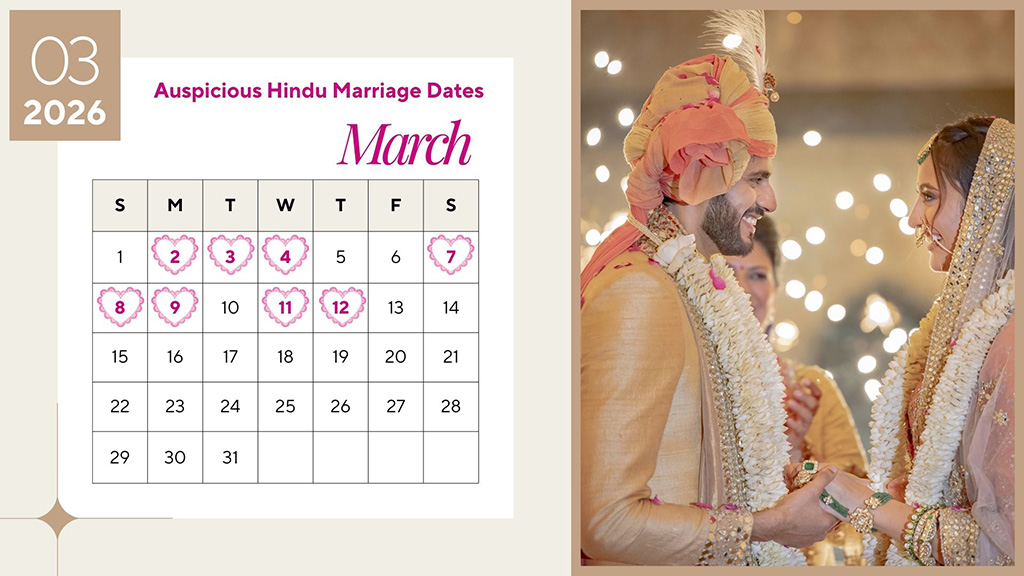
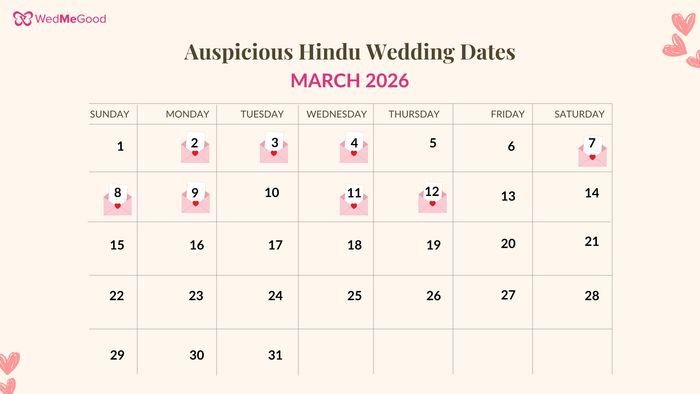
March 2026 offers several beautiful opportunities for a Telugu wedding. As spring blossoms, these dates carry the promise of new beginnings and vibrant unions. Here’s a meticulously curated list of auspicious Vivah Muhurats for March 2026, keeping Telugu Panchang principles in mind. Remember, these are general guidelines, and personalized consultation is always recommended.
| Date | Day | Auspicious Start Time (IST) | Auspicious End Time (IST) | Key Telugu Tithi | Key Auspicious Nakshatra | General Guidance |
|---|---|---|---|---|---|---|
| March 2, 2026 | Monday | 05:30 AM | 06:45 AM | Magha Purnima | Uttara Phalguni | Excellent for new beginnings. Short morning window. |
| March 3, 2026 | Tuesday | 08:00 AM | 11:30 AM | Pratipada, Krishna Paksha | Hasta | Good mid-morning Muhurat. |
| March 4, 2026 | Wednesday | 10:00 AM | 01:15 PM | Dwitiya, Krishna Paksha | Chitra | Favorable for strong partnerships. |
| March 7, 2026 | Saturday | 07:30 AM | 09:45 AM | Panchami, Krishna Paksha | Anuradha | Auspicious for enduring love. |
| March 8, 2026 | Sunday | 06:50 AM | 09:00 AM | Shashti, Krishna Paksha | Jyeshtha | Morning window, consider Jupiter’s strength. |
| March 9, 2026 | Monday | 09:30 AM | 12:45 PM | Saptami, Krishna Paksha | Moola | Strong Muhurat for family harmony. |
| March 11, 2026 | Wednesday | 11:00 AM | 02:30 PM | Navami, Krishna Paksha | Purva Ashadha | Midday Muhurat, consult for specific details. |
| March 12, 2026 | Thursday | 06:30 AM | 09:15 AM | Dashami, Krishna Paksha | Uttara Ashadha | Excellent for prosperity and growth. |
*IST (Indian Standard Time) is used as a reference. You MUST adjust these times to your local timezone (e.g., EST, PST) and consult a local Telugu astrologer for precise timings.
Diving Deeper: Key Astrological Factors for Your Telugu Wedding in March 2026
While the table above gives you a solid starting point, the true depth of Telugu Vivah Muhurat selection lies in understanding the individual astrological components. It’s a bit like baking; you need the right ingredients in the right proportions for the perfect outcome.
Nakshatra Matching: The Heart of Telugu Compatibility
The Nakshatra, or lunar mansion, in which the Moon is placed at the time of a person’s birth, is fundamental in Vedic astrology. For a Telugu wedding, the compatibility between the bride’s and groom’s birth Nakshatras, along with the Nakshatra active on the wedding day, is critically evaluated. Specific Nakshatras are considered highly auspicious for marriage, promising good health, wealth, and progeny. Neglecting Nakshatra matching can lead to unforeseen challenges in married life. Always ensure the chosen wedding day Nakshatra harmonizes well with both individuals’ birth Nakshatras.
Tithi (Lunar Day) & Its Impact on Wedding Success
The Tithi, or lunar day, is another vital component. Each Tithi has a specific energy. For marriages, Tithis like Dwitiya (2nd), Tritiya (3rd), Panchami (5th), Saptami (7th), Ekadashi (11th), and Trayodashi (13th) of the bright half (Shukla Paksha) or dark half (Krishna Paksha) are generally considered auspicious. Avoiding inauspicious Tithis, such as Chaturthi (4th), Navami (9th), and Chaturdashi (14th), and Amavasya (new moon) or Purnima (full moon) unless specifically advised by an astrologer, is standard practice.
The Role of Vara (Weekday) and Yoga in Muhurat Selection
The Vara (weekday) adds another layer of influence. Certain days are ruled by specific planets, imparting their energies to events held on those days. Mondays (Moon), Wednesdays (Mercury), Thursdays (Jupiter), and Fridays (Venus) are typically favored for weddings due to their benevolent planetary rulers. Sundays can also be suitable depending on other factors. Saturdays and Tuesdays are generally avoided due to their association with malefic planets Saturn and Mars, respectively.
Similarly, Yogas, formed by the angular relationship between the Sun and Moon, carry specific energetic signatures. Certain Yogas are highly beneficial for marriages, promoting harmony and auspiciousness, while others are to be strictly avoided.
Avoiding Inauspicious Periods: Rahu Kalam, Yamaganda Kalam, Durmuhurtham
Even on an otherwise auspicious day, there are specific periods that are considered inauspicious for initiating new ventures, especially weddings. These include:
- Rahu Kalam: A daily period, typically lasting about 90 minutes, ruled by the shadow planet Rahu. It’s universally avoided for all auspicious ceremonies.
- Yamaganda Kalam: Another daily inauspicious period, associated with Yamaganda, a malefic influence.
- Durmuhurtham: Short, recurring inauspicious time slots each day that are generally unsuitable for significant events.
- Gulika Kalam: While not as severe as Rahu Kalam, it’s generally avoided for starting highly auspicious events.
A proficient Telugu astrologer will meticulously check these daily planetary hours to ensure your chosen Muhurat falls outside these negative windows, maximizing positive outcomes.
Personalizing Your March 2026 Telugu Marriage Muhurat
While this guide provides excellent general dates, your wedding is unique. For a truly perfect Muhurat, a personalized approach is non-negotiable, especially for Telugu families who adhere strictly to these traditions.
The Importance of Individual Horoscope Matching (Jathakam Kaluputa)
In Telugu culture, Jathakam Kaluputa (horoscope matching) is a comprehensive process where the birth charts (Jathakam) of the prospective bride and groom are thoroughly analyzed. This involves not just checking Nakshatra compatibility but also examining planetary positions, Ashtakoota Milan (eight-fold compatibility check), and other astrological aspects to assess the long-term compatibility, potential challenges, and overall well-being of the couple. The wedding Muhurat is then chosen to align perfectly with both individuals’ charts, enhancing their positive planetary periods and mitigating any potential doshas (malefic influences).
Consulting a Telugu Purohit or Astrologer: Your Best Bet
Given the complexity of Vedic astrology and the nuances of Telugu traditions, consulting an experienced Telugu Purohit or astrologer is absolutely vital. They possess the knowledge to:
- Analyze the precise birth details of the bride and groom.
- Perform detailed horoscope matching (Jathakam Kaluputa).
- Calculate the exact Muhurat timings adjusted for your specific location (including different time zones).
- Recommend the most auspicious periods, considering all Panchang elements and individual charts.
- Guide you on specific rituals and planetary remedies if needed.
This expert guidance ensures that no astrological stone is left unturned, providing you with a truly blessed and personalized wedding date.
Location, Time Zones, and Practical Considerations (especially for USA audience)
For those planning a Telugu wedding in the USA, remember that all astrological calculations are highly dependent on the geographical location and its corresponding time zone. The Muhurat timings provided in general calendars (often based on Indian Standard Time, IST) will need precise conversion and recalculation for your specific city and state in the USA (e.g., EST, CST, PST). Daylight Saving Time also needs to be factored in.
When you consult a Telugu astrologer, be sure to provide accurate birth details (date, time, place) for both individuals, as well as the exact location where the wedding ceremony will take place. This ensures the Muhurat is perfectly tailored to your unique circumstances, wherever you are in the world.
Planning Beyond the Muhurat: Essential Telugu Wedding Traditions
While the Muhurat sets the stage, a Telugu wedding is a tapestry woven with rich traditions and meaningful rituals. Understanding these can help you better appreciate the significance of your chosen date.
Important Pre-Wedding Rituals
- Pelli Choopulu: The initial meeting of the bride and groom’s families.
- Nischitartham (Engagement): The formal announcement of the alliance, often involving the exchange of rings and blessings.
- Pelli Koduku/Kuthuru Cheyadam: Rituals where the groom/bride is prepared for the wedding, including an auspicious bath and blessings from elders.
- Snaatakam: A ritual for the groom, symbolizing his transition from bachelorhood to a householder.
Key Wedding Day Customs
- Kanyadaan: The emotional moment when the bride’s parents give her away to the groom.
- Jeelakarra Bellam: A significant ritual where the bride and groom place a paste of cumin seeds and jaggery on each other’s heads, signifying their eternal bond.
- Mangala Sutra Dharana: The groom ties the sacred thread (Mangala Sutram) around the bride’s neck, symbolizing her marital status.
- Saptapadi: The couple takes seven steps around the sacred fire, each step representing a vow for their married life.
- Akshitalu: The couple showers each other with rice mixed with turmeric, symbolizing blessings and prosperity.
Post-Wedding Observances
- Griha Pravesam: The bride’s formal entry into her new home.
- Satyanarayana Swamy Vratam: Often performed shortly after the wedding to seek blessings for prosperity and happiness.
Making Your March 2026 Wedding Dream a Reality
Choosing an auspicious Vivah Muhurat for your March 2026 Telugu wedding is more than just marking a date on the calendar; it’s an act of faith and adherence to a tradition that seeks to imbue your union with cosmic blessings. By understanding the significance of Tithi, Nakshatra, Vara, and other astrological factors, and by seeking personalized guidance from a trusted Telugu astrologer, you ensure your journey into matrimony begins on the most harmonious note possible.
March 2026 offers beautiful dates, but early planning is key. Lock in your auspicious Muhurat, and then immerse yourselves in the joy of preparing for a lifetime of togetherness. May your Telugu wedding be filled with blessings, love, and endless happiness!

Frequently Asked Questions
What is Vivah Muhurat and why is it important in Telugu weddings?
Vivah Muhurat refers to the most auspicious time or date chosen for a wedding ceremony based on Vedic astrological calculations. In Telugu traditions, it’s crucial as it’s believed to align the couple’s union with positive cosmic energies, ensuring a harmonious, prosperous, and long-lasting marital life by mitigating potential challenges.
How are Telugu marriage dates in March 2026 determined?
Telugu marriage dates are determined by analyzing specific Panchang elements: Tithi (lunar day), Nakshatra (lunar mansion), Vara (weekday), Yoga, and Karana. Astrologers also consider the positions of planets like Jupiter and Venus, and avoid inauspicious periods like Rahu Kalam and Yamaganda Kalam, all specific to the Telugu calendar.
Can I use the general Hindu marriage dates for a Telugu wedding?
While there’s overlap, it’s best to consult a Telugu astrologer. General Hindu marriage dates might not always align perfectly with the specific regional Panchang calculations and traditional nuances followed in Telugu culture, which can vary slightly in their emphasis on certain Nakshatras or Tithis.
Is it necessary to consult a Telugu astrologer if I have a list of auspicious dates?
Absolutely. A list provides a general starting point, but a personal consultation with a Telugu astrologer is essential. They will analyze the birth charts (Jathakam) of both the bride and groom for compatibility (Jathakam Kaluputa) and precisely calculate the Muhurat times adjusted for your specific birth details and wedding location, including time zone differences.
What happens if we can’t find an ideal Muhurat in March 2026?
If an ideal Muhurat is challenging to find, a skilled astrologer might suggest alternative dates or provide specific remedies (pariharams) to mitigate any potential doshas (malefic influences) on a slightly less auspicious date. They can also advise on the most favorable short windows within a chosen day to maximize positive effects.
Are there any specific months to avoid for Telugu weddings in 2026?
Generally, periods like Aashada, Bhadrapada, Poushya, and Chaitra are often avoided for weddings in some Hindu traditions. However, auspicious dates can sometimes be found within these months with careful astrological calculation. It’s always best to get specific advice from your Telugu astrologer regarding any particular months or planetary retrogrades in 2026.
How do time zones affect the March 2026 Telugu marriage dates, especially for those in the USA?
Time zones significantly impact Muhurat calculations. The auspicious timings listed in most calendars are often based on Indian Standard Time (IST). If you are in the USA, these times must be precisely converted and recalculated for your specific local time zone (e.g., Eastern, Central, Pacific Time) by an astrologer to ensure the ceremony happens at the truly auspicious moment for your location.
