Your Essential Guide to the March 2026 Malayalam Calendar & Mathrubhumi Insights
Are you looking to connect with your roots, plan important religious observances, or simply understand the cultural rhythm of Kerala, even from thousands of miles away in the USA? The search for the March 2026 Malayalam Calendar, especially a trusted source like Mathrubhumi, is more than just about dates—it’s about staying connected to heritage, family, and tradition.

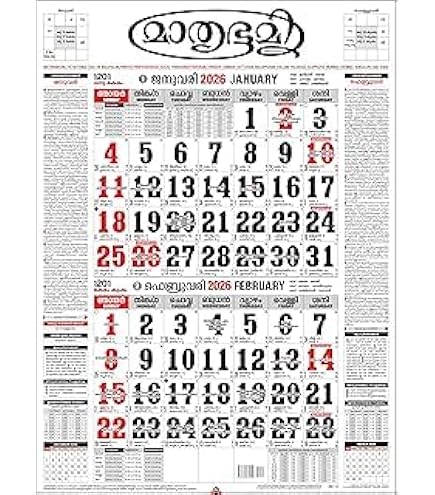
For Malayalees living abroad, a reliable Malayalam calendar isn’t just a scheduling tool; it’s a bridge. It tells you when to observe a special vratam, when a loved one’s birth star (nakshatram) falls, or when a significant festival is approaching. And when it comes to accuracy and cultural depth, the Mathrubhumi Calendar has long been a go-to for generations. This guide will dive deep into March 2026, breaking down its Malayalam significance, detailing key events, and showing you how the Mathrubhumi calendar remains an indispensable resource.
Unpacking the March 2026 Malayalam Calendar: Key Dates & Festivals
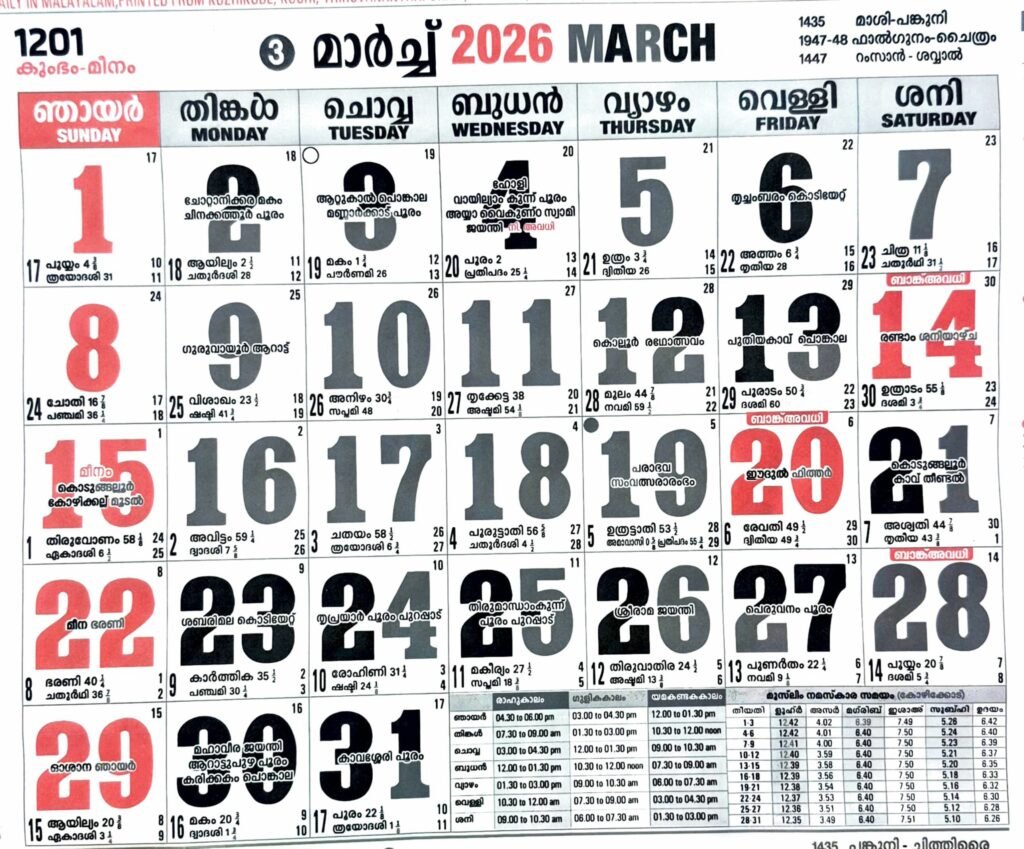
March 2026 holds a unique place in the Malayalam calendar, marking the transition from the month of Kumbham into Meenam. The month of Meenam is particularly significant, as it precedes the New Year month of Medam (Vishu) in the Kollavarsham calendar. Understanding these monthly transitions and the daily astrological components is crucial for planning.
March 2026 at a Glance: Gregorian & Malayalam Dates
Let’s break down March 2026 day by day, highlighting the Gregorian date, the corresponding Malayalam date (Kumbham/Meenam), key astrological elements like Nakshatram and Tithi, and any notable observances. This comprehensive table provides the essential information you need to plan your month effectively.
| Gregorian Date | Malayalam Date | Nakshatram (Star) | Tithi (Lunar Day) | Key Observances / Notes |
|---|---|---|---|---|
| March 1, 2026 (Sunday) | 17 Kumbham | Punarvasu | Trayodashi | Somavara Vratam (if applicable) |
| March 2, 2026 (Monday) | 18 Kumbham | Pooyam | Chaturdashi | |
| March 3, 2026 (Tuesday) | 19 Kumbham | Ayilyam | Pournami (Full Moon) | Pournami Vratam |
| March 4, 2026 (Wednesday) | 20 Kumbham | Makam | Prathama | |
| March 5, 2026 (Thursday) | 21 Kumbham | Pooram | Dwitiya | |
| March 6, 2026 (Friday) | 22 Kumbham | Uthram | Tritiya | |
| March 7, 2026 (Saturday) | 23 Kumbham | Atham | Chaturthi | |
| March 8, 2026 (Sunday) | 24 Kumbham | Chithira | Panchami | |
| March 9, 2026 (Monday) | 25 Kumbham | Chothi | Shashti | |
| March 10, 2026 (Tuesday) | 26 Kumbham | Vishakham | Saptami | |
| March 11, 2026 (Wednesday) | 27 Kumbham | Anizham | Ashtami | |
| March 12, 2026 (Thursday) | 28 Kumbham | Thrikketta | Navami | |
| March 13, 2026 (Friday) | 29 Kumbham | Moolam | Dashami | |
| March 14, 2026 (Saturday) | 30 Kumbham | Pooradam | Ekadashi | Amalaki Ekadashi Vratam |
| March 15, 2026 (Sunday) | 1 Meenam | Uthradam | Dwadashi | Meenam 1 – Sun Enters Pisces |
| March 16, 2026 (Monday) | 2 Meenam | Thiruvonam | Trayodashi | |
| March 17, 2026 (Tuesday) | 3 Meenam | Avittam | Chaturdashi | |
| March 18, 2026 (Wednesday) | 4 Meenam | Chathayam | Amavasya (New Moon) | Amavasya |
| March 19, 2026 (Thursday) | 5 Meenam | Pooruruttathi | Prathama | |
| March 20, 2026 (Friday) | 6 Meenam | Uthrattathi | Dwitiya | Cheti Chand (Sindhi New Year) |
| March 21, 2026 (Saturday) | 7 Meenam | Revathi | Tritiya | |
| March 22, 2026 (Sunday) | 8 Meenam | Ashwini | Chaturthi | |
| March 23, 2026 (Monday) | 9 Meenam | Bharani | Panchami | |
| March 24, 2026 (Tuesday) | 10 Meenam | Karthika | Shashti | |
| March 25, 2026 (Wednesday) | 11 Meenam | Rohini | Saptami | |
| March 26, 2026 (Thursday) | 12 Meenam | Mrigasiram | Ashtami | Ram Navami |
| March 27, 2026 (Friday) | 13 Meenam | Thiruvathira | Navami | |
| March 28, 2026 (Saturday) | 14 Meenam | Punartham | Dashami | |
| March 29, 2026 (Sunday) | 15 Meenam | Pooyam | Ekadashi | Kamada Ekadashi Vratam |
| March 30, 2026 (Monday) | 16 Meenam | Ayilyam | Dwadashi | |
| March 31, 2026 (Tuesday) | 17 Meenam | Makam | Trayodashi |
Note: The Nakshatram and Tithi timings can change slightly based on geographical location and specific panchangam calculations. For precise astrological timings relevant to your exact location in the USA, always cross-reference with a localized panchangam.
Major Festivals & Observances in March 2026
While the Malayalam month of Meenam doesn’t host many exclusively Kerala-specific mega-festivals, it often aligns with significant Hindu observances that are widely celebrated by Malayalees and other Indian communities globally. Here are some key dates you’ll want to mark:
- March 14, 2026 (Saturday): Amalaki Ekadashi Vratam – A day for fasting and devotion, dedicated to Lord Vishnu, believed to bestow great merit.
- March 15, 2026 (Sunday): Meenam 1 – This marks the sun’s transition into the Pisces (Meenam) zodiac sign, initiating the Malayalam month of Meenam. It’s a culturally important day, setting the tone for the coming month.
- March 18, 2026 (Wednesday): Amavasya (New Moon) – A day often observed for ancestral rites and spiritual reflection.
- March 20, 2026 (Friday): Cheti Chand (Sindhi New Year) – While primarily a Sindhi festival, it’s a reminder of the diverse cultural tapestry within the Indian diaspora, often noted in comprehensive calendars.
- March 26, 2026 (Thursday): Ram Navami – A hugely significant Hindu festival celebrating the birth of Lord Rama. Many Malayalees observe this with special prayers, pujas, and fasting.
- March 29, 2026 (Sunday): Kamada Ekadashi Vratam – Another important Ekadashi dedicated to Lord Vishnu, believed to fulfill desires and purify sins.
The Mathrubhumi Calendar: A Trusted Companion for Malayalees
When you mention ‘Malayalam calendar,’ the name Mathrubhumi often comes up first. For generations, Mathrubhumi has been synonymous with reliable, accurate, and culturally rich calendars. It’s not just a collection of dates; it’s a daily guide rooted in tradition and meticulous astronomical calculations.

Why is Mathrubhumi so highly regarded? It’s the legacy of trust. Mathrubhumi, a leading media house in Kerala, has consistently delivered calendars that are not only accurate in their astrological details but also beautifully encapsulate the spirit of Kerala. Their calendars are known for their detailed Panchangam, information on auspicious timings (Muhurtham), and comprehensive festival listings, making them an indispensable household item.
Accessing Your Mathrubhumi Calendar for 2026
Living in the USA, you might wonder how to get your hands on this esteemed calendar. Fortunately, Mathrubhumi has adapted to the digital age, making its invaluable content more accessible than ever.
- Digital Options: The most convenient way for many in the USA is through the Mathrubhumi Calendar app, available on both Android and iOS. These apps often provide daily Panchangam, festival alerts, and other useful features. Many reputable Malayalam news portals and calendar websites (though not Mathrubhumi directly hosting March 2026 calendar as a PDF on their main site at the time of this writing) often reference or derive their data from such authoritative sources.
- Physical Calendars: While it might require a bit more effort, physical Mathrubhumi wall or desk calendars are available. You might find them in specialty Indian grocery stores in areas with large Malayalee populations, or you could order them online through Indian e-commerce sites (like Amazon India) that ship internationally. Planning ahead for these is key!
What Makes the Mathrubhumi Calendar Stand Out?
Beyond its reputation, the Mathrubhumi calendar distinguishes itself through several key features:
- Accuracy: Rigorous astrological calculations ensure precise timings for Nakshatram, Tithi, Rahu Kalam, and Gulika Kalam.
- Comprehensive Panchangam: It provides a daily snapshot of the lunar and stellar positions, crucial for determining auspicious times for life events.
- Festival & Vratam Details: Clear listings of Hindu, Christian, and Islamic festivals, along with details for fasting days.
- Cultural Relevance: Often includes snippets of cultural information, proverbs, or regional holiday details that deepen your connection to Kerala.
- User-Friendly Format: Whether in physical or digital form, the layout is typically intuitive, making complex astrological data easy to comprehend.
Understanding the Malayalam Calendar System: Beyond Just Dates
To truly appreciate the March 2026 Malayalam calendar, it helps to grasp the foundational principles of the Kollavarsham system. It’s much more than a simple date tracker; it’s a cosmic clock interwoven with daily life and spiritual practice.
The Kollavarsham & Gregorian Connection
The Malayalam calendar, known as Kollavarsham or the Kolla Era, is a sidereal solar calendar that originated in Kollam, Kerala. Unlike the Gregorian calendar, which is purely solar, the Malayalam calendar combines solar and lunar elements for its calculations. Each Malayalam month corresponds to the sun’s transit through a specific zodiac sign.
- Kumbham: The month preceding Meenam, typically spanning mid-February to mid-March.
- Meenam: The month we’re focusing on for March 2026, usually from mid-March to mid-April. It corresponds to the sun’s presence in the Pisces constellation.
- Medam: The subsequent month, starting around mid-April, which typically marks Vishu, the Malayalam New Year.
Key Elements: Nakshatram, Tithi, & Yogam
These terms are the building blocks of the daily Panchangam (the five limbs of the Hindu calendar). Understanding them empowers you to use the calendar more meaningfully:
-
Nakshatram (Birth Star): There are 27 Nakshatrams, or lunar mansions, each representing a specific constellation through which the moon passes. Your birth Nakshatram is considered highly significant in Malayalam astrology, influencing personality and life events. Knowing the daily Nakshatram helps determine auspicious timings (Muhurtham) for weddings, housewarmings, or starting new ventures.
-
Tithi (Lunar Day): A Tithi is a lunar day, defined by the angular distance between the sun and the moon. There are 15 Tithis in a lunar fortnight, from Pratipada (first day) to Purnima (full moon) or Amavasya (new moon). Tithis are crucial for identifying auspicious and inauspicious days, observing vratams, and celebrating festivals.
-
Yogam & Karanam: While less commonly discussed by laypersons, these are other astrological elements calculated from the positions of the sun and moon. Yogam (27 types) relates to the combination of the sun and moon’s longitudes, while Karanam (11 types) is half of a Tithi. Both further refine the astrological quality of a day.
The Significance of Vratams and Auspicious Days
Many dates in the Malayalam calendar are marked by specific observances called vratams (fasts). These are not merely abstinence from food; they are spiritual practices involving prayers, meditation, and self-discipline to seek divine blessings, atone for actions, or fulfill vows. The Ekadashi vratams, occurring twice a lunar month, are particularly important for many devotees of Lord Vishnu.

Auspicious days (Muhurtham) are determined by a combination of Nakshatram, Tithi, Yogam, and the positions of other planets. Choosing the right Muhurtham is believed to ensure success and prosperity for significant events.
Navigating Other Reputable Malayalam Calendar Resources
While Mathrubhumi holds a special place, it’s worth knowing that several other excellent resources exist for the Malayalam calendar. These can serve as cross-references or offer slightly different features:
- Prokerala: Widely known for its detailed online Panchangam and calendar features, including daily Nakshatram, Tithi, and Rahu Kalam for various locations. It’s a very comprehensive digital resource.
- Drik Panchang: Another highly respected portal that offers detailed Hindu and Malayalam Panchangam information, allowing users to customize for their specific location and time zone. Its depth of information is significant.
- Malayala Manorama Calendar: Similar to Mathrubhumi, Manorama is another prominent media house in Kerala that publishes popular and reliable calendars, both physical and digital.
- Malayalamcalendar.co.in: A straightforward website that often provides monthly calendar views and festival lists, sometimes with PDF download options.
Each of these has its strengths. Prokerala and Drik Panchang excel in detailed, customizable astrological data, while Mathrubhumi and Manorama are celebrated for their traditional accuracy and broad cultural appeal, often integrated with daily life insights.
Practical Tips for Using Your Malayalam Calendar in the USA
Living outside Kerala presents a few unique considerations when using your Malayalam calendar, but with a few tips, you can fully integrate it into your life:
-
Time Zone Adjustments: Most traditional Malayalam calendars or apps might default to Indian Standard Time (IST). When observing a vratam or checking an auspicious time, remember to adjust for your local USA time zone (e.g., Eastern, Central, Pacific). Many digital calendars, like Drik Panchang, allow you to set your specific location for precise local calculations.
-
Integrating with Digital Tools: Don’t let your cultural calendar be isolated. Use the dates and observances from your Mathrubhumi calendar to populate your Google Calendar, Outlook, or other digital planners. Set reminders for Ekadashis or important festival preparations.
-
Connecting with Community: Many Malayalee associations and Hindu temples across the USA organize events for major festivals. Your Malayalam calendar helps you know when these will occur, allowing you to participate and foster community bonds. Check local temple schedules for specific observances.
-
Educating the Next Generation: Use the calendar as a teaching tool. Explain the significance of different months, stars, and festivals to your children and grandchildren. It’s a wonderful way to pass on cultural knowledge and keep traditions alive, even far from the homeland.
-
Personalized Planning: Beyond general festivals, use the Nakshatram details to track your own birth star and that of your family members. This can be used for personal prayer, or to plan small, auspicious family gatherings on those days.
Embracing the March 2026 Malayalam Calendar, especially from a trusted source like Mathrubhumi, is more than just marking dates. It’s about keeping a vibrant cultural heritage alive, planning your life in harmony with ancient wisdom, and strengthening your connection to Kerala, no matter where you are in the world.
So go ahead, explore the depths of March 2026, and let the timeless rhythm of the Malayalam calendar guide your days with purpose and tradition.
Frequently Asked Questions
What is the Malayalam month for March 2026?
March 2026 will predominantly feature two Malayalam months: the beginning of March will be the latter half of Kumbham, transitioning into Meenam from around March 15th onwards. So, you’ll experience both late Kumbham and Meenam in March 2026.
Where can I find the Mathrubhumi Calendar for 2026 online?
For digital access, the Mathrubhumi Calendar is often available via its dedicated mobile application on both Android and iOS platforms. While a direct PDF download of their entire calendar might not be readily available on their main website, the app provides comprehensive daily astrological details and festival information.
Are the festival dates in the Malayalam calendar different from the Gregorian calendar?
Yes, festival dates in the Malayalam calendar (based on lunar-solar calculations) often differ from Gregorian dates year-to-year. While some Hindu festivals like Ram Navami may have a fixed Gregorian equivalent for a given year, their alignment with specific Malayalam Tithis or Nakshatrams will vary.
What are Nakshatram and Tithi, and why are they important?
Nakshatram refers to the 27 lunar constellations or birth stars through which the moon passes, crucial for personal astrology and auspicious timings. Tithi is a lunar day, determined by the angular distance between the sun and moon, vital for observing fasts (vratams) and festivals. Both are fundamental for daily astrological relevance in the Malayalam calendar.
Can I download a PDF version of the March 2026 Malayalam Calendar?
While direct official Mathrubhumi PDFs for a specific month like March 2026 might not always be publicly offered, many independent Malayalam calendar websites or apps do provide monthly PDF downloads or printable versions based on similar panchangam data. Check reputable sources like Prokerala or Malayalamcalendar.co.in, which sometimes offer this.
How accurate is the Mathrubhumi calendar?
The Mathrubhumi Calendar is highly regarded for its accuracy, built upon traditional astrological and astronomical calculations. It is considered one of the most reliable sources for Kollavarsham dates, Nakshatram, Tithi, Rahu Kalam, and festival observances among Malayalees globally.
Is the Malayalam calendar relevant for people living outside Kerala, like in the USA?
Absolutely! For Malayalees in the USA, the Malayalam calendar is a vital tool for cultural connection. It helps plan religious observances, track personal birth stars, and stay aligned with family traditions back home, fostering a sense of identity and community even across continents.
