March 2026 Tamil Daily Calendar: Your Essential Guide to Auspicious Living
Are you looking to navigate March 2026 with an eye towards traditional Tamil timings and auspicious moments? Perhaps you’re planning an important event, seeking spiritual alignment, or simply want to connect more deeply with your heritage, even from afar in the USA. You’ve landed in the right place.
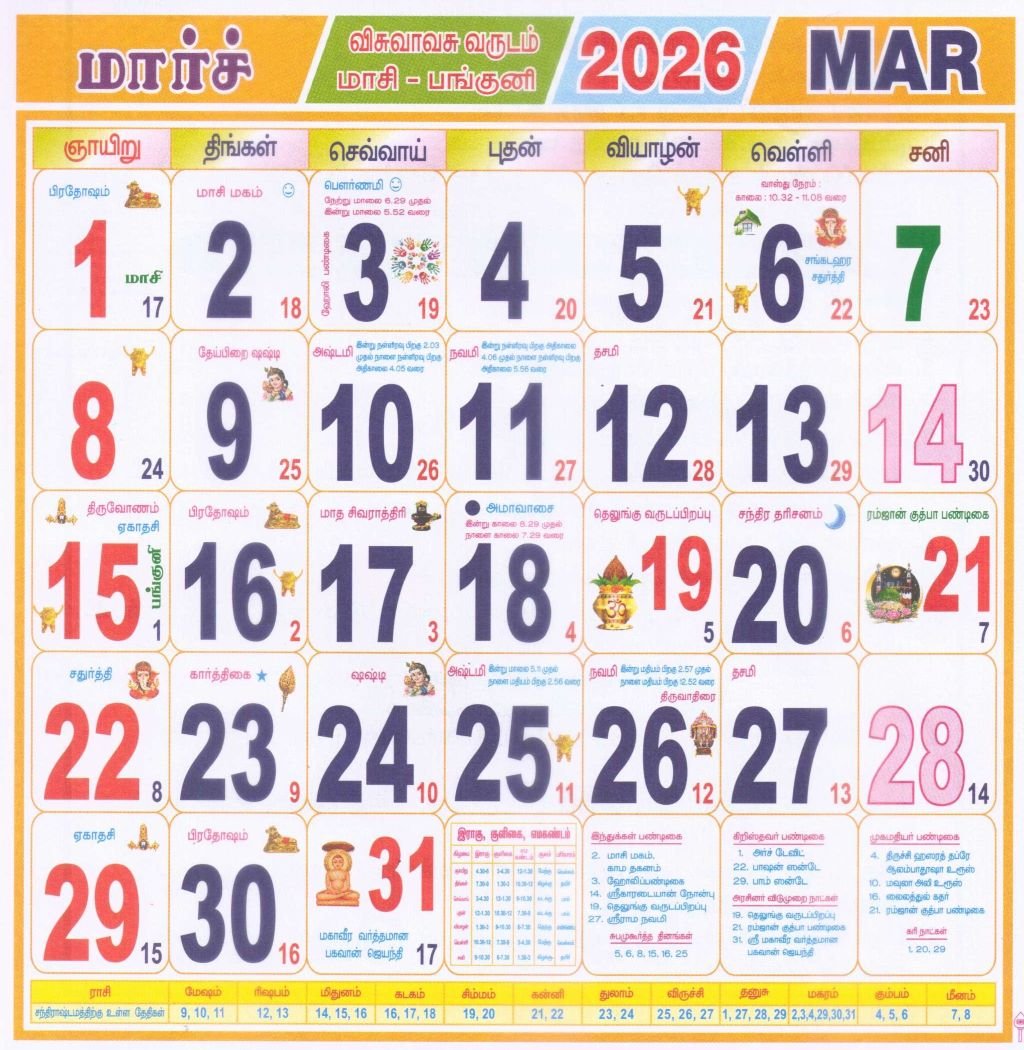
The Tamil Daily Calendar isn’t just a list of dates; it’s a profound tool rooted in ancient wisdom, offering insights into the cosmic energies of each day. It guides millions in making informed decisions about everything from major life events to daily routines. For March 2026, we’re diving deep to give you more than just a calendar – we’re providing the understanding to truly live by it, no matter where you are.

Forget generic calendars. This guide is your definitive resource to understanding March 2026 through the lens of the Tamil calendar, packed with actionable insights, detailed explanations, and practical advice to help you seize auspicious opportunities and navigate challenges with confidence.
Decoding the Tamil Calendar: More Than Just Dates
At its heart, the Tamil calendar is a lunisolar calendar, meaning it factors in both the sun’s and moon’s positions. This intricate system is far more detailed than a standard Gregorian calendar, offering granular daily insights crucial for those who follow traditional Tamil practices. It’s a blend of astronomy and astrology, providing a roadmap for daily living.
The Core Components of Your Daily Tamil Calendar
To truly use a Tamil daily calendar, you need to understand its building blocks. These aren’t just arbitrary terms; they are calculations based on celestial movements that dictate the day’s inherent energies.
- Panchangam: The Five Limbs of Time
The term “Panchangam” literally means “five limbs” (Pancha = five, Angam = limb). These five elements are the bedrock of daily Tamil astrological timing: - Thithi (Lunar Day): This is the angular distance between the Sun and the Moon. There are 15 thithis in a waxing cycle (Shukla Paksha) and 15 in a waning cycle (Krishna Paksha). Each thithi has specific characteristics, influencing the suitability of certain activities.
- Nakshatra (Lunar Mansion/Star): The 27 nakshatras are constellations or lunar mansions through which the Moon travels. Each nakshatra lasts for approximately one day and imparts unique qualities and influences. Understanding the daily nakshatra is crucial for astrological readings and auspicious timings.
- Yoga (Combination): Derived from the combined longitudes of the Sun and Moon, there are 27 yogas. Each yoga carries its own specific energy, favorable or unfavorable for different actions.
- Karana (Half Thithi): A thithi is divided into two karanas. There are 11 karanas, each with its own specific nature.
- Vaaram (Day of the Week): While seemingly simple, the planetary ruler of each day (e.g., Monday ruled by Moon, Tuesday by Mars) also contributes to its overall energy.
- Rahu Kalam, Yamagandam, Kuligai: Understanding Inauspicious Timings
These are specific periods each day considered inauspicious for starting new ventures, travel, or significant events. Ignoring them is believed to lead to delays or negative outcomes. - Rahu Kalam: Associated with the shadow planet Rahu, this period is generally avoided for all new beginnings.
- Yamagandam: Linked to Yama, the lord of death, this time is also considered highly inauspicious for starting anything new.
- Kuligai: While less severe than Rahu Kalam or Yamagandam, Kuligai is still advised to be avoided for important endeavors, as things done during this time tend to repeat.
- Nalla Neram (Auspicious Times): How to Identify and Utilize Them
Conversely, Nalla Neram refers to the “good times” of the day. These are periods calculated to be highly favorable for starting new tasks, signing agreements, travelling, or performing auspicious ceremonies. Consulting the Nalla Neram is a cornerstone of daily Tamil planning. - Chandrashtamam: What it is and its Implications
This refers to the period when the Moon transits the 8th house from your birth moon sign (Rasi). It’s considered an inauspicious period where one might experience mental stress, conflicts, or obstacles. Being aware of your Chandrashtamam period, typically lasting about 2.25 days, allows you to exercise caution and avoid major decisions.
Thithi & Nakshatra Specifics for March 2026: General Trends
March 2026, for followers of the Tamil calendar, holds several significant phases. The month will see shifts through various thithis and nakshatras, each bringing its unique energetic blueprint. Understanding these shifts helps you align your activities with the cosmic flow.
For instance, Amavasai (New Moon), which falls around the 19th of March 2026, is a powerful day for ancestral prayers and spiritual reflection, often avoided for materialistic beginnings. On the other hand, the days leading up to and after Amavasai will be governed by different thithis, each suitable for specific actions.
March 2026: Key Dates, Festivals, and Observances
March 2026 is an active month in the Tamil calendar, marked by several important festivals and observances. These aren’t just holidays; they are opportunities for spiritual growth, cultural celebration, and community bonding.
Major Tamil Festivals in March 2026
Here’s a look at some of the significant observances within March 2026, according to the Tamil calendar:
| Date (Approx.) | Festival/Observance | Significance |
|---|---|---|
| March 19, 2026 (Thursday) | Amavasai | New Moon day, highly significant for ancestral rituals (Tarpanam) and spiritual practices. Generally avoided for new ventures. |
| March 19, 2026 (Thursday) | Ugadi / Gudi Padwa (Telugu/Kannada/Marathi New Year) | While primarily celebrated by other South Indian communities, it often coincides with important celestial alignments relevant to panchangam calculations. Marks the beginning of a new year in some calendars. |
| March 20, 2026 (Friday) | Chandra Darshan | Observance of the first sighting of the moon after Amavasai, considered auspicious for new beginnings and prayers to the Moon god. |
| March 22, 2026 (Sunday) | Chaturthi Vratham | A fasting day dedicated to Lord Ganesha, observed on the fourth day after the New Moon. Seeking blessings for obstacle removal. |
| March (various dates) | Pradosham Vratam | Twice a month, this sacred fasting period (3 hours before and after sunset) is dedicated to Lord Shiva and Parvati, observed on the 13th lunar day (Trayodashi) of both waxing and waning moon phases. Dates vary. |
Note: Always verify exact dates with a trusted local Tamil calendar or panchangam for your specific location, as timings can shift slightly based on geographical coordinates.
Auspicious Days for New Beginnings in March 2026
The Tamil calendar is particularly invaluable for identifying Subha Muhurtham, which are highly auspicious periods for significant life events. Whether you’re planning a wedding, a housewarming, starting a new business, or even registering a new vehicle, choosing the right Muhurtham is believed to ensure success and minimize obstacles.
In March 2026, days with favorable combinations of thithi, nakshatra, and other panchangam elements will be ideal. You’ll want to look for days free from Rahu Kalam, Yamagandam, and Kuligai, and ideally, not within your Chandrashtamam period. While specific dates require a detailed panchangam for March 2026, generally, most waxing moon days (Shukla Paksha) are preferred for positive undertakings, provided other elements are also favorable.

Avoiding Inauspicious Periods: Rahu Kalam and More
Knowing when to pause or avoid starting something new is just as crucial as knowing when to begin. Rahu Kalam, Yamagandam, and Kuligai are daily segments that are best avoided for auspicious activities. These periods rotate throughout the day, ensuring that every day has both auspicious and inauspicious windows.
Here’s a general guideline for these inauspicious timings based on the day of the week. Remember, these timings are approximate and vary based on sunrise/sunset for your specific location (e.g., USA cities vs. India).
| Day of the Week | Rahu Kalam (Approx.) | Yamagandam (Approx.) | Kuligai (Approx.) |
|---|---|---|---|
| Monday | 7:30 AM – 9:00 AM | 10:30 AM – 12:00 PM | 1:30 PM – 3:00 PM |
| Tuesday | 3:00 PM – 4:30 PM | 9:00 AM – 10:30 AM | 12:00 PM – 1:30 PM |
| Wednesday | 12:00 PM – 1:30 PM | 7:30 AM – 9:00 AM | 10:30 AM – 12:00 PM |
| Thursday | 1:30 PM – 3:00 PM | 6:00 AM – 7:30 AM | 9:00 AM – 10:30 AM |
| Friday | 10:30 AM – 12:00 PM | 3:00 PM – 4:30 PM | 7:30 AM – 9:00 AM |
| Saturday | 9:00 AM – 10:30 AM | 1:30 PM – 3:00 PM | 6:00 AM – 7:30 AM |
| Sunday | 4:30 PM – 6:00 PM | 12:00 PM – 1:30 PM | 3:00 PM – 4:30 PM |
Your Daily Planner: How to Use the March 2026 Tamil Calendar Effectively
For those living outside of India, particularly in the USA, integrating the Tamil calendar into daily life requires a bit of thoughtful planning. But it’s entirely doable and incredibly rewarding.
Integrating Tamil Calendar into Your Western Schedule (for USA audience)
The biggest hurdle for many is the time zone difference. A Tamil calendar calculated for Chennai, India, will have different sunrise/sunset times, which impacts the precise start and end of Rahu Kalam, Nalla Neram, and other daily periods for someone in New York or Los Angeles.
Here’s how to bridge the gap:
- Location-Specific Calendars: Whenever possible, seek out online Tamil calendars or apps that allow you to set your specific city or time zone in the USA. This is paramount for accurate timings.
- Cross-Reference: Keep your Gregorian calendar handy. Mark down the Tamil festival dates and auspicious timings directly onto your Western planner.
- Daily Check-in: Make it a habit to quickly check the day’s Panchangam, Nalla Neram, and Rahu Kalam in the morning. This simple act can help you plan meetings, travel, or even important conversations for the most favorable windows.
- Flexibility: While adhering to auspicious timings is ideal, understand that life in the Western world doesn’t always allow for perfect alignment. Do your best, prioritize major events, and remember the intention behind your actions is often as important as the timing.
A Sample Day in March 2026: What to Look For
Let’s imagine a typical day in March 2026. Here’s what you might see on a comprehensive Tamil Daily Calendar (for a US location like New York, for illustrative purposes – actual timings will vary):
Example: March 10, 2026 (Tuesday)
- Sunrise: 6:20 AM
- Sunset: 6:05 PM
- Thithi: Dwitiya (2nd Lunar Day, Shukla Paksha – Waxing Moon)
- Nakshatra: Ashwini
- Yoga: Siddha Yoga
- Karana: Kaulava
- Rahu Kalam: 3:30 PM – 4:59 PM
- Yamagandam: 9:15 AM – 10:44 AM
- Kuligai: 12:15 PM – 1:44 PM
- Nalla Neram: 7:30 AM – 8:30 AM & 10:00 AM – 11:00 AM
- Chandrashtamam for: (Specify Rasi – e.g., Virgo Rasi)
How to use this: On March 10th, you might plan your most important meetings or start a new project during the morning Nalla Neram. You’d avoid signing critical documents during Rahu Kalam in the afternoon, and perhaps use the Yamagandam period for routine tasks that don’t require significant initiative. If your Rasi is Virgo, you’d be mindful of interactions and major decisions throughout the day.
Beyond Daily: Monthly Overviews and Future Planning
While the ‘daily’ aspect is crucial, don’t overlook the broader monthly and yearly perspectives. Many Tamil calendars offer:
- Monthly Festival Highlights: A quick glance at the month’s significant religious and cultural events.
- Subha Muhurtham Lists: Often, calendars will highlight specific auspicious dates for weddings, housewarmings, and other ceremonies for the entire month or even year.
- Rasi Palan: Monthly or daily horoscopes based on your moon sign, offering general guidance on health, finance, and relationships.
Using these features helps you plan both your immediate day and your longer-term goals with cosmic alignment.
The Deeper Meaning: Cultural Significance and Astrological Insights
The enduring popularity of the Tamil Daily Calendar, even among the diaspora in the USA, speaks to its profound cultural and spiritual value. It’s more than just a scheduling tool; it’s a living link to a rich heritage.
Connection to Tamil Heritage and Traditions
For many Tamilians, particularly those living abroad, the calendar is a vital thread connecting them to their roots. It helps preserve traditions, observe fasts (Vratham), and celebrate festivals in alignment with how they would be observed back home. It fosters a sense of community, even when thousands of miles away, as families and friends can align their observances.
It teaches children about cultural practices, the stories behind festivals, and the importance of mindful living guided by ancient principles. It’s a repository of collective memory and identity.
Astrological Influences on Daily Life
Every element of the Panchangam, from the Thithi to the Nakshatra, is steeped in Vedic astrological principles. These calculations reflect the dynamic positions of planets and stars, which are believed to exert specific influences on Earth and its inhabitants.
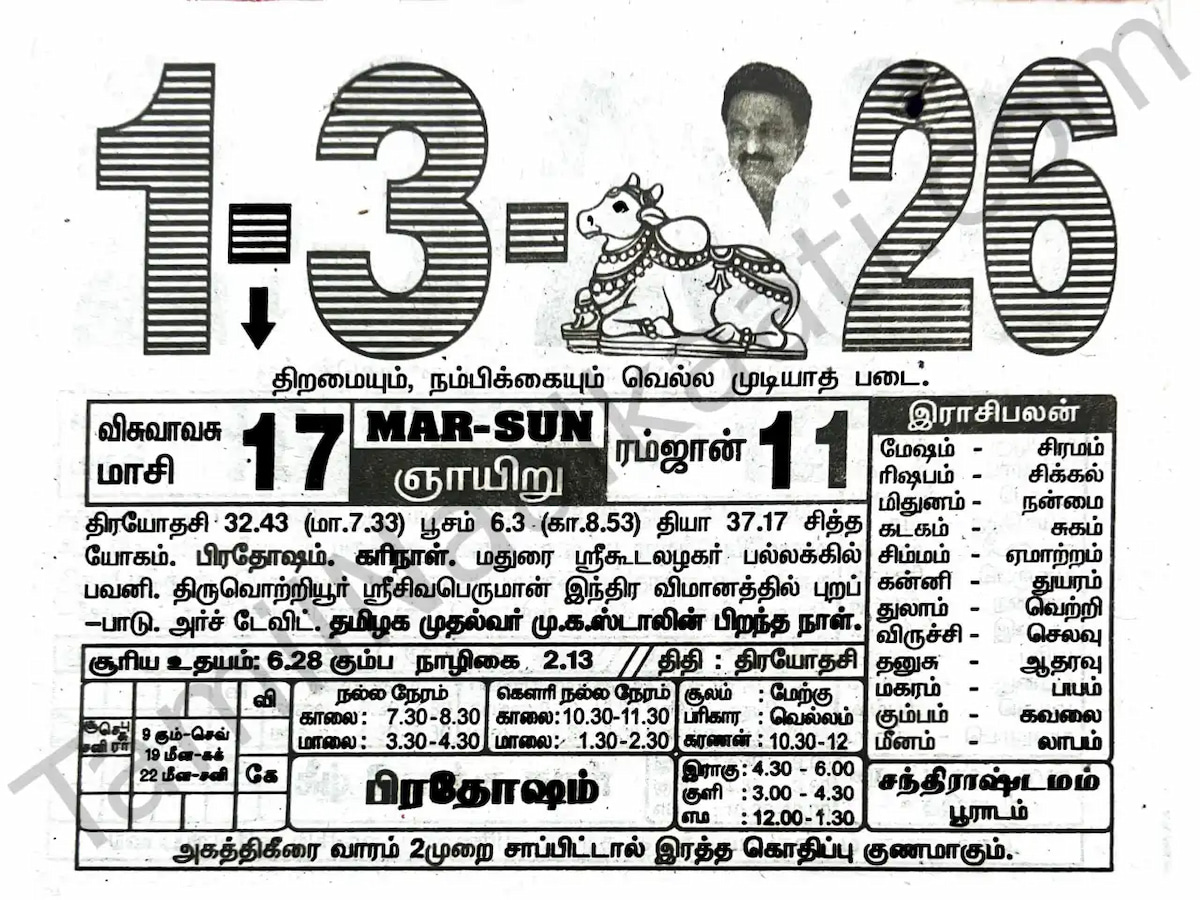
- The Nakshatra, for instance, influences one’s personality, destiny, and the energy of the day.
- The Yoga indicates the strength or weakness of planetary combinations.
- The Vaaram (day of the week) brings the energy of its ruling planet.
By understanding these daily influences, practitioners believe they can work *with* the cosmic flow, rather than against it, leading to greater harmony, success, and well-being. This isn’t about blind adherence but about informed choice and mindful living, leveraging ancient wisdom for modern challenges.
Your Digital Tamil Calendar: Tools and Resources
In today’s digital age, accessing a reliable Tamil Daily Calendar for March 2026 is easier than ever. Numerous websites and mobile applications offer this vital information, often with customizable options for location and language.

Key Features to Look For in an Online Tamil Calendar
When selecting your digital Tamil calendar, prioritize features that enhance accuracy and usability, especially for a USA audience:
- Location-Based Calculations: This is non-negotiable. Ensure the calendar allows you to input your specific city or time zone in the USA for precise sunrise/sunset dependent timings (Rahu Kalam, Nalla Neram, etc.).
- Detailed Panchangam: Look for a calendar that provides all five limbs: Thithi, Nakshatra, Yoga, Karana, and Vaaram, along with their start and end times.
- Festival Lists: A clear, comprehensive list of festivals and observances for the month.
- Subha Muhurtham: Specific listings for auspicious times for major events.
- User-Friendly Interface: An easy-to-navigate design that presents complex information clearly.
- Language Options: Availability in both Tamil and English can be very helpful.
Websites like Prokerala, Drikpanchang, and even some dedicated Tamil calendar sites (ensure they offer location customization) are good starting points. Always cross-reference a few sources if you’re planning extremely critical events.
Planning Ahead: Why March 2026 is Just the Beginning
Understanding the March 2026 Tamil Daily Calendar is an excellent first step. But the true power comes from consistent engagement. Make it a part of your daily ritual to check the calendar, plan your activities, and reflect on the energies of the day. This practice deepens your connection to your culture, enhances your decision-making, and brings a profound sense of purpose to your everyday life.
As you become more attuned to these rhythms, you’ll find that the Tamil calendar is not just an ancient artifact but a vibrant, living guide to navigating the complexities of the modern world with grace and wisdom.
Embrace the Wisdom of the Tamil Calendar for March 2026
The March 2026 Tamil Daily Calendar offers a powerful framework for intentional living. By understanding its core components – the Panchangam, auspicious Nalla Neram, and periods to avoid like Rahu Kalam – you gain an invaluable tool for planning your month. For those in the USA, adapting these ancient timings to your local context is key, and with the right resources, it’s a seamless integration. Embrace this rich cultural heritage and let the wisdom of the Tamil calendar guide you to a more harmonious and purposeful March 2026.
Frequently Asked Questions
What is a Tamil Daily Calendar?
A Tamil Daily Calendar is a lunisolar calendar that provides daily astrological and astronomical information (Panchangam) based on traditional Tamil calculations. It includes details like auspicious (Nalla Neram) and inauspicious (Rahu Kalam, Yamagandam) timings, thithis (lunar days), nakshatras (lunar mansions), and lists of festivals and observances for each day.
Why are the timings like Nalla Neram and Rahu Kalam important?
Nalla Neram (Auspicious Time) periods are considered highly favorable for starting new ventures, performing important ceremonies, or undertaking significant activities, believed to bring success and positive outcomes. Rahu Kalam, Yamagandam, and Kuligai are specific daily periods considered inauspicious for initiating new tasks, travel, or major decisions, as they are thought to lead to obstacles or negative results.
How does location (e.g., USA vs. India) affect Tamil Calendar calculations?
Location significantly affects calculations. Timings for sunrise and sunset, which dictate the precise start and end of daily periods like Rahu Kalam and Nalla Neram, vary greatly by geographical location and time zone. For accurate information, it is crucial to use a Tamil calendar or app that allows you to specify your exact city or time zone in the USA, rather than relying on calculations made for India.
What is Panchangam, and why is it crucial in a Tamil Calendar?
Panchangam, meaning ‘five limbs,’ is the core of a Tamil Daily Calendar. It comprises five key astrological elements: Thithi (lunar day), Nakshatra (star/lunar mansion), Yoga (planetary combination), Karana (half of a thithi), and Vaaram (day of the week). These elements collectively describe the energetic quality of each day, guiding practitioners in identifying auspicious or inauspicious periods for various activities.
Are there any major festivals in March 2026 according to the Tamil Calendar?
Yes, March 2026 includes several significant observances. Key dates include Amavasai (New Moon) around March 19th, which is important for ancestral rites, and Chandra Darshan on March 20th. Other important observances like Chaturthi Vratham (dedicated to Lord Ganesha) and recurring Pradosham Vratam (dedicated to Lord Shiva) will also occur during the month. Always consult a specific March 2026 Tamil calendar for exact local dates and timings.
Where can I find a reliable March 2026 Tamil Daily Calendar online?
You can find reliable March 2026 Tamil Daily Calendars on reputable websites and mobile applications. Look for platforms like Prokerala, Drikpanchang, or dedicated Tamil calendar apps that offer location-specific calculations for your city in the USA. Ensure the source provides detailed Panchangam information and allows for time zone adjustments to ensure accuracy.
What is Chandrashtamam?
Chandrashtamam is an astrological period when the Moon transits through the eighth house from one’s birth Moon sign (Rasi). It typically lasts for about 2.25 days and is considered an inauspicious time during which individuals may experience mental stress, increased challenges, or emotional disturbances. It is generally advised to be cautious and avoid major decisions or important undertakings during your Chandrashtamam period.
