Marathi Calendar 2026 March Mahina: Your Essential Guide to Festivals & Auspicious Dates
Are you looking for the Marathi Calendar for March 2026? Perhaps you’re planning ahead for festivals, important family events, or just want to stay connected to your cultural roots while living in the USA. Whatever your reason, you’ve landed in the right place. Navigating a traditional lunar calendar can feel daunting, especially when it overlaps with the Gregorian calendar, but I’m here to make it crystal clear for you.
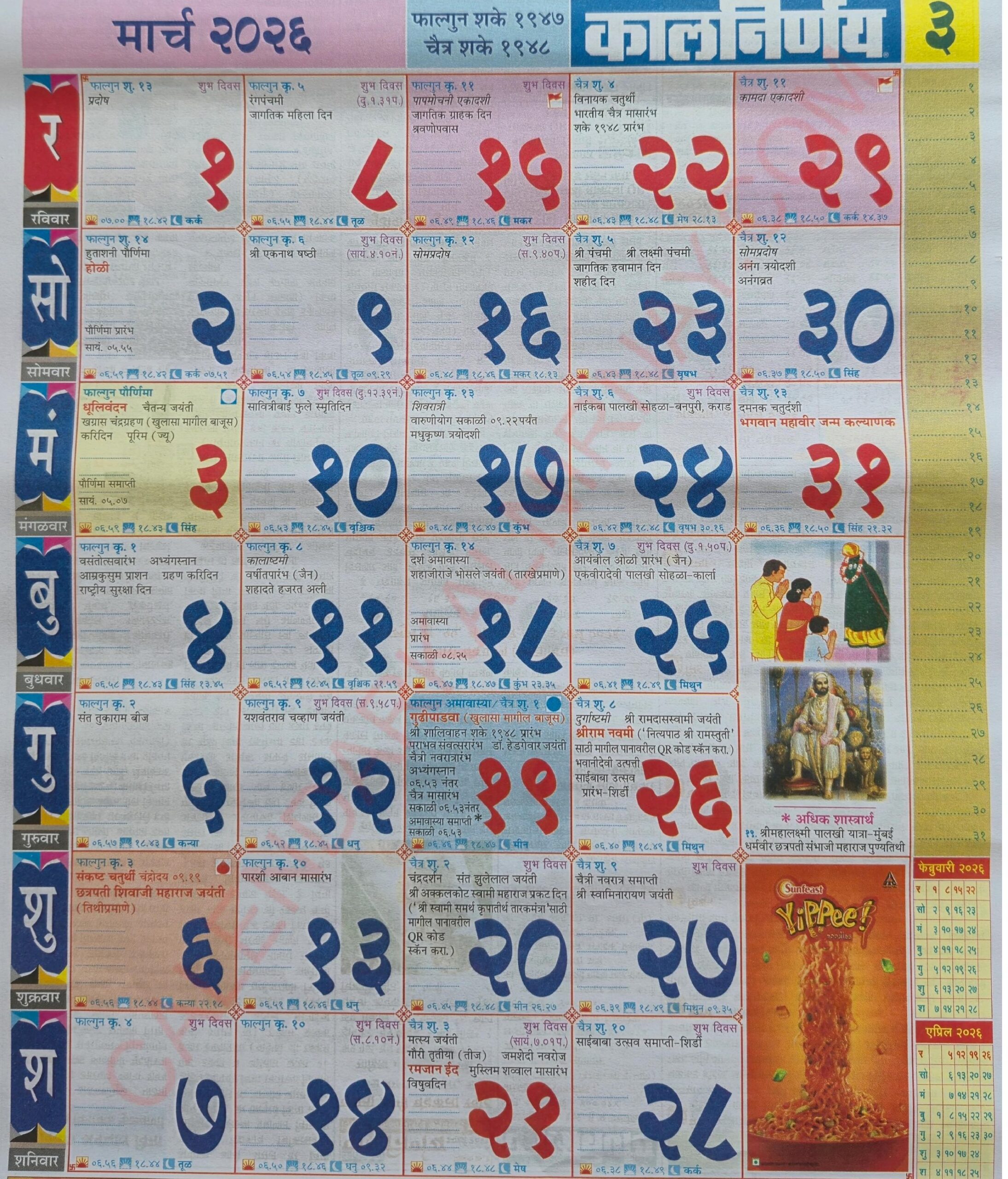
March 2026 is a particularly vibrant month in the Marathi calendar, as it marks the transition from the end of the Hindu lunar month of Phalguna into the auspicious beginning of Chaitra Mahina – ushering in the Marathi New Year, Gudi Padwa, and the start of Chaitra Navratri. This guide will provide you with a comprehensive breakdown of all the significant dates, festivals, and cultural nuances you need to know for March 2026.
March 2026 in the Marathi Calendar: An Overview
The Marathi calendar, like other Hindu calendars, is primarily a lunisolar calendar, meaning it accounts for both the moon’s phases and the sun’s annual cycle. Unlike the Gregorian calendar, which has fixed month lengths, Marathi months (called Mahina) are determined by the lunar cycle, typically lasting 29 or 30 days. Each Mahina is divided into two fortnights: the Shukla Paksha (waxing moon period) and the Krishna Paksha (waning moon period).
March 2026 primarily encompasses the latter part of Phalguna Mahina and the beginning of Chaitra Mahina. This overlap is crucial because it includes major festivals like Holi, Holika Dahan, Gudi Padwa, and the commencement of Chaitra Navratri and Rama Navami. Understanding these transitions helps you meticulously plan for religious observances, fasts (Vrats), and family gatherings.
For those in the USA, knowing these dates is a beautiful way to maintain heritage, educate younger generations, and participate in traditions regardless of geographical distance. Let’s dive into the specifics of March 2026.
Your Comprehensive Marathi Calendar 2026 for March
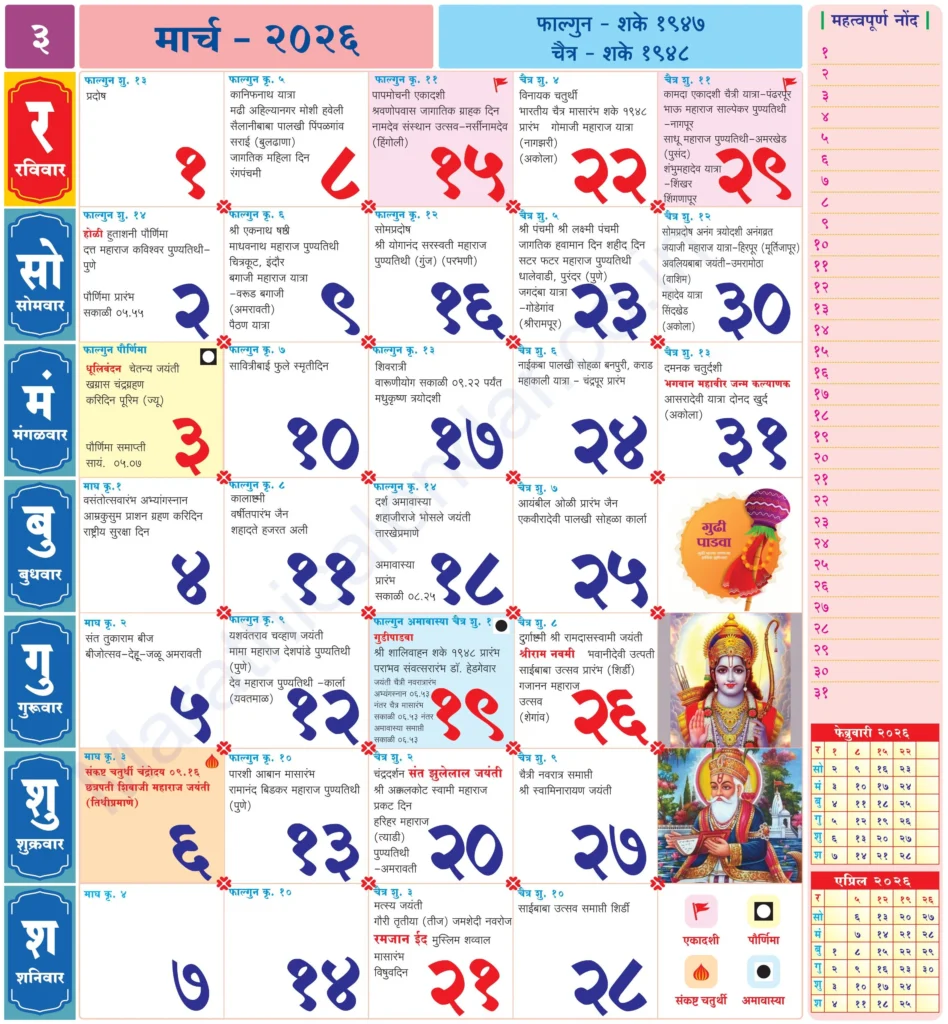
Here’s your detailed, easy-to-read Marathi calendar for March 2026, highlighting all the important dates, Tithis (lunar days), Pakshas (fortnights), and major festivals. This table is designed to give you a clear, day-by-day snapshot, ensuring you don’t miss any significant event.
Key Marathi Dates & Festivals in March 2026
| Gregorian Date | Day | Marathi Tithi (पक्ष) | Marathi Mahina | Major Festivals / Events / Vrats |
|---|---|---|---|---|
| March 1 | Sunday | Krishna Trayodashi (त्रयोदशी) | Phalguna (फाल्गुन) | |
| March 2 | Monday | Krishna Chaturdashi (चतुर्दशी) | Phalguna (फाल्गुन) | Masik Shivaratri |
| March 3 | Tuesday | Krishna Amavasya (अमावस्या) | Phalguna (फाल्गुन) | Phalguna Amavasya, Holika Dahan |
| March 4 | Wednesday | Shukla Pratipada (प्रतिपदा) | Phalguna (फाल्गुन) | Holi (धूलिवंदन), Phalguna Shukla Pratipada |
| March 5 | Thursday | Shukla Dwitiya (द्वितीया) | Phalguna (फाल्गुन) | Rang Panchami |
| March 6 | Friday | Shukla Tritiya (तृतीया) | Phalguna (फाल्गुन) | |
| March 7 | Saturday | Shukla Chaturthi (चतुर्थी) | Phalguna (फाल्गुन) | |
| March 8 | Sunday | Shukla Panchami (पंचमी) | Phalguna (फाल्गुन) | |
| March 9 | Monday | Shukla Shashthi (षष्ठी) | Phalguna (फाल्गुन) | |
| March 10 | Tuesday | Shukla Saptami (सप्तमी) | Phalguna (फाल्गुन) | Sheetala Saptami |
| March 11 | Wednesday | Shukla Ashtami (अष्टमी) | Phalguna (फाल्गुन) | |
| March 12 | Thursday | Shukla Navami (नवमी) | Phalguna (फाल्गुन) | |
| March 13 | Friday | Shukla Dashami (दशमी) | Phalguna (फाल्गुन) | |
| March 14 | Saturday | Shukla Ekadashi (एकादशी) | Phalguna (फाल्गुन) | Amalaki Ekadashi |
| March 15 | Sunday | Shukla Dwadashi (द्वादशी) | Phalguna (फाल्गुन) | Meena Sankranti |
| March 16 | Monday | Shukla Trayodashi (त्रयोदशी) | Phalguna (फाल्गुन) | |
| March 17 | Tuesday | Shukla Chaturdashi (चतुर्दशी) | Phalguna (फाल्गुन) | |
| March 18 | Wednesday | Shukla Purnima (पौर्णिमा) | Phalguna (फाल्गुन) | Phalguna Purnima Vrat (End of Phalguna) |
| March 19 | Thursday | Krishna Pratipada (प्रतिपदा) | Chaitra (चैत्र) | Chaitra Krishna Paksha begins |
| March 20 | Friday | Krishna Dwitiya (द्वितीया) | Chaitra (चैत्र) | |
| March 21 | Saturday | Krishna Tritiya (तृतीया) | Chaitra (चैत्र) | |
| March 22 | Sunday | Krishna Chaturthi (चतुर्थी) | Chaitra (चैत्र) | Sankashti Chaturthi (for Chaitra) |
| March 23 | Monday | Krishna Panchami (पंचमी) | Chaitra (चैत्र) | |
| March 24 | Tuesday | Krishna Shashthi (षष्ठी) | Chaitra (चैत्र) | |
| March 25 | Wednesday | Krishna Saptami (सप्तमी) | Chaitra (चैत्र) | Sheetala Ashtami (some observe Saptami) |
| March 26 | Thursday | Krishna Ashtami (अष्टमी) | Chaitra (चैत्र) | |
| March 27 | Friday | Krishna Navami (नवमी) | Chaitra (चैत्र) | |
| March 28 | Saturday | Krishna Dashami (दशमी) | Chaitra (चैत्र) | |
| March 29 | Sunday | Krishna Ekadashi (एकादशी) | Chaitra (चैत्र) | Papmochani Ekadashi |
| March 30 | Monday | Krishna Dwadashi (द्वादशी) | Chaitra (चैत्र) | |
| March 31 | Tuesday | Krishna Trayodashi (त्रयोदशी) | Chaitra (चैत्र) |
Note: Tithi timings can span across two Gregorian days. The festival is generally observed on the day the Tithi is predominant during the relevant ritualistic period (e.g., sunrise for a full day fast, moonrise for Sankashti Chaturthi). Always consult a local Panchang or religious authority for precise local timings, especially if observing strict fasts or rituals.
Understanding the Marathi Months of Phalguna and Chaitra in March 2026
March 2026 is a bridge month, saying goodbye to Phalguna and welcoming Chaitra. These two months carry immense cultural and spiritual weight. Let’s explore their significance.
Phalguna Mahina (फाल्गुन महिना) in March 2026
Phalguna is the twelfth and final month of the Hindu lunar calendar, often associated with the conclusion of winter and the joyous anticipation of spring. It’s a month of celebration, relief, and farewells to the colder season. The most prominent festival during Phalguna is, of course, Holi, which marks the victory of good over evil and the arrival of spring.
- Characteristics: This month brings a gradual shift in weather, with days becoming longer and warmer. Nature starts to bloom, mirroring the vibrant festivities.
- Key Festivals: The latter part of Phalguna is dominated by the build-up to and celebration of Holi. Phalguna Purnima, the full moon day, is particularly significant as it marks Holika Dahan.
- Significance: It’s a time for communal harmony, forgiving past grievances, and looking forward to new beginnings. Many observe fasts and perform rituals dedicated to Lord Vishnu and other deities.
Chaitra Mahina (चैत्र महिना) Beginning in March 2026
Chaitra is the first month of the Hindu lunar calendar and is considered highly auspicious, marking the official beginning of spring and the Hindu New Year in many parts of India, including Maharashtra. This month is a symbol of renewal, growth, and fresh starts.
- Characteristics: Chaitra ushers in the full glory of spring. The air is filled with the scent of blooming flowers, and there’s an undeniable sense of optimism and new energy.
- Key Festivals: The most significant festival in Chaitra, and indeed for Marathi people, is Gudi Padwa, which is celebrated on the first day of Chaitra Shukla Pratipada. This is also the day Chaitra Navratri begins, leading up to Rama Navami.
- Significance: It’s a period for spiritual cleansing, setting new intentions, and celebrating the triumph of good. The hoisting of the Gudi, symbolic of victory and prosperity, is central to Marathi traditions.
Important Festivals & Auspicious Days in March 2026 (Marathi Calendar)
March 2026 is packed with significant cultural and religious events. Let’s delve deeper into some of the most prominent ones that Marathi communities worldwide, including here in the USA, will observe.
Holika Dahan & Holi (होलिका दहन आणि होळी)
Dates: Holika Dahan – March 3, 2026; Holi (Dhulivandan) – March 4, 2026
Holika Dahan marks the eve of Holi, symbolizing the triumph of good over evil. Bonfires are lit to commemorate the legend of Prahlada and Holika, where Holika, immune to fire, attempted to burn Prahlada but was herself consumed, while Prahlada emerged unscathed. For Marathi families in the USA, this might involve smaller symbolic bonfires or community gatherings to share the story and its meaning.
The following day is Holi, or Dhulivandan (often called Rang Panchami in Maharashtra on the fifth day after Holi). While the North Indian tradition involves playing with colors directly on Holi, in Maharashtra, the first day (Dhulivandan) is more about applying ash from the Holika fire, and the fifth day (Rang Panchami) is when colors are joyously applied. It’s a day of uninhibited joy, music, dance, and sharing sweets, fostering community bonds even across continents.
Sankashti Chaturthi (संकष्टी चतुर्थी)
Date: March 22, 2026 (Chaitra Krishna Chaturthi)
Sankashti Chaturthi is a significant day dedicated to Lord Ganesha, the remover of obstacles. Devotees observe a fast from sunrise until moonrise. The fast is broken only after sighting the moon and performing prayers to Lord Ganesha. This month’s Sankashti Chaturthi falls in the Krishna Paksha of Chaitra Mahina. For many, observing this fast, even in the USA, is a way to seek blessings for prosperity and to overcome challenges.
Amalaki Ekadashi (आमलाकी एकादशी)
Date: March 14, 2026
Amalaki Ekadashi, also known as Rangbhari Ekadashi or Phalguna Shukla Ekadashi, is dedicated to Lord Vishnu and the Amalaki tree (Indian gooseberry), considered sacred. It is believed that Lord Vishnu resides in the Amalaki tree. Devotees observe a fast and worship the Amalaki tree, offering prayers for health, wealth, and liberation. It’s a beautiful tradition that connects spiritual practice with reverence for nature.
Gudi Padwa (गुढीपाडवा) – The Marathi New Year
Date: March 20, 2026
Gudi Padwa is arguably the most important festival for Marathi people, marking the first day of Chaitra Shukla Pratipada and the beginning of the New Year. It signifies prosperity, good fortune, and new beginnings. Homes are cleaned and decorated, traditional patterns (rangoli) are drawn, and families hoist the ‘Gudi’ – a bright silk cloth tied to the top of a bamboo stick, adorned with neem leaves, mango leaves, and a garland of sweets, topped with a silver or copper pot.
The Gudi is a symbol of victory and prosperity. Traditional dishes like Puran Poli and Shrikhand are prepared. For Marathi families in the USA, Gudi Padwa is a powerful reminder of home, heritage, and the enduring spirit of their culture. Community events and temple celebrations often take place, bringing people together.

Chaitra Navratri (चैत्र नवरात्री) & Rama Navami (राम नवमी)
Dates: Chaitra Navratri begins March 20, 2026; Rama Navami – March 28, 2026
Chaitra Navratri commences immediately after Gudi Padwa, also on Chaitra Shukla Pratipada. This nine-night festival is dedicated to the worship of the nine forms of Goddess Durga. It’s a period of intense prayer, fasting, and spiritual reflection, leading up to Rama Navami.
Rama Navami, celebrated on the ninth day of Navratri (Chaitra Shukla Navami), marks the birth of Lord Rama. Devotees celebrate with special prayers, Bhajans, and Kirtans, and many participate in community processions. In the USA, temples organize elaborate celebrations, allowing devotees to immerse themselves in the devotional spirit of these powerful festivals.
Decoding the Marathi Panchang: Beyond Just Dates
While the calendar gives you the dates, the Panchang (पंचांग) offers a deeper layer of understanding. It’s an astrological almanac that details five (Panch) limbs (Anga) of time: Tithi, Nakshatra, Yoga, Karana, and Vaar (day of the week). Understanding these elements can enrich your daily planning and spiritual practices.
Understanding Tithi (तिथी)
A Tithi is a lunar day, defined by the time it takes for the longitudinal angle between the sun and the moon to increase by 12 degrees. There are 30 Tithis in a lunar month. Each Tithi has its unique characteristics and significance, dictating auspicious and inauspicious times for various activities.
Nakshatra (नक्षत्र)
A Nakshatra refers to a lunar mansion or constellation in Vedic astrology. There are 27 Nakshatras, each spanning 13 degrees 20 minutes of the zodiac. The moon’s position in a particular Nakshatra is crucial for determining muhurats (auspicious timings) for ceremonies, journeys, or starting new ventures.
Yoga (योग) and Karana (करण)
Yoga is derived from the combined longitudes of the sun and moon, and there are 27 Yogas, each with specific influences. Karana is half of a Tithi, and there are 11 Karanas. These are used in conjunction with Tithis and Nakshatras to assess the overall auspiciousness of a particular time for specific actions.

Rahu Kaal and Shubha Muhurat
The Panchang also identifies specific periods like Rahu Kaal, which is considered inauspicious for starting new endeavors, and Shubha Muhurat, which are highly favorable times. Being aware of these helps in planning daily activities, from signing contracts to performing religious rituals, ensuring that you align your actions with favorable cosmic energies.
Why You Need the Marathi Calendar in the USA
For Marathi individuals and families residing in the United States, the Marathi calendar serves multiple vital functions:
- Maintaining Cultural Connection: It’s a tangible link to your heritage, helping you stay connected to the traditions, stories, and rhythms of Maharashtra, even thousands of miles away.
- Planning Religious Observances and Family Events: From determining the exact date for a Gudi Padwa feast to knowing when to observe an Ekadashi fast, the calendar is indispensable. It allows you to align your personal and family schedule with important religious and cultural events.
- Passing on Traditions to Younger Generations: For children growing up in the USA, understanding the Marathi calendar is a key way to impart cultural knowledge. It helps them learn about festivals, their significance, and the Marathi way of life, fostering a sense of identity and belonging.
- Bridge Between Gregorian and Lunar Calendars: Many Marathi calendars also provide the corresponding Gregorian dates, making it easier to integrate traditional observances into a modern, Western lifestyle.
How to Best Utilize Your Marathi Calendar
Now that you have this detailed information for March 2026, how can you effectively use it?
- Integrate with Digital Calendars: Transfer key Marathi festival dates into your Google Calendar, Outlook Calendar, or other digital planners. Set reminders for upcoming events.
- Mark Important Dates Physically: If you prefer a physical planner or wall calendar, highlight the Marathi festivals and auspicious days so they stand out.
- Resource for Community Events: Share this information with your local Marathi community in the USA. Many temples and cultural organizations plan their events around these traditional dates, and you can be a part of those celebrations.
- Plan Ahead: Knowing the dates for festivals like Gudi Padwa and Rama Navami allows you to plan your family gatherings, festive meal preparations, and even travel well in advance.
Conclusion: Embrace Your Heritage with the Marathi Calendar
The Marathi Calendar for March 2026 is more than just a list of dates; it’s a vibrant tapestry of tradition, spirituality, and community. From the joyous colors of Holi to the auspicious beginnings of Gudi Padwa and Chaitra Navratri, this month offers numerous opportunities to celebrate, reflect, and connect with your heritage. Whether you’re a seasoned follower or just beginning to explore the rich cultural landscape of Maharashtra, this guide aims to be your definitive resource. Embrace the rhythm of the Marathi Mahinas and make March 2026 a month of meaningful connections and cherished traditions.
Frequently Asked Questions
What are the main Marathi festivals in March 2026?
March 2026 is rich with Marathi festivals. Key observances include Holika Dahan (March 3), Holi (March 4), Amalaki Ekadashi (March 14), Gudi Padwa (March 20 – marking the Marathi New Year), and the beginning of Chaitra Navratri (March 20), leading up to Rama Navami (March 28). Sankashti Chaturthi also falls on March 22.
How does the Marathi calendar differ from the Gregorian calendar?
The Marathi calendar is a lunisolar calendar, meaning its months (Mahinas) are based on the moon’s phases, while the Gregorian calendar is purely solar. Marathi months usually have 29 or 30 days, and an extra month (Adhik Maas) is added approximately every three years to align with the solar year. This leads to festivals falling on different Gregorian dates each year.
What is ‘Mahina’ and ‘Tithi’ in the Marathi calendar?
‘Mahina’ refers to a lunar month in the Marathi calendar (e.g., Phalguna, Chaitra). A ‘Tithi’ is a lunar day, determined by the angular distance between the sun and moon. There are 15 Tithis in each fortnight (Paksha) – Shukla Paksha (waxing moon) and Krishna Paksha (waning moon) – totaling 30 Tithis in a full lunar month.
Is Gudi Padwa in March 2026?
Yes, Gudi Padwa, the Marathi New Year, falls on March 20, 2026. This marks the first day of the Chaitra Mahina (Chaitra Shukla Pratipada) and is a highly auspicious day for new beginnings and celebrations.
How can Marathi individuals in the USA best observe these festivals?
In the USA, Marathi individuals can observe festivals by referencing reliable Marathi calendars (like this guide), participating in local temple events or community gatherings, preparing traditional foods, performing home pujas, sharing stories with family, and decorating their homes. Many online resources and video calls also help maintain connections with family abroad for collective celebrations.
What is the significance of Chaitra Mahina?
Chaitra Mahina is the first month of the Marathi and Hindu lunar calendar, symbolizing new beginnings, spring, and renewal. It is highly auspicious, commencing with Gudi Padwa and marking the start of Chaitra Navratri, a nine-day festival dedicated to Goddess Durga, culminating in Rama Navami. It’s a period for spiritual growth and celebration of victory.
Where can I find a Marathi calendar PDF for March 2026?
While this guide provides a comprehensive list of dates, many Marathi calendar websites (like kalnirnay.co.in or marathicalendar.co.in) often provide free PDF downloads for specific months or the entire year. You can search for ‘Marathi Calendar 2026 March PDF’ on Google to find printable versions.
