The March 2026 Total Lunar Eclipse: Your Definitive Guide to the “Blood Moon” Path Across the USA
Mark your calendars, sky gazers! A spectacular celestial show is heading our way in early March 2026: a total lunar eclipse, often dubbed a “Blood Moon.” If you’re in the USA, you’re in for a treat, as this event offers prime viewing opportunities across a wide swath of the country. Forget generic global timelines; this guide is specifically tailored for you, providing the precise timings, best viewing locations, and everything you need to know to experience this cosmic ballet.

Imagine watching our Moon slowly transform from a brilliant white disc into a rusty, coppery red hue, all while bathed in the Earth’s shadow. It’s an awe-inspiring sight that connects us directly to the grand mechanics of our solar system. Whether you’re a seasoned astronomer or just curious about the night sky, this eclipse is one you won’t want to miss. Let’s dive into when, where, and how you can witness the March 2026 Blood Moon.
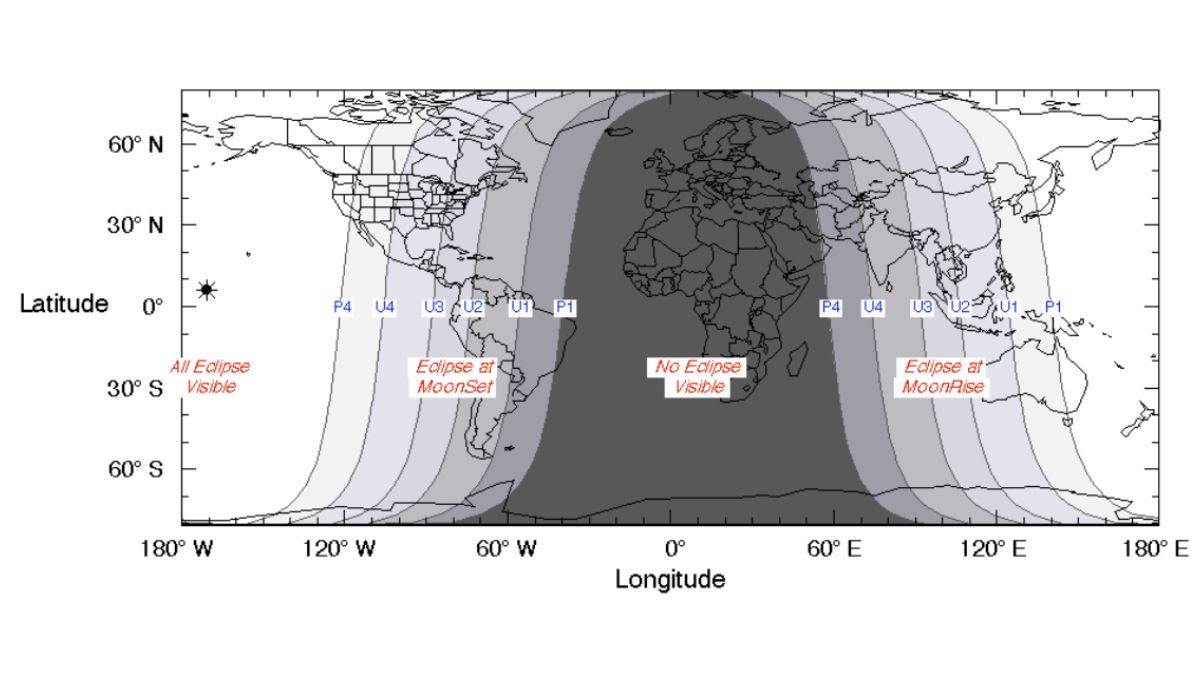
When and Where to See the March 2026 Lunar Eclipse in the USA
The total lunar eclipse of March 2026 is a globally significant event, but its timing makes it particularly favorable for observers across the Americas, especially the western and central United States. Understanding the key dates and times, and how they translate to your local time zone, is crucial for planning your viewing experience.
The Critical Dates and Times
The eclipse officially kicks off on the evening of March 2, 2026, and progresses through the early morning hours of March 3, 2026, depending on your location. For most of the continental USA, the most dramatic phase—totality—will occur in the pre-dawn darkness of March 3rd. The entire event, from the moment the Moon first touches Earth’s faint outer shadow (the penumbra) to when it fully exits, spans an impressive 5 hours and 39 minutes. The breathtaking period of totality, when the Moon is fully immersed in Earth’s darkest shadow (the umbra) and glows red, will last for 58 minutes.
Here’s a breakdown of the key phases in Universal Time (UT1), which you can then convert to your local time zone:
- Penumbral Eclipse Begins: March 3, 2026, at 08:41:40 UT1
- Partial Eclipse Begins: March 3, 2026, at 09:47:04 UT1
- Total Eclipse Begins: March 3, 2026, at 10:49:55 UT1
- Greatest Eclipse (Mid-Totality): March 3, 2026, at 11:33:40 UT1
- Total Eclipse Ends: March 3, 2026, at 12:17:25 UT1
- Partial Eclipse Ends: March 3, 2026, at 13:20:16 UT1
- Penumbral Eclipse Ends: March 3, 2026, at 14:25:40 UT1
Is It Visible From Your US Location? A Regional Breakdown
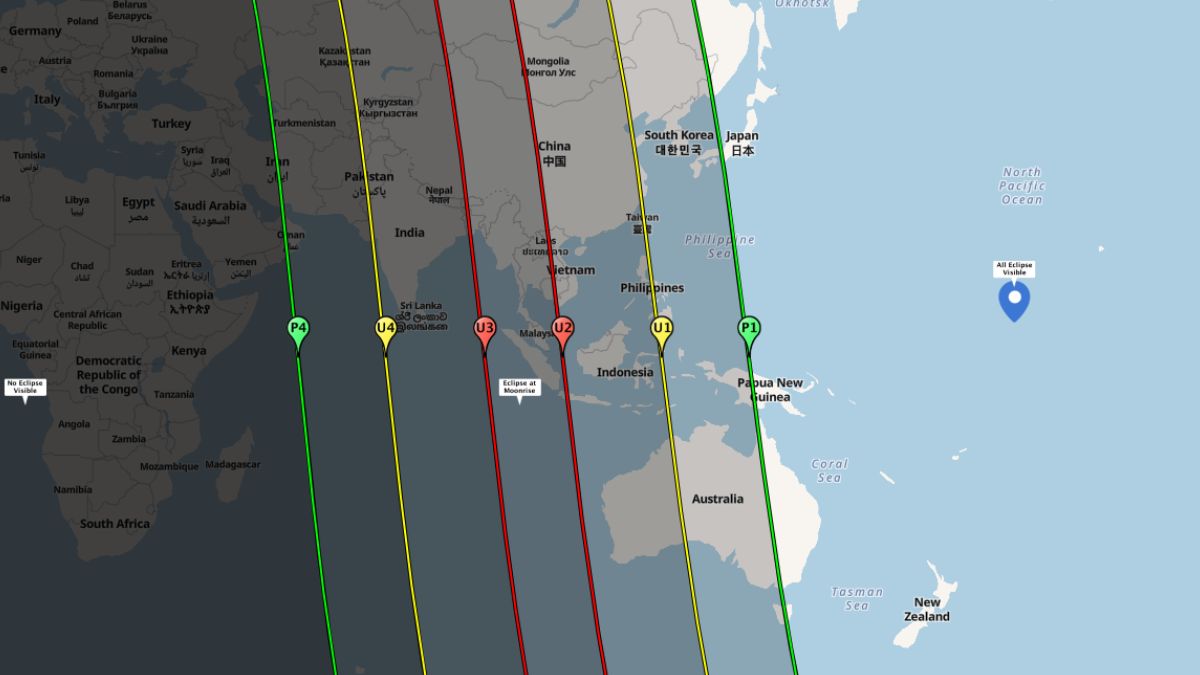
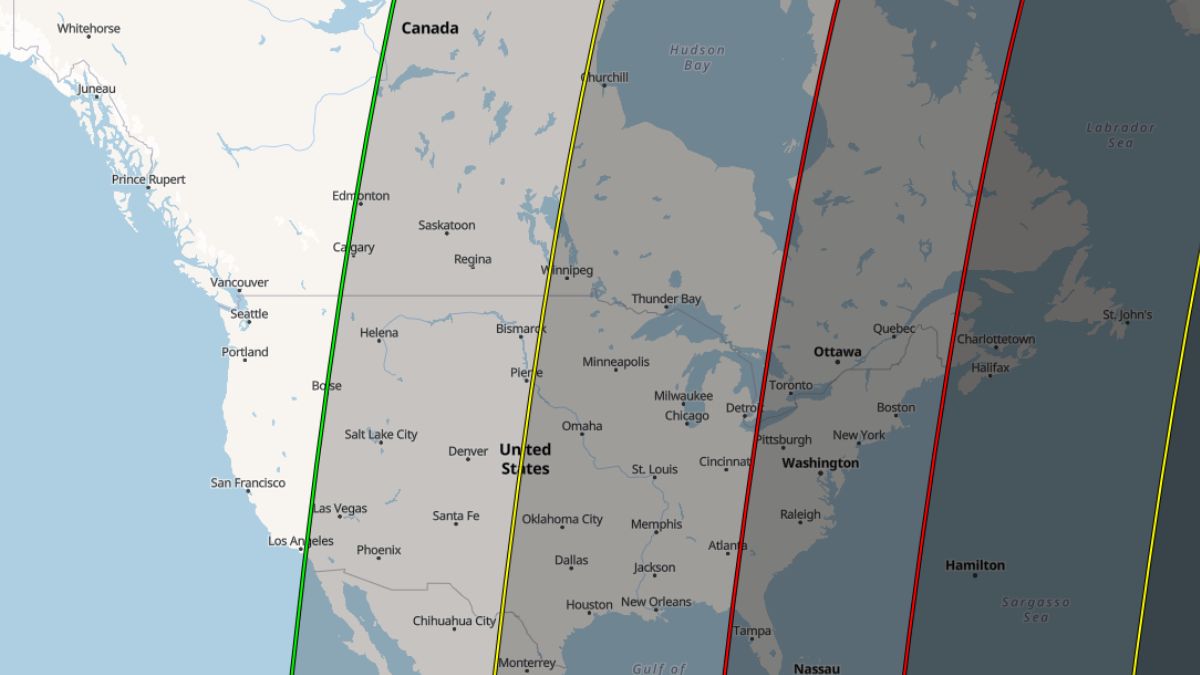
Good news for most Americans! The entirety of the total lunar eclipse will be visible from the Western United States, including states like California, Oregon, Washington, Nevada, Arizona, Idaho, and Utah. Moving eastward, the Central United States (e.g., Colorado, Texas, Kansas, Nebraska, Illinois) will also enjoy excellent views, catching the full totality and most of the partial phases. The Eastern United States (e.g., New York, Florida, Georgia, the Carolinas) will see the eclipse in progress, with the Moon setting for some before the penumbral phase fully concludes, but still experiencing the dramatic totality and partial phases.
Even Alaska and Hawaii are in prime viewing positions, with Hawaii experiencing the event in the very early morning hours of March 3rd, and Alaska seeing it perfectly positioned in its pre-dawn sky.
To give you a clearer picture, consult the detailed table below for specific timings in major US cities, accounting for their local time zones. Remember to factor in your exact location and local sunrise times for optimal viewing.
Understanding the “Blood Moon” Phenomenon
Every total lunar eclipse is affectionately (and accurately) called a “Blood Moon.” But what exactly makes the Moon turn that distinctive, eerie shade of red? It’s all thanks to a fascinating interaction between sunlight, Earth’s atmosphere, and our celestial neighbor.
Why the Moon Turns Red: Scattering Light Explained
During a total lunar eclipse, the Earth passes directly between the Sun and the Moon, casting a shadow that completely engulfs the Moon. While you might expect the Moon to disappear entirely, it doesn’t. Instead, it takes on a reddish or coppery hue. This happens because of a phenomenon called Rayleigh scattering, the same process that makes our sky blue and sunsets red.
As sunlight travels through Earth’s atmosphere, blue light waves are scattered more efficiently by tiny nitrogen and oxygen molecules. Red and yellow light, with their longer wavelengths, pass through more easily. When the Sun’s rays skim the edges of Earth’s atmosphere during an eclipse, the blue light is scattered away, leaving only the red and orange light to bend or refract into Earth’s shadow. This filtered, refracted light then illuminates the Moon, giving it its characteristic “blood red” appearance. The exact shade of red can vary based on factors like dust, clouds, or even volcanic ash present in Earth’s atmosphere at the time of the eclipse.
What to Expect During Each Phase
Witnessing a total lunar eclipse is a gradual process, with distinct phases that offer different visual experiences:
- Penumbral Eclipse: This is the first and last stage, where the Moon enters and exits Earth’s faint outer shadow (the penumbra). It’s often subtle, with the Moon appearing only slightly dimmer or dusky. Many observers might not even notice it without careful attention.
- Partial Eclipse: As the Moon moves further into Earth’s darker, inner shadow (the umbra), a noticeable bite appears on its edge. This “bite” grows larger, gradually consuming more of the lunar surface. During this phase, you can clearly see the curved edge of Earth’s shadow creeping across the Moon.
- Total Eclipse (Totality): This is the main event! The Moon is fully immersed in the umbra and takes on its dramatic reddish hue. This is the “Blood Moon.” The color can range from a bright orange to a deep, dark red, almost black, depending on atmospheric conditions. During totality, the sky often darkens enough to reveal fainter stars that are usually washed out by the bright full Moon. This specific totality will last for 58 minutes, providing ample time to soak in the beauty.
- Ending Phases: After totality, the process reverses. The Moon begins to exit the umbra, and the partial and penumbral phases unfold again until the Moon returns to its full, bright glory.
Detailed Eclipse Timetable for Major US Cities
To help you plan your viewing party, here’s a comprehensive table showing the exact local times for the key phases of the March 2026 total lunar eclipse across various major US cities. All times are for March 3, 2026, unless otherwise noted. Remember to double-check your specific location and elevation for precise local moonrise/moonset data, as these can slightly affect visibility.
| City | Time Zone | Penumbral Begins | Partial Begins | Total Begins | Greatest Eclipse | Total Ends | Partial Ends | Penumbral Ends |
|---|---|---|---|---|---|---|---|---|
| Honolulu | HST (UTC-10) | 10:41 PM (Mar 2) | 11:47 PM (Mar 2) | 12:49 AM | 01:33 AM | 02:17 AM | 03:20 AM | 04:25 AM |
| Anchorage | AKST (UTC-9) | 11:41 PM (Mar 2) | 12:47 AM | 01:49 AM | 02:33 AM | 03:17 AM | 04:20 AM | 05:25 AM |
| Los Angeles | PST (UTC-8) | 12:41 AM | 01:47 AM | 02:49 AM | 03:33 AM | 04:17 AM | 05:20 AM | 06:25 AM |
| Denver | MST (UTC-7) | 01:41 AM | 02:47 AM | 03:49 AM | 04:33 AM | 05:17 AM | 06:20 AM | 07:25 AM |
| Chicago | CST (UTC-6) | 02:41 AM | 03:47 AM | 04:49 AM | 05:33 AM | 06:17 AM | 07:20 AM | 08:25 AM |
| New York | EST (UTC-5) | 03:41 AM | 04:47 AM | 05:49 AM | 06:33 AM | 07:17 AM | 08:20 AM | 09:25 AM |
| Miami | EST (UTC-5) | 03:41 AM | 04:47 AM | 05:49 AM | 06:33 AM | 07:17 AM | 08:20 AM | 09:25 AM |
Note: Times are approximate and based on UT1 conversions. Local moonrise/moonset times may slightly affect visibility of the beginning or end of the penumbral phase for locations on the far eastern/western edges of the visibility zone. Totality is fully visible across the continental US where the moon is above the horizon.
Observing the Eclipse: Tips for a Stellar Experience
Unlike a solar eclipse, which requires specialized eye protection, a lunar eclipse is perfectly safe to view directly. You don’t need fancy equipment, but a few simple preparations can greatly enhance your experience.
No Special Equipment Needed (But Binoculars Help!)
The beauty of a lunar eclipse is its accessibility. You can simply step outside and enjoy the show with your naked eye. The Moon is a large, bright object, and its transformation is easily visible. However, if you have them, a pair of binoculars will dramatically improve your view. They’ll bring out the subtle shades of red and orange during totality, allow you to see finer details on the lunar surface, and reveal the stars that emerge as the Moon dims. Even a small telescope can offer incredible close-ups of the Earth’s shadow creeping across craters and mountains.
Finding the Best Viewing Spot
While visible from anywhere with a clear view of the Moon, certain locations will provide a more immersive experience:
- Minimize Light Pollution: City lights can wash out the fainter penumbral phases and reduce the vibrancy of the Blood Moon. If possible, head to a rural area or a park away from streetlights.
- Clear Horizon: Ensure you have an unobstructed view of the sky, especially towards the west/southwest (depending on your location), as the Moon will be setting in the morning hours. Find an open field, a hilltop, or even a backyard with a clear line of sight.
- Check the Weather: Of course, clear skies are paramount. Keep an eye on the forecast for March 3rd, 2026. A cloudy night means no eclipse show for you.
Capturing the Blood Moon: Photography Tips
If you’re into astrophotography, a total lunar eclipse is a fantastic target. Here are some tips:
- Equipment: A DSLR or mirrorless camera with a telephoto lens (200mm or more) and a sturdy tripod are essential. A remote shutter release will help prevent camera shake.
- Settings for Totality: During totality, the Moon is much dimmer than a full Moon. You’ll need to increase your ISO (e.g., ISO 800-3200), open your aperture wide (f/2.8-f/5.6), and use longer exposures (several seconds). Experiment to find the right balance – too long, and the Moon’s motion will cause blurring.
- Composition: Don’t just zoom in on the Moon. Consider including foreground elements like trees, mountains, or interesting landscapes to create a more compelling scene.
- Practice: If you’re new to night sky photography, practice shooting the full Moon beforehand to get a feel for your camera’s settings.
Safety First (Though Lunar Eclipses are Harmless)
A total lunar eclipse poses absolutely no danger to your eyes. Unlike a solar eclipse, where looking directly at the Sun can cause permanent damage, the Moon simply reflects sunlight and is no brighter than a regular full Moon. So, feel free to gaze directly at it for as long as you like. However, remember that March mornings can be chilly, so dress warmly, bring a blanket, and maybe a hot drink to stay comfortable during your observation.
The Science Behind the Spectacle: What Makes a Lunar Eclipse Special?
While beautiful to behold, lunar eclipses are also a profound demonstration of celestial mechanics. They reveal the intricate dance between the Sun, Earth, and Moon that governs our solar system.
The Geometry of a Total Lunar Eclipse
A total lunar eclipse occurs when the Sun, Earth, and Moon align in a nearly perfect straight line (syzygy), with the Earth positioned squarely in the middle. This alignment causes Earth to cast two distinct shadows into space: the inner, dark umbra and the outer, fainter penumbra. For a total lunar eclipse, the Moon must pass entirely through Earth’s umbra. The depth of the Moon’s immersion into the umbra, known as the umbral magnitude (1.1526 for this eclipse), dictates how bright or dark the Blood Moon will appear.
Why Aren’t There Lunar Eclipses Every Full Moon?
This is a common and excellent question! If a lunar eclipse happens when the Earth is between the Sun and Moon, and a full Moon occurs every time the Earth is between the Sun and Moon, why don’t we have an eclipse every month? The answer lies in the Moon’s orbit. The Moon’s orbit around Earth is tilted by about 5 degrees relative to Earth’s orbit around the Sun (the ecliptic plane). This means that most of the time, during a full Moon, the Moon passes either slightly above or slightly below Earth’s shadow. A lunar eclipse can only occur when a full Moon happens precisely when the Moon’s orbit intersects the ecliptic plane, allowing it to pass through Earth’s shadow.
The Saros Cycle and Recurrence
Eclipses aren’t random events; they occur in predictable patterns. The March 2026 lunar eclipse is part of a series known as the Saros cycle. Each Saros cycle lasts about 18 years, 11 days, and 8 hours (or 223 synodic months). Eclipses in the same Saros cycle share similar geometries, meaning they occur with the Moon and Earth in roughly the same positions relative to each other. This particular eclipse belongs to Lunar Saros 133, which is known for producing total lunar eclipses visible across the Americas.
Looking Ahead: Other Celestial Events in 2026 and Beyond
While the March 2026 Blood Moon is a highlight, 2026 promises to be a fantastic year for skywatchers. Later in the year, on August 27-28, 2026, there will be a partial lunar eclipse visible from the Americas, Europe, and Africa. Even more dramatically, 2026 also features a highly anticipated total solar eclipse on August 12, 2026, with its path of totality sweeping across parts of Greenland, Iceland, and Spain. These events offer continued opportunities to connect with the cosmos and witness the grandeur of our solar system.
So, get ready! The March 2026 total lunar eclipse is more than just an astronomical event; it’s an invitation to pause, look up, and be amazed by the natural beauty of the universe. With its convenient timing for much of the USA and the captivating display of a “Blood Moon,” it’s an experience that will undoubtedly create lasting memories. Clear skies and happy viewing!
Frequently Asked Questions
What is the ‘Blood Moon’ and why does it turn red?
The ‘Blood Moon’ is a popular term for a total lunar eclipse. During this event, the Moon turns red because sunlight, filtered through Earth’s atmosphere, is bent (refracted) into Earth’s shadow. Our atmosphere scatters blue light more efficiently, allowing only the red and orange light to pass through and illuminate the Moon.
When is the March 2026 total lunar eclipse visible in the USA?
For most of the continental USA, the total lunar eclipse will be visible in the early morning hours of March 3, 2026. The full event begins late on March 2nd for western regions and extends through sunrise on March 3rd for eastern areas. Totality, the most dramatic phase, occurs between approximately 2:49 AM PST and 7:17 AM EST.
Do I need special equipment to view the March 2026 lunar eclipse?
No, you do not need any special equipment. A lunar eclipse is perfectly safe to view directly with the naked eye. However, binoculars or a small telescope will enhance the experience, revealing more details and colors during the different phases.
How long will the totality phase of the March 2026 lunar eclipse last?
The total phase of the March 2026 lunar eclipse, when the Moon is fully immersed in Earth’s darkest shadow and appears red, will last for 58 minutes. The entire eclipse event, from the beginning of the penumbral phase to its end, will span approximately 5 hours and 39 minutes.
What is the best way to photograph the Blood Moon?
To photograph the Blood Moon, you’ll need a camera with manual settings, a telephoto lens (200mm+ recommended), and a sturdy tripod. During totality, use a higher ISO (800-3200), a wide aperture (f/2.8-f/5.6), and an exposure of a few seconds. Experiment with settings and consider including foreground elements for a more artistic shot.
Why don’t lunar eclipses happen every full Moon?
Lunar eclipses don’t occur every full Moon because the Moon’s orbit is tilted about 5 degrees relative to Earth’s orbit around the Sun. This means that most of the time, the Moon passes above or below Earth’s shadow during its full phase. An eclipse only happens when a full Moon aligns precisely with Earth’s orbital plane, allowing it to enter the shadow.

