India Holidays in March 2026: Your Ultimate Travel Guide for a Vibrant Journey
Planning a trip to India in March 2026? You’re in for a treat! March is an absolutely fantastic time to experience the subcontinent. Why? Because you’ll catch the tail end of India’s pleasant winter, enjoy comfortable temperatures across many regions, and, most excitingly, potentially immerse yourself in some of its most vibrant festivals.

But here’s the thing: holidays and festivals in India aren’t just days off work. They’re deeply ingrained cultural experiences that can transform your trip from a simple sightseeing tour into an unforgettable adventure. However, they also come with practical considerations for travelers, like closures, crowds, and transportation impacts. Don’t worry, I’m here to walk you through everything you need to know to plan a seamless and enriching journey.
Key India Holidays & Festivals in March 2026: Dates, Significance, and Traveler Insights
March 2026 in India is a tapestry of cultural and religious observances. Some are national public holidays, meaning widespread closures and celebrations, while others are restricted holidays or regional festivals, offering unique local insights. Understanding these is crucial for maximizing your travel experience.
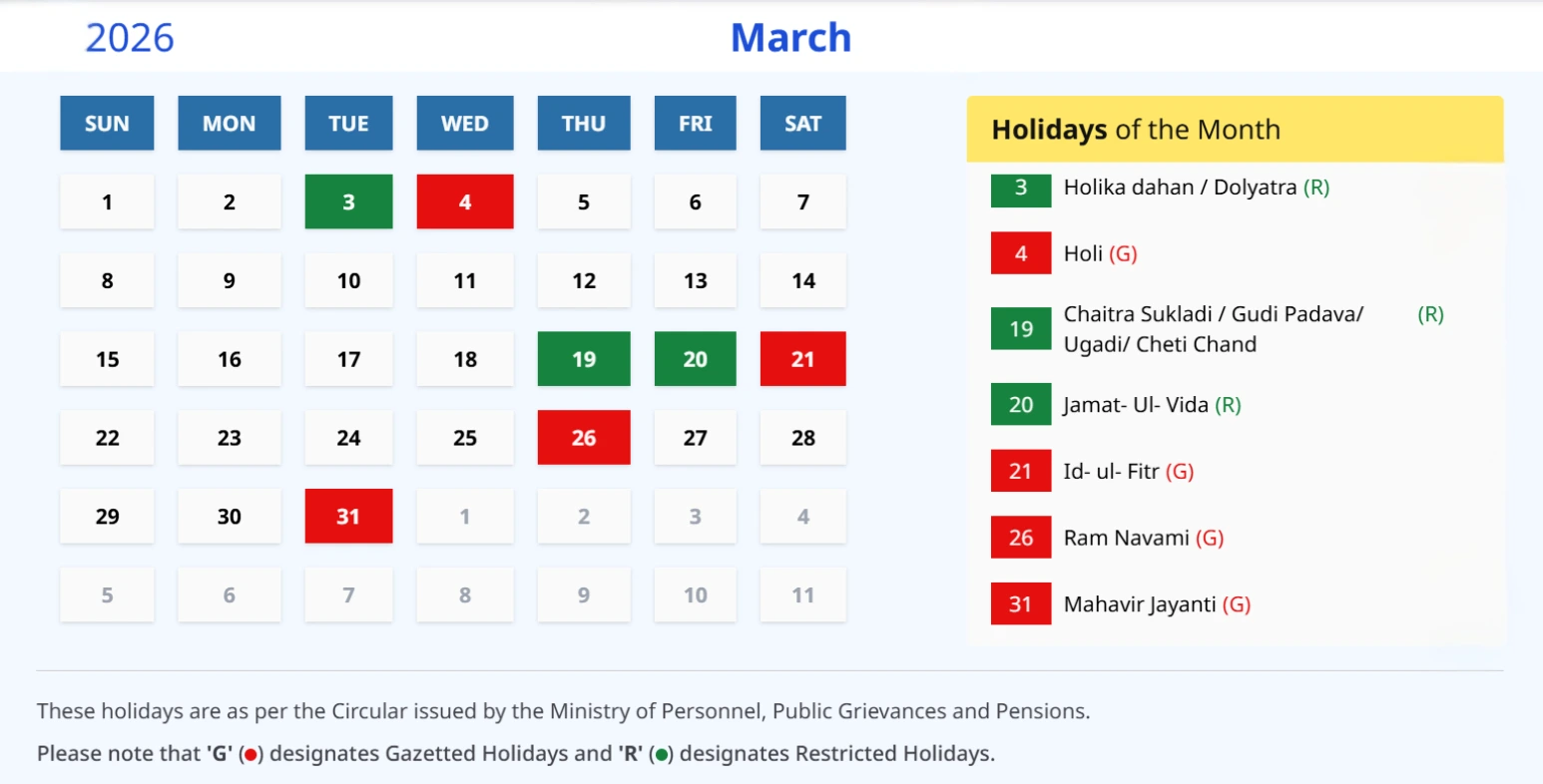
To give you a quick overview, here’s a comprehensive table of the major holidays and festivals expected in March 2026. Keep in mind that dates for some festivals (especially those following lunar calendars) can be tentative and may shift slightly, so always double-check closer to your travel date.
| Date | Day | Holiday/Festival Name | Type | Significance & Impact for Travelers |
|---|---|---|---|---|
| March 3 | Tuesday | Holi | Major Festival (Public/Restricted in some states) | The iconic ‘Festival of Colors.’ Expect joyous chaos, vibrant celebrations nationwide. Many businesses may close. Transportation could be impacted. A must-experience for the adventurous traveler. |
| March 20 | Friday | Ugadi / Gudi Padwa | Regional Festival (Public Holiday in some states like Karnataka, Andhra Pradesh, Telangana, Maharashtra) | New Year celebrations in South and West India. Expect local festivities, special dishes, and family gatherings. Impact on travel mostly localized to these regions. |
| March 20 | Friday | March Equinox | Astronomical Event | Marks the beginning of spring in the Northern Hemisphere. No direct travel impact, but signifies changing weather patterns. |
| March 21 | Saturday | Id-ul-Fitr (Eid al-Fitr) | Major Festival (Public Holiday) | Celebrates the end of Ramadan. Expect widespread celebrations in Muslim-majority areas, special prayers, feasts, and family visits. Government offices and some businesses may close. |
| March 23 | Monday | Bhagat Singh Martyrdom Day | Regional Observance (Public Holiday in Haryana) | Commemorates a freedom fighter. Impact is primarily local to Haryana. |
| March 26 | Thursday | Rama Navami | Major Festival (Public/Restricted Holiday) | Celebration of Lord Rama’s birth. Widespread temple visits, devotional singing, and processions. Closures are generally less extensive than Holi or Eid, but expect local fervor, especially in places like Ayodhya. |
| March 31 | Tuesday | Mahavir Jayanti | Regional Festival (Public Holiday in some states) | Celebration of the birth of Lord Mahavir, founder of Jainism. Observances typically in areas with significant Jain populations. Expect peaceful processions and temple visits. |
Let’s dive deeper into the major events that could define your March 2026 trip.
Holi: The Festival of Colors (March 3, 2026 – Tentative)
If you’re in India for Holi, prepare for an explosion of joy! This ancient Hindu festival signifies the triumph of good over evil, the arrival of spring, and a day to forget grievances and celebrate with abandon. People take to the streets, splashing each other with powdered dyes (gulal) and water. It’s truly a sensory overload in the best way possible.
What to Expect as a Tourist:
- Participation is encouraged: Locals will invite you to join, but always politely ask permission before applying color to someone.
- Dress for mess: Wear old clothes you don’t mind getting stained. White is popular for showing off the colors.
- Protect your valuables: Keep cameras, phones, and wallets in waterproof bags. Sunglasses are a must for eye protection.
- Regional variations: While celebrated nationwide, cities like Mathura and Vrindavan (Lord Krishna’s birthplace) are famous for grand, week-long celebrations. Jaipur, Udaipur, and Delhi also have lively festivities.
Impact on Travel: The day of Holi (March 3, 2026) will see many businesses, government offices, and even some public transportation services closed or operating on reduced schedules. Plan your inter-city travel for the days surrounding Holi, not on the day itself, as roads can be chaotic and services limited. Major tourist sites might also have altered hours or be closed.
Id-ul-Fitr (Eid al-Fitr): Celebrating the End of Ramadan (March 21, 2026 – Tentative)
Id-ul-Fitr marks the end of Ramadan, the holy month of fasting. It’s a joyful occasion of feasting, giving to charity, and spending time with family and friends. The exact date depends on the sighting of the moon, so it’s always considered a tentative date until confirmed by religious authorities.
Significance & Traditions: The day begins with special prayers in mosques, followed by visiting relatives, exchanging gifts, and enjoying elaborate meals. Sweet dishes, especially sheer khurma (vermicelli pudding), are traditional.
Travel Implications: Id-ul-Fitr is a public holiday across India. In Muslim-majority areas, you’ll see bustling markets leading up to Eid as people shop for new clothes and gifts. On the day itself, expect closures of many businesses, banks, and government offices. Transportation may be busier as people travel to visit family. For travelers, it’s a wonderful opportunity to witness community spirit and, if invited, partake in traditional feasts.
Rama Navami: Celebrating Lord Rama’s Birth (March 26, 2026)
Rama Navami celebrates the birth of Lord Rama, a revered deity in Hinduism, particularly important for followers of Vaishnavism. It’s a day marked by devotion, fasting, and temple visits.
Spiritual Significance: Devotees engage in prayer, recite sacred texts like the Ramayana, and observe fasts. Temples dedicated to Lord Rama, especially in places like Ayodhya (his birthplace), Nashik, and Rameshwaram, hold special services and processions.
Impact on Local Businesses: While a significant religious holiday, Rama Navami generally has less impact on commercial activities than Holi or Eid. Most businesses and tourist attractions will remain open, though some local shops in devout areas might close for a few hours. Expect increased crowds around temples and areas with processions. It’s a beautiful time to witness India’s spiritual depth.
Other Notable Observances & Regional Holidays
- Ugadi / Gudi Padwa (March 20, 2026): This day marks the New Year for people in Karnataka, Andhra Pradesh, Telangana, and Maharashtra. Expect colorful rangoli patterns, special foods like pachadi (a symbolic mix of sweet, sour, bitter, spicy), and family gatherings. If you’re in these regions, you’ll feel the festive spirit, but it’s less likely to cause major disruptions for general tourism.
- Mahavir Jayanti (March 31, 2026): Celebrated by the Jain community, this day honors the birth of Lord Mahavir. It’s a day of peace, reflection, and charitable acts. Observances are focused in areas with significant Jain populations, and impact on general travel is minimal, though some businesses may be closed in these specific locales.
- March Equinox (March 20, 2026): While not a public holiday, the March Equinox signifies the moment the sun crosses the celestial equator. It’s the start of spring in the Northern Hemisphere and a subtle shift in weather patterns across India, signaling the gradual increase in temperatures.
- Bhagat Singh Martyrdom Day (March 23, 2026): This day commemorates the sacrifice of freedom fighter Bhagat Singh. It’s observed as a public holiday primarily in the state of Haryana. For most travelers across India, this day will not impact your plans.
Understanding “Public Holiday” vs. “Restricted Holiday”: For US travelers, this distinction is important. A Public Holiday (also known as a Gazetted Holiday) is a compulsory day off for all government offices, banks, and often many private businesses. Transportation and services can be significantly affected. A Restricted Holiday (or Optional Holiday) is one where employees have the option to take a day off, but businesses are generally open. Most major festivals are either public or restricted, but the key is to know which ones will cause widespread closures.
Navigating India During March Holidays: Practical Travel Tips
Traveling during India’s holidays and festivals is an unparalleled experience, but smart planning is your best friend. Here’s what you need to keep in mind:
Impact on Transportation & Accommodation
- Flights & Trains: Domestic flights and especially train tickets can book up weeks or even months in advance around major holidays like Holi and Eid as locals travel to their hometowns. Book your tickets as early as possible.
- Road Travel: Buses and taxis might be scarce or more expensive, especially immediately before and after a major holiday. Road closures or diversions for processions are common in festive areas.
- Hotels: Accommodation in popular tourist destinations or festival hubs will see increased demand and higher prices. Book your hotels well in advance, and don’t hesitate to confirm your reservations a few days before arrival.
Understanding Closures & Opening Hours
- Banks & Government Offices: These will almost certainly be closed on Public Holidays. Plan your financial needs (currency exchange, ATM withdrawals) accordingly.
- Tourist Sites & Museums: While many major attractions like the Taj Mahal might remain open, their hours could be reduced, or they might experience heavier crowds. Smaller, regional museums or government-run sites may close. Always check specific opening times online or with your hotel.
- Shopping & Dining: During festivals like Holi, many shops and restaurants, especially family-run establishments, will be closed for at least half a day or the entire day. In the evenings, things usually pick up again, offering festive meals.
Embracing Cultural Experiences Safely
- Respect Local Customs: When visiting religious sites or participating in festivals, dress modestly. If you’re unsure about etiquette, observe what locals are doing or ask.
- Participating in Holi: If you join in, be aware that the colors can be stubborn! Stick to natural, organic colors if possible (often available from street vendors). Avoid being alone in isolated areas, especially during festivities, and be mindful of your personal space.
- Food Experiences: Festivals are a feast for the senses, including your palate! Don’t shy away from trying traditional sweets and savory dishes. Look for reputable eateries or ask your hotel for recommendations.
Weather in March: What to Pack
March represents a transition from cooler winter days to the onset of summer heat, but it’s generally still very pleasant, especially in early March. Here’s a general guide:
- North India (Delhi, Rajasthan, Uttar Pradesh): Expect warm, sunny days (70-85°F / 21-30°C) and cooler evenings. Pack light cotton clothing, a light jacket or shawl for evenings, and comfortable walking shoes.
- South India (Kerala, Goa, Tamil Nadu): Temperatures will be warmer, leaning towards hot and humid (80-95°F / 27-35°C), especially towards the end of the month. Light, breathable fabrics are essential.
- Himalayan Foothills (Rishikesh, Dharamshala): Still relatively cool (50-70°F / 10-21°C), especially at higher altitudes. Layers are key.
Regardless of region, always bring sunscreen, a hat, and a reusable water bottle to stay hydrated.

Crafting Your March 2026 India Itinerary: Destination Ideas
With pleasant weather and exciting festivals, March offers a fantastic canvas for exploring India. Here are some ideas:
North India: Golden Triangle & Himalayan Foothills
- Delhi, Agra, Jaipur (The Golden Triangle): This classic route is excellent in March. You might experience Holi in Delhi or Jaipur, witnessing the city come alive with color. Be aware of potential closures on Holi day, but otherwise, these cities offer iconic sights like the Taj Mahal, Red Fort, and Amber Fort in comfortable weather.
- Varanasi: India’s spiritual capital on the Ganges is always a profound experience. Rama Navami (March 26) would be particularly significant here, with heightened devotion around the ghats and temples.
- Rishikesh & Haridwar: If spiritual solace or adventure (rafting starts in spring) calls, the ‘Yoga Capital of the World’ is beautiful in March. The impact of national holidays here is mostly about local reverence rather than significant disruption.
West India: Rajasthan’s Deserts & Maharashtra’s Coasts
- Rajasthan (Udaipur, Jodhpur, Pushkar): The desert state is glorious in March before the intense summer heat sets in. You could catch Holi celebrations in Udaipur or Pushkar, adding a unique festive layer to your palace and fort explorations.
- Mumbai: India’s bustling financial capital is less affected by some religious holidays. Ugadi/Gudi Padwa (March 20) is a local holiday here, celebrating the Marathi New Year with traditional parades and cultural events, offering a different cultural immersion.
- Goa: If you’re looking for sun and sand, Goa is still pleasant in March before the monsoon season begins. It’s less affected by major Hindu or Muslim holidays, offering a more relaxed beach experience.
South India: Backwaters & Temples
- Kerala: The serene backwaters and lush landscapes of Kerala are inviting in March. While less impacted by North Indian festivals, local temple festivals (poorams) are common and incredible to witness.
- Karnataka (Hampi, Mysore, Bangalore): If you’re in Karnataka around March 20, you’ll experience Ugadi, the local New Year. Hampi’s ancient ruins are particularly stunning in the mild March weather.
- Tamil Nadu (Madurai, Chennai): Explore the vibrant Dravidian temples. The region’s rich cultural calendar means you might stumble upon smaller, local temple festivals unique to the state.
East India: Kolkata & Beyond
- Kolkata: This city of intellect and art offers pleasant weather in March. While Holi is celebrated, the major holidays might have a slightly different flavor compared to North India. It’s a great time to explore its colonial architecture and vibrant street life.
Essential Pre-Trip Checklist for US Travelers
Before you jet off to India, ensure you’ve ticked these boxes:
- Visa: US citizens need a visa to enter India. Apply for an e-Visa well in advance (at least 4-6 weeks before departure).
- Vaccinations: Consult your doctor about recommended vaccinations (e.g., Hepatitis A & B, Typhoid, Tetanus, Yellow Fever if traveling from an endemic area).
- Travel Insurance: Essential for medical emergencies, trip cancellations, and lost luggage.
- Currency: The Indian Rupee (INR) is the local currency. Have some small denominations for immediate needs upon arrival. ATMs are widely available.
- Communication: Consider an international roaming plan or purchase a local SIM card upon arrival for easier navigation and staying connected.
- Safety & Health: Be mindful of street food hygiene. Drink only bottled water. Carry basic medications. Research local safety tips for your destinations.
Conclusion: Make Your March 2026 India Trip Unforgettable
March 2026 truly offers a window into the soul of India – a kaleidoscope of ancient traditions, vibrant festivals, and diverse landscapes, all under the comfort of pleasant weather. By understanding the local holidays, planning your logistics carefully, and approaching the experience with an open mind, you’re set for an adventure that will be etched in your memory forever. So, start planning, embrace the color, the chaos, and the incredible hospitality, and prepare for an unforgettable journey to India!
Frequently Asked Questions
What are the major public holidays in India in March 2026?
The major public holidays and festivals expected in March 2026 include Holi (March 3), Id-ul-Fitr (March 21 – tentative), and Rama Navami (March 26). Ugadi/Gudi Padwa (March 20) and Mahavir Jayanti (March 31) are also significant regional holidays.
Is March a good time to visit India for tourism?
Yes, March is considered an excellent time to visit India. The weather is generally pleasant across most regions, transitioning from comfortable winter to warmer spring, and you have the unique opportunity to experience vibrant festivals like Holi, making for a rich cultural immersion.
How do festivals like Holi and Eid al-Fitr affect travel for tourists?
During major festivals like Holi and Eid al-Fitr, expect widespread closures of government offices, banks, and many businesses. Transportation services (flights, trains, buses) can be heavily booked and more expensive. Tourist sites might have altered hours. It’s crucial to book accommodation and travel well in advance and plan for potential disruptions.

What is the difference between a ‘Public Holiday’ and a ‘Restricted Holiday’ in India?
A ‘Public Holiday’ (or Gazetted Holiday) is a compulsory day off for all government offices, banks, and many private businesses, leading to widespread closures. A ‘Restricted Holiday’ (or Optional Holiday) is one where employees can choose to take a day off, but businesses typically remain open, causing less disruption to general services.
What kind of weather can I expect in India during March?
In North India, expect warm days (70-85°F / 21-30°C) and cooler evenings. South India will be hotter and more humid (80-95°F / 27-35°C). Himalayan regions will be cooler. Pack light cotton clothing, sun protection, and a light jacket for evenings in the north.
Will tourist attractions be open during March holidays in India?
Many major tourist attractions, like the Taj Mahal, may remain open but might have reduced hours or be very crowded. Smaller museums or government-run sites could be closed. It’s always best to check the specific opening times for each attraction online or with your hotel closer to your travel date.
Do I need a visa to visit India from the USA?
Yes, US citizens require a visa to enter India. It is highly recommended to apply for an e-Visa well in advance, typically 4-6 weeks before your intended departure date, to ensure a smooth travel process.
