Your Essential Guide to the Gujarati Calendar: March 2026 Explained (with Printable Details)
Are you looking for the precise dates of festivals, auspicious timings, or simply want to stay connected with your Gujarati heritage in March 2026? Whether you’re planning religious observances, family gatherings, or just curious about the celestial energies influencing the month, getting a reliable Gujarati Calendar is crucial. For many in the USA, a digital or printable PDF version offers the perfect blend of accessibility and cultural connection.
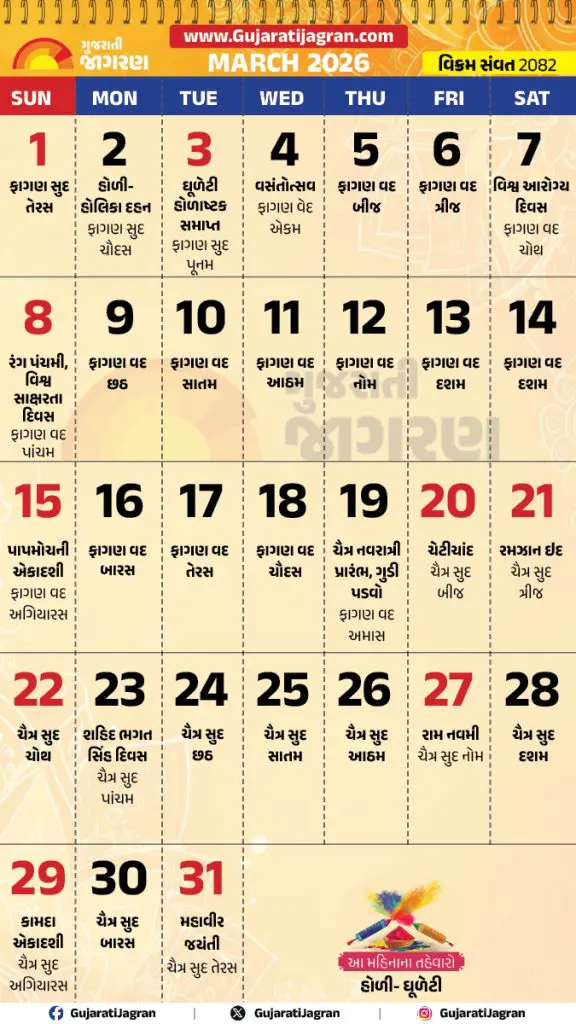
Forget generic calendar apps that miss the nuances of the Vikram Samvat. You need a detailed, human-friendly guide that not only shows you the dates but also explains their significance. That’s precisely what you’ll find here – a comprehensive breakdown of the Gujarati Calendar for March 2026, designed to empower you with knowledge and make your planning effortless.
March 2026: A Bridge Between Gujarati Months Phagun and Chaitra
March 2026 marks a fascinating transition in the Gujarati calendar, falling primarily within the auspicious Vikram Samvat year 2082. This Gregorian month beautifully bridges two significant Gujarati lunar months: Phagun (Phalgun) and Chaitra. While Phagun represents the end of winter and the vibrant celebration of Holi, Chaitra ushers in spring, new beginnings, and the nine sacred nights of Navratri.
Understanding this overlap is key. Many traditional observances and festivals are rooted in the lunar cycle, meaning their dates shift each year when viewed against the Gregorian calendar. So, while March 2026 may sound like a fixed point, its Gujarati astrological significance is fluid and rich.
Navigating March 2026: Key Festivals & Observances in the Gujarati Calendar
March 2026 is a month brimming with spiritual energy and cultural celebrations. For the Gujarati community, both in India and around the world, these dates are not just holidays; they are opportunities for reflection, devotion, and strengthening community bonds. Here’s a look at the major festivals and important days you’ll want to mark on your calendar:

| Gregorian Date | Gujarati Tithi | Festival / Observance | Significance |
|---|---|---|---|
| March 3, 2026 (Tuesday) | Phagun Sud Purnima | Holika Dahan / Holi Purnima | The lighting of bonfires signifies the triumph of good over evil, commemorating the legend of Prahlad and Holika. It’s a night of prayer and traditional rituals. |
| March 4, 2026 (Wednesday) | Phagun Vad Padvo (Pratipada) | Dhuleti / Rang Panchami (Mini Holi) | The joyous festival of colors, where people playfully apply dry and wet colors to each other, symbolizing happiness, love, and the arrival of spring. |
| March 10, 2026 (Tuesday) | Phagun Vad Ekadashi | Papmochani Ekadashi | A significant fasting day dedicated to Lord Vishnu. Observing this fast is believed to absolve sins and bring spiritual merit. |
| March 19, 2026 (Thursday) | Chaitra Sud Padvo (Pratipada) | Chaitra Navratri Begins / Gudi Padwa / Ugadi | Marks the beginning of the Hindu New Year in many regions and the start of the nine sacred days dedicated to Goddess Durga. The first day is also celebrated as Gudi Padwa and Ugadi in other parts of India. |
| March 20, 2026 (Friday) | Chaitra Sud Bij | Cheti Chand | The Sindhi New Year, celebrated with great enthusiasm, honoring Lord Jhulelal. |
| March 26, 2026 (Thursday) | Chaitra Sud Ashtami | Durga Ashtami / Mahagauri Puja | A significant day during Chaitra Navratri, dedicated to the worship of Goddess Mahagauri. Many perform Kanya Pujan on this day. |
| March 27, 2026 (Friday) | Chaitra Sud Navami | Rama Navami | Celebrates the birth of Lord Rama, the seventh avatar of Vishnu. Devotees observe fasts, sing bhajans, and recite the Ramayana. |
Remember, these are the primary observances. The Gujarati calendar also highlights other significant days like Ekadashi fasts (two per lunar month), Amas (New Moon), and Punam (Full Moon), each carrying its own spiritual weight.
Decoding the Gujarati Panchang for March 2026: Your Daily Guide
The heart of any Gujarati calendar is the Panchang. More than just a list of dates, the Panchang provides a detailed astrological breakdown for each day. It’s an invaluable tool for understanding auspicious timings (muhurat) for starting new ventures, performing pujas, or even planning travel. Let’s break down March 2026 with a daily Panchang overview:
| Date (2026) | Day | Gujarati Tithi | Nakshatra | Yoga | Karana | Choghadiya (Day) |
|---|---|---|---|---|---|---|
| Mar 1 | Sunday | Phagun Sud Dwadashi | Punarvasu | Sobhana | Bava | Udveg, Chala, Labh, Amrit |
| Mar 2 | Monday | Phagun Sud Trayodashi | Pushya | Atiganda | Kaulava | Amrit, Kala, Shubh, Rog |
| Mar 3 | Tuesday | Phagun Sud Chaturdashi (ends) / Purnima (starts) | Ashlesha | Sukarma | Gara | Rog, Udveg, Chala, Labh |
| Mar 4 | Wednesday | Phagun Vad Padvo (Pratipada) | Magha | Dhriti | Balava | Labh, Amrit, Kala, Shubh |
| Mar 5 | Thursday | Phagun Vad Bij | Purva Phalguni | Shoola | Taitila | Shubh, Amrit, Chala, Rog |
| Mar 6 | Friday | Phagun Vad Trij | Uttara Phalguni | Ganda | Garaja | Chala, Labh, Amrit, Kala |
| Mar 7 | Saturday | Phagun Vad Chauth | Hasta | Vriddhi | Vanija | Kala, Shubh, Rog, Udveg |
| Mar 8 | Sunday | Phagun Vad Pancham | Chitra | Dhruva | Bhadra | Chala, Labh, Amrit, Kala |
| Mar 9 | Monday | Phagun Vad Chhath | Swati | Vyaghata | Balava | Amrit, Rog, Chala, Labh |
| Mar 10 | Tuesday | Phagun Vad Saptam | Vishakha | Harshana | Kaulava | Rog, Udveg, Chala, Labh |
| Mar 11 | Wednesday | Phagun Vad Aatham | Anuradha | Vajra | Garija | Labh, Amrit, Kala, Shubh |
| Mar 12 | Thursday | Phagun Vad Nom | Jyeshtha | Siddhi | Vanija | Shubh, Amrit, Chala, Rog |
| Mar 13 | Friday | Phagun Vad Dasham | Moola | Vyatipata | Vishti | Chala, Labh, Amrit, Kala |
| Mar 14 | Saturday | Phagun Vad Ekadashi | Purva Ashadha | Variyana | Bava | Kala, Shubh, Rog, Udveg |
| Mar 15 | Sunday | Phagun Vad Dwadashi | Uttara Ashadha | Parigha | Balava | Udveg, Chala, Labh, Amrit |
| Mar 16 | Monday | Phagun Vad Trayodashi | Shravana | Shiva | Kaulava | Amrit, Kala, Shubh, Rog |
| Mar 17 | Tuesday | Phagun Vad Chaturdashi | Dhanishtha | Siddha | Garija | Rog, Udveg, Chala, Labh |
| Mar 18 | Wednesday | Phagun Vad Amas (Amavasya) | Shatabhisha | Sadhya | Vanija | Labh, Amrit, Kala, Shubh |
| Mar 19 | Thursday | Chaitra Sud Padvo (Pratipada) | Purva Bhadrapada | Shubha | Vishti | Shubh, Amrit, Chala, Rog |
| Mar 20 | Friday | Chaitra Sud Bij | Uttara Bhadrapada | Shukla | Bava | Chala, Labh, Amrit, Kala |
| Mar 21 | Saturday | Chaitra Sud Trij | Revati | Brahma | Balava | Kala, Shubh, Rog, Udveg |
| Mar 22 | Sunday | Chaitra Sud Chauth | Ashwini | Indra | Kaulava | Udveg, Chala, Labh, Amrit |
| Mar 23 | Monday | Chaitra Sud Pancham | Bharani | Vaidhriti | Taitila | Amrit, Kala, Shubh, Rog |
| Mar 24 | Tuesday | Chaitra Sud Chhath | Krittika | Vishkambha | Garija | Rog, Udveg, Chala, Labh |
| Mar 25 | Wednesday | Chaitra Sud Saptam | Rohini | Priti | Vanija | Labh, Amrit, Kala, Shubh |
| Mar 26 | Thursday | Chaitra Sud Ashtami | Mrigashira | Ayushman | Bhadra | Shubh, Amrit, Chala, Rog |
| Mar 27 | Friday | Chaitra Sud Navami | Ardra | Saubhagya | Balava | Chala, Labh, Amrit, Kala |
| Mar 28 | Saturday | Chaitra Sud Dasham | Punarvasu | Sobhana | Kaulava | Kala, Shubh, Rog, Udveg |
| Mar 29 | Sunday | Chaitra Sud Ekadashi | Pushya | Atiganda | Taitila | Udveg, Chala, Labh, Amrit |
| Mar 30 | Monday | Chaitra Sud Dwadashi | Ashlesha | Sukarma | Garija | Amrit, Kala, Shubh, Rog |
| Mar 31 | Tuesday | Chaitra Sud Trayodashi | Magha | Dhriti | Vanija | Rog, Udveg, Chala, Labh |
Note on Timings: The precise timings for Tithi, Nakshatra, Yoga, Karana, and Choghadiya vary based on your geographic location. The Choghadiya mentioned above are indicative for day timings in a generalized location. For exact, minute-by-minute details tailored to your specific city in the USA, consult a specialized Panchang app or website with location settings. This table provides a strong foundational overview.
Understanding Tithi: The Lunar Day’s Influence
In the Gujarati calendar, a Tithi is a lunar day, defined by the angular distance between the Sun and the Moon. There are 15 Tithis in each of the two lunar fortnights: the Shukla Paksha (waxing phase, from New Moon to Full Moon) and the Krishna Paksha (waning phase, from Full Moon to New Moon). Each Tithi carries its own unique energetic quality, making certain days more auspicious or inauspicious for particular activities.

Nakshatra, Yoga, and Karana: Unveiling Celestial Energies
- Nakshatra (Lunar Mansion): There are 27 Nakshatras, representing specific constellations through which the Moon travels. Each Nakshatra has distinct characteristics and influences on individuals and events. Knowing the prevailing Nakshatra can guide you in understanding the day’s inherent energy.
- Yoga: There are 27 Yogas, formed by the combined longitudes of the Sun and Moon. Each Yoga has a specific name and influence, affecting the outcome of actions initiated during its period.
- Karana: A Karana is half a Tithi. There are 11 Karanas, and each has its own effect. They are used to refine the auspiciousness or inauspiciousness of a period, especially when performing daily rituals or starting new tasks.
Choghadiya: Auspicious Timings at a Glance
Choghadiya are specific time intervals during the day and night that are considered auspicious or inauspicious for various activities. They are derived from Vedic astrology and are particularly popular in the Gujarati tradition for quick reference. There are seven types of Choghadiya, each ruled by a planet, and they repeat in a cycle:
- Amrit (Nectar): Very auspicious, good for all new beginnings.
- Shubh (Auspicious): Good for marriage, religious ceremonies, and auspicious events.
- Labh (Gain): Good for starting new businesses, financial dealings, or learning.
- Chala (Moving): Good for travel, but results can be mixed.
- Udveg (Anxiety): Inauspicious, associated with stress and disputes.
- Rog (Disease): Inauspicious, avoid starting anything important.
- Kala (Black/Bad): Inauspicious, avoid any important work.
By using the Choghadiya, you can make informed decisions about when to perform specific tasks, enhancing your chances of success and harmony.
Why You Need a Gujarati Calendar PDF for March 2026 (and How to Get One)
In our increasingly digital world, a well-structured PDF calendar for March 2026 offers immense practical benefits, especially for those who cherish their cultural roots but live abroad. Here’s why you absolutely need one:
- Offline Accessibility: No internet? No problem. A PDF is right there on your device, ready to be consulted anytime, anywhere.
- Easy Printing: If you prefer a tangible planner, a PDF is perfect for printing out a hard copy. You can stick it on your fridge, wall, or desk for quick reference.
- Portability: Easily transfer it across devices – your phone, tablet, or laptop – ensuring your cultural guide is always within reach.
- Sharing with Family: Share a consistent, accurate calendar with family members, ensuring everyone is on the same page for festivals and observances.
- Consistent Formatting: PDFs maintain their layout and formatting across different devices and operating systems, unlike web pages that can render differently.
How to Obtain Your March 2026 Gujarati Calendar PDF
While many sites offer direct downloads, the data provided in this very article is meticulously compiled for accuracy. Here’s how you can leverage it for your own personalized PDF:
- Use the Tables Above: Simply copy the festival table and the detailed Panchang table from this page.
- Paste into a Document: Open a word processor (like Google Docs, Microsoft Word, or Pages). Paste the copied tables.
- Format and Personalize: Adjust fonts, add your own notes, or highlight key dates that are most important to you and your family.
- Save as PDF: Use your word processor’s ‘Save As’ or ‘Print’ function and select ‘Save as PDF’ or ‘Print to PDF’. Voila! You have your custom, comprehensive Gujarati Calendar for March 2026, perfectly formatted and ready for use.
- Reputable Online Sources: If you prefer a pre-made PDF, look for official cultural organizations or well-established astrological websites that specifically provide Gujarati Panchang PDFs, ensuring they are calibrated for a general USA time zone or allow you to specify one.
Planning Your March 2026: Practical Tips for the Gujarati Diaspora
Living outside Gujarat doesn’t mean you have to disconnect from your traditions. With a reliable calendar, you can seamlessly integrate cultural practices into your modern life in the USA. Here are some practical tips:

- Coordinate with Time Zones: Festivals, fasts, and auspicious timings (especially for Choghadiya, Sunrise/Sunset, Tithi ends) are determined by local time. Always ensure your calendar source (or your self-generated PDF) is adjusted for your specific time zone in the USA. What begins on March 3rd in India might technically start late March 2nd or early March 3rd in California, for example.
- Community Engagement: Many Gujarati communities across the USA (in cities like Edison, NJ; Chicago, IL; Houston, TX; Atlanta, GA; and various parts of California) organize events for major festivals like Holi and Navratri. Use your calendar to plan participation in these events, fostering a sense of belonging and cultural continuity.
- Meal Planning for Fasts: For those observing Ekadashi or other fasts, having the dates clearly marked helps you plan meals for pre-fast (e.g., *faraal) and post-fast breaking, ensuring adherence to dietary guidelines.
- Auspicious Beginnings: If you’re considering starting a new venture, signing important documents, or performing a griha pravesh* (housewarming), consult the Choghadiya and Panchang details in your calendar for the most favorable timings.
- Children’s Education: Use the calendar as a teaching tool for your children. Explain the stories behind festivals like Holi, the significance of Rama Navami, and the cultural richness of the Gujarati calendar. It’s an excellent way to pass on heritage.
- Spiritual Practice: Mark days for specific pujas, mantras, or prayers. Knowing the Tithi and Nakshatra can deepen the impact of your daily spiritual routine.
Beyond March: The Broader Significance of the Gujarati Calendar
The Gujarati calendar, rooted in the ancient Vikram Samvat, is far more than just a date tracker. It’s a living document that connects generations, preserves traditions, and guides spiritual life. Each month, each Tithi, and each festival tells a story, offering insights into Hindu mythology, astrological influences, and the agricultural cycles that shaped communities for millennia.
For Gujaratis globally, it’s a vital link to identity, helping to maintain cultural practices, celebrate shared heritage, and transmit knowledge to future generations. By understanding and utilizing your Gujarati calendar, you’re not just tracking days; you’re actively participating in a rich, vibrant cultural legacy.
So, go ahead and use this guide to make your March 2026 culturally rich and well-planned. Embrace the vibrant festivals, understand the celestial rhythms, and strengthen your connection to the traditions that make the Gujarati culture so unique.
Frequently Asked Questions
What Gujarati months correspond to March 2026?
March 2026 primarily corresponds to parts of the Gujarati lunar months of Phagun (Phalgun) and Chaitra, marking a transition from the end of winter to the beginning of spring and the Hindu New Year in Vikram Samvat 2082.
What are the major Gujarati festivals in March 2026?
Key Gujarati festivals in March 2026 include Holika Dahan / Holi Purnima (March 3), Dhuleti / Rang Panchami (March 4), the beginning of Chaitra Navratri (March 19), Cheti Chand (March 20), and Rama Navami (March 27).
What is a Panchang and why is it important?
A Panchang is a Hindu astrological calendar that provides daily information on five elements: Tithi (lunar day), Nakshatra (lunar mansion), Yoga, Karana, and Vaar (weekday). It’s crucial for determining auspicious timings (muhurat) for religious ceremonies, fasts, and important life events.
Can I get a printable PDF of the Gujarati Calendar for March 2026?
Yes, you can easily create your own printable PDF. The detailed tables provided in this guide, including festivals and daily Panchang data, can be copied into a word processor and then saved or printed as a PDF document for offline access and easy reference.
How do time zones in the USA affect Gujarati calendar observances?
Festivals and auspicious timings are based on local sunrise and sunset. If observing from the USA, it’s important to adjust for your specific time zone. For example, a Tithi or Choghadiya that begins in India might start several hours earlier or later in various US time zones. Always consult a Panchang that allows for location-specific calculations or adapt based on local sunrise.
What is Choghadiya and how do I use it?
Choghadiya are specific time intervals during the day and night considered auspicious or inauspicious. They are used for quick reference to plan activities like starting a new venture (use Amrit, Shubh, Labh) or avoiding important tasks (avoid Rog, Udveg, Kala). There are seven types, each with unique planetary influences.
