The Full Worm Blood Moon of March 2026: Your Definitive USA Guide to a Total Lunar Eclipse
Ever gazed up at a full moon and felt a pull, a sense of wonder? Get ready, because the Full Moon in March 2026 isn’t just any lunar event. It’s set to be a spectacular celestial showstopper, offering a rare opportunity for stargazers and casual observers across the USA.
On Tuesday, March 3, 2026, the night sky will light up with the Full Worm Moon, but here’s the kicker: it will also be accompanied by a Total Lunar Eclipse. That’s right, a ‘Blood Moon’ will grace our skies, painting the moon in striking hues of red and orange as it passes through Earth’s shadow. This isn’t just a date for your calendar; it’s an event to plan for, gather your friends, and look skyward.
Ready to know exactly when and how to witness this breathtaking phenomenon? Let’s dive in.
March 2026 Full Moon At A Glance: Key Details for the USA
You want the crucial info, right? Here it is:

- Official Name: The Full Worm Moon
- Peak Illumination: Tuesday, March 3, 2026, at approximately 6:38 AM Eastern Time (ET)
- Key Event: A Total Lunar Eclipse will coincide with the full moon, visible across the Americas.
- Duration of Totality: Approximately 58 minutes.
Because the moon reaches peak illumination in the early morning for the Eastern Seaboard, those on the West Coast will experience it earlier in the night. This is crucial for planning your viewing! Here’s a breakdown of the peak illumination times across the major US time zones:
| US Time Zone | Peak Full Moon Illumination (March 3, 2026) |
|---|---|
| Eastern Time (ET) | 6:38 AM |
| Central Time (CT) | 5:38 AM |
| Mountain Time (MT) | 4:38 AM |
| Pacific Time (PT) | 3:38 AM |
| Alaska Standard Time (AKST) | 2:38 AM |
| Hawaii Standard Time (HST) | 1:38 AM |
Unveiling the “Blood Moon”: March 2026’s Total Lunar Eclipse
This isn’t just about a full moon; it’s about a celestial dance that will turn the moon into a glowing ember in the night sky. The total lunar eclipse is the main event here, making the March 2026 full moon truly special.
What is a Total Lunar Eclipse?
A lunar eclipse occurs when the Earth passes directly between the Sun and the Moon, casting a shadow on the Moon. During a total lunar eclipse, the entire Moon falls within the Earth’s darkest shadow, called the umbra. This is different from a solar eclipse, where the Moon blocks the Sun.
Unlike solar eclipses, which require special eye protection, a lunar eclipse is perfectly safe to view directly with the naked eye, binoculars, or a telescope. In fact, binoculars will enhance the experience, allowing you to see the subtle colors and textures on the eclipsed lunar surface.

Why “Blood Moon”? The Science Behind the Red Hue
So, if the Earth is blocking the Sun, why doesn’t the moon just disappear? Great question! The Earth’s atmosphere plays a crucial role. Even when completely eclipsed, some sunlight still reaches the Moon. This light is filtered and refracted (bent) by Earth’s atmosphere. Blue light scatters away more easily (which is why our sky is blue!), leaving behind the longer, redder wavelengths to reach the Moon.
The result? The Moon takes on a stunning spectrum of colors, from a deep orange to a rusty red, earning it the dramatic nickname: the “Blood Moon.” The exact shade depends on factors like dust and clouds in Earth’s atmosphere at the time of the eclipse.
Visibility in the USA: Will You See It?
Fantastic news! The entire duration of the total lunar eclipse on March 3, 2026, will be visible from North America, including the contiguous USA, Alaska, and Hawaii, provided skies are clear. This is a prime viewing opportunity for millions!
The eclipse phases will unfold over several hours. To make sure you don’t miss the most spectacular part – totality – here’s a detailed timeline:
| Eclipse Phase | Eastern Time (ET) | Central Time (CT) | Mountain Time (MT) | Pacific Time (PT) |
|---|---|---|---|---|
| Penumbral Eclipse Begins | 4:15 AM | 3:15 AM | 2:15 AM | 1:15 AM |
| Partial Eclipse Begins | 5:16 AM | 4:16 AM | 3:16 AM | 2:16 AM |
| Total Eclipse Begins (Totality) | 6:21 AM | 5:21 AM | 4:21 AM | 3:21 AM |
| Mid-Eclipse (Peak Totality) | 6:50 AM | 5:50 AM | 4:50 AM | 3:50 AM |
| Total Eclipse Ends (Totality) | 7:19 AM | 6:19 AM | 5:19 AM | 4:19 AM |
| Partial Eclipse Ends | 8:24 AM | 7:24 AM | 6:24 AM | 5:24 AM |
| Penumbral Eclipse Ends | 9:25 AM | 8:25 AM | 7:25 AM | 6:25 AM |
Note: For Alaska (AKST), subtract 4 hours from ET; for Hawaii (HST), subtract 5 hours from ET. The eclipse will occur primarily in the very early morning hours for the western half of the USA, making it an excellent opportunity to catch the entire spectacle before sunrise.
The March Full Moon’s Ancient Names: “Worm Moon” and Beyond
Beyond the scientific marvel of an eclipse, full moons carry rich cultural and historical significance, often reflected in their traditional names. March’s full moon is no exception.
The “Worm Moon”: A Sign of Spring’s Awakening
The most widely recognized name for the March full moon is the “Worm Moon.” This evocative name originated from Native American traditions, particularly those in the northeastern United States. It refers to the time of year when the ground begins to thaw after winter’s freeze, and earthworms start to reappear, signaling the return of birds and the imminent arrival of spring. It’s a name that speaks to renewal, awakening, and the stirring of life after dormancy.
Other Historical Names for March’s Full Moon
While “Worm Moon” is popular, various cultures and regions have had their own names for the March full moon, each reflecting local observations and traditions:
- Crow Moon: Named by some tribes for the cawing of crows, which signifies the end of winter.
- Sap Moon: Reflecting the season when maple sap begins to flow, perfect for making maple syrup.
- Crust Moon: Refers to the snow cover that often crusts over from thawing during the day and freezing at night.
- Chaste Moon: A European Pagan name, often associated with purity and the beginning of spring.
- Lenten Moon: In Christian traditions, this moon typically falls during Lent, a period of fasting and reflection.
And, of course, for 2026, we add “Blood Moon” to the list, directly referencing the total lunar eclipse. This blend of ancient tradition and astronomical event makes the March 2026 full moon a truly unique occasion.
How to Witness the March 2026 Full Moon and Eclipse in the USA
You don’t need fancy equipment to enjoy a lunar eclipse, but a little preparation can make the experience even more memorable.
Best Viewing Practices for the Lunar Eclipse
Given the early morning times for much of the US, here’s how to make the most of it:
- Location, Location, Location: Find a spot with an unobstructed view of the western horizon (where the moon will be setting in the morning sky). A park, a quiet field, or even your backyard can work if you have a clear sightline.
- Check the Weather: This is paramount. Clear skies are a must. Keep an eye on local forecasts leading up to March 3rd.
- Dress for the Chill: Even in March, early mornings can be cold, especially if you’re standing still for an extended period. Bundle up!
- Set an Alarm: Don’t rely on waking up naturally. Use the detailed eclipse times above to set an alarm for at least 15-30 minutes before totality begins, giving you time to get settled.
- Bring a Chair or Blanket: Make yourself comfortable. You’ll want to relax and soak in the view.
- Binoculars or a Small Telescope (Optional but Recommended): While visible with the naked eye, binoculars will magnify the view, allowing you to appreciate the subtle colors and surface details of the eclipsed moon.
Essential Gear (or Lack Thereof!)
The beauty of a lunar eclipse is its accessibility. You literally need nothing but your eyes and clear skies. However, to enhance your experience, consider:
- Warm clothing: Layers are your friend.
- Hot beverage: A thermos of coffee or tea can make early morning viewing more pleasant.
- Binoculars: Even inexpensive ones will significantly improve the view.
- Red-light flashlight: To preserve your night vision if you need to move around or check charts.
Photography Tips for the Blood Moon
Capturing a lunar eclipse can be incredibly rewarding. Here are some quick tips:
- Tripod is a Must: For sharp images, especially in low light, a sturdy tripod is non-negotiable.
- Manual Settings: Forget auto mode. You’ll want to control ISO, aperture, and shutter speed. Start with a relatively low ISO (e.g., 800-1600), wide aperture (f/2.8-f/5.6), and experiment with shutter speeds (e.g., 1-4 seconds during totality).
- Telephoto Lens: The longer your focal length, the larger the moon will appear.
- Remote Shutter Release: To avoid camera shake when pressing the shutter button.
- Practice: If you have the opportunity, practice shooting the full moon before the eclipse to get a feel for your camera’s settings.
Beyond the Fullness: March 2026 Moon Phases in Review
While the full moon and total eclipse are undoubtedly the highlights, the Moon cycles through all its phases in March 2026. Understanding the entire lunar cycle adds to our appreciation of this celestial body.
Understanding the Lunar Cycle
The lunar cycle, or synodic month, lasts about 29.5 days. During this time, the Moon’s appearance changes as the amount of its sunlit surface visible from Earth varies. From the New Moon (invisible) to the Waxing Crescent, First Quarter, Waxing Gibbous, Full Moon, Waning Gibbous, Last Quarter, and Waning Crescent, each phase offers a unique view.
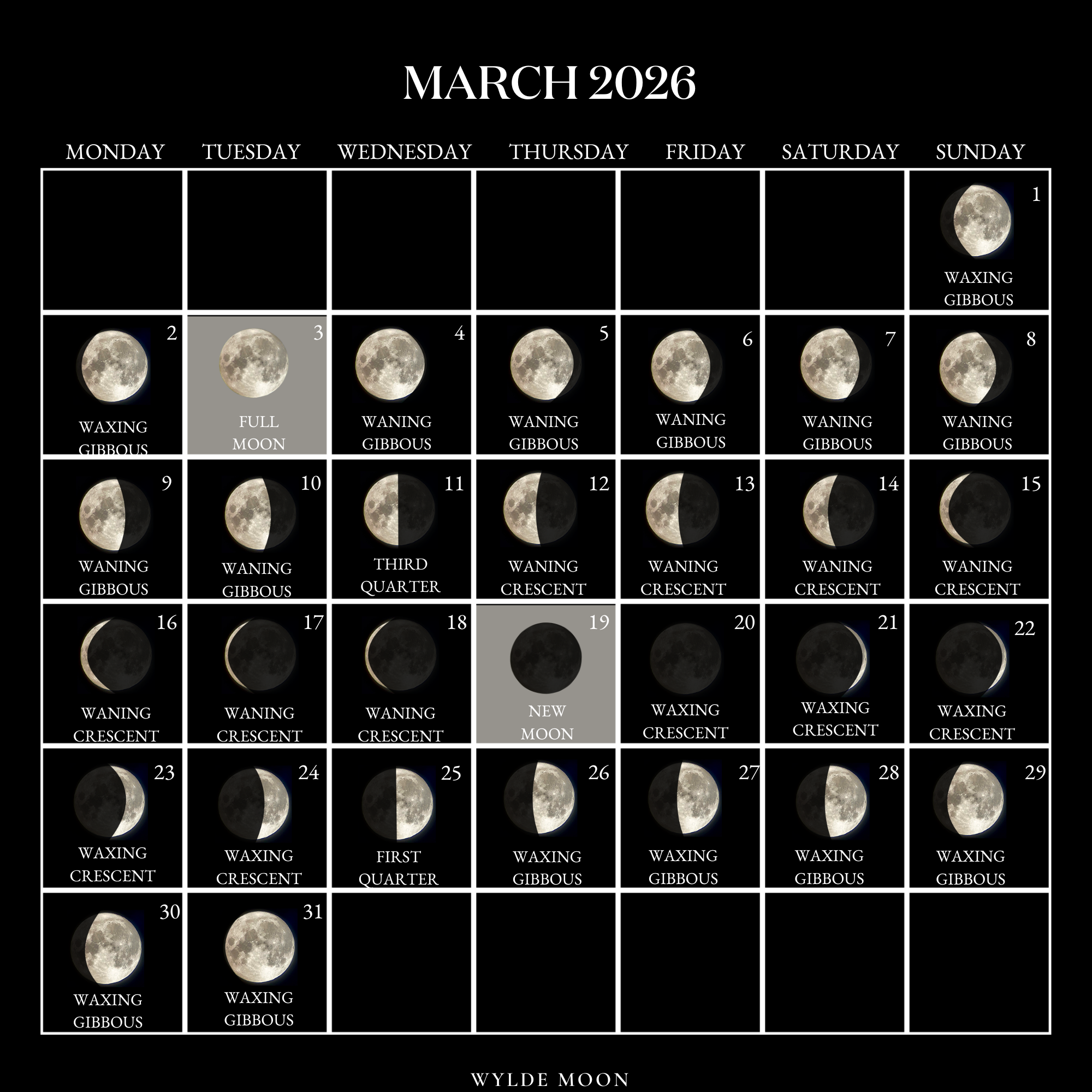
Here’s a full calendar of moon phases for March 2026, so you can track the moon throughout the entire month:
| Date (March 2026) | Moon Phase | Time (ET) |
|---|---|---|
| March 1 | Waxing Gibbous | All Day |
| March 3 | Full Moon & Total Lunar Eclipse | 6:38 AM |
| March 11 | Last Quarter | 1:40 AM |
| March 18 | Waning Crescent | All Day |
| March 19 | New Moon | 10:59 PM |
| March 26 | First Quarter | 1:26 PM |
The Astrological Significance of the March 2026 Full Moon
For those who follow astrology, a full moon is always a powerful time of culmination, release, and heightened emotional energy. The March 2026 Full Worm Moon falls in the sign of Virgo, opposing the Sun in Pisces. This astrological alignment often brings themes of balance between practicality and intuition, service and self-care, and attention to detail versus a more flowing, spiritual approach.
With the added intensity of a total lunar eclipse, these themes are amplified. Eclipses are seen as cosmic wild cards, often bringing sudden changes, revelations, and accelerated karmic shifts. For individuals, this could mean a powerful push to release old habits, find clarity in complex situations, or make significant life adjustments, especially concerning health, daily routines, or relationships.
Whether you believe in astrology or not, the sheer spectacle of a lunar eclipse can be a moment of personal reflection and appreciation for the vast cosmos we inhabit.
Looking Ahead: Other Celestial Events in 2026
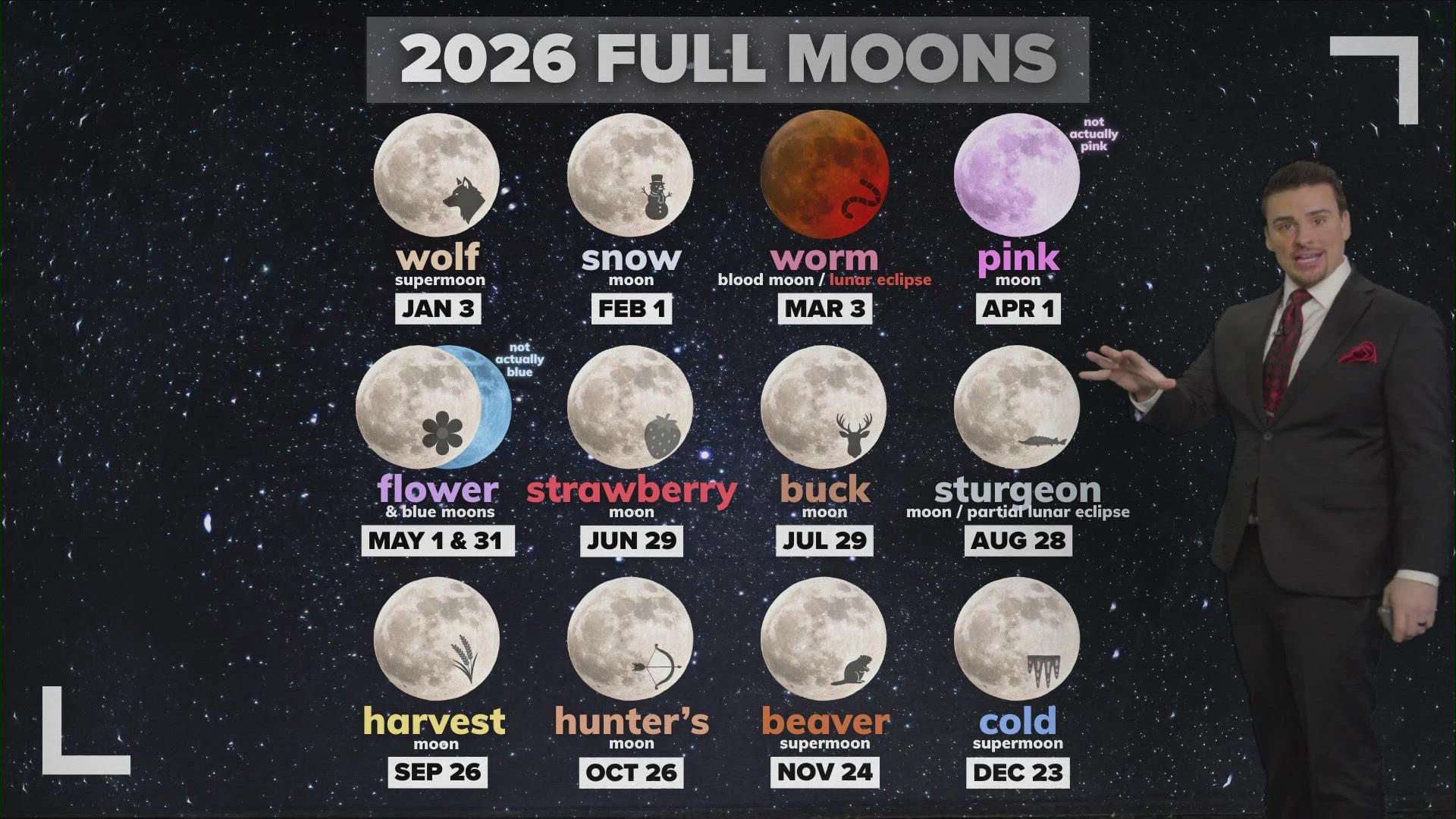
While the March 2026 Full Worm Blood Moon will be a tough act to follow, 2026 promises other celestial delights for stargazers:
- April 1, 2026: The Full Pink Moon.
- May 1, 2026: The Full Flower Moon.
- August 2026: The annual Perseid Meteor Shower, one of the year’s most reliable and spectacular meteor displays.
- August 12, 2026: A Total Solar Eclipse will be visible from parts of Greenland, Iceland, Spain, and Portugal (not from the USA, unfortunately, but still a major event!).
- Keep an eye out for planetary conjunctions and bright comets that may unexpectedly grace our skies throughout the year!
So, mark your calendars, set your alarms, and prepare to be amazed. The Full Worm Blood Moon of March 2026 is an unmissable event, offering both scientific wonder and a moment of profound connection to the universe. We hope you have clear skies and an unforgettable viewing experience!
Frequently Asked Questions
What is the date and time of the Full Moon in March 2026 in the USA?
The Full Worm Moon in March 2026 will reach its peak illumination on Tuesday, March 3, 2026, at approximately 6:38 AM Eastern Time (ET). Please refer to the provided table for specific peak times across different US time zones.
Will there be a lunar eclipse during the March 2026 Full Moon?
Yes, absolutely! The March 2026 Full Moon will coincide with a spectacular Total Lunar Eclipse, often referred to as a ‘Blood Moon’. This means the Moon will pass entirely through Earth’s darkest shadow, taking on reddish-orange hues.
What is a ‘Blood Moon’ and why is it called that?
A ‘Blood Moon’ is a common term for a total lunar eclipse. It’s called this because during totality, sunlight filtered and refracted by Earth’s atmosphere casts a reddish glow on the Moon, making it appear in various shades of orange and red.
Is the March 2026 Total Lunar Eclipse visible from all of the USA?
Yes, the entire duration of the Total Lunar Eclipse on March 3, 2026, will be visible from all of North America, including the contiguous USA, Alaska, and Hawaii, provided you have clear skies.

What is the meaning behind the name ‘Worm Moon’?
The ‘Worm Moon’ is a traditional Native American name for the March full moon. It signifies the time when the ground begins to thaw after winter, and earthworms emerge, indicating the arrival of spring and the return of birds.
Do I need special equipment to view the Total Lunar Eclipse?
No special equipment is required! A total lunar eclipse is safe to view directly with the naked eye. However, binoculars or a small telescope can greatly enhance the viewing experience, revealing more detail and color on the Moon’s surface.
What are the key times for the Total Lunar Eclipse on March 3, 2026?
The Total Eclipse begins at 6:21 AM ET, reaches Mid-Eclipse at 6:50 AM ET, and ends at 7:19 AM ET. The entire spectacle, from partial to total eclipse phases, will unfold over several hours. Check the ‘Total Lunar Eclipse Phases and US Times’ table in the article for precise timings across all major US time zones.
