Your Ultimate Guide to the March 2026 Full Moon: The Total Lunar Eclipse & The Worm Moon
Get ready, skygazers! March 2026 isn’t just delivering a beautiful Full Moon; it’s presenting a spectacular celestial double-feature. Mark your calendars for Tuesday, March 3, 2026, because the night sky will host the much-anticipated Full Worm Moon, which will also be accompanied by a rare and breathtaking Total Lunar Eclipse visible across the Americas.
This isn’t your average monthly lunar display. We’re talking about the Moon dipping into Earth’s shadow, turning a dramatic crimson hue, all while embodying the traditional ‘Worm Moon’ moniker that signals the arrival of spring. If you’re in the United States, you’re in for a treat, with excellent visibility for the eclipse.
I’m here to give you all the details: the exact dates and times, what makes this Full Moon so special, how to best view the total lunar eclipse, and what cultural and astrological significance this powerful event holds. Let’s dive in!
The March 2026 Full Moon: Key Details You Need to Know
Let’s cut right to the chase. You want the specifics, and I’ve got them for you. March’s Full Moon is a particularly exciting event due to its co-occurrence with a total lunar eclipse.
When is the Full Moon in March 2026?
The Full Moon in March 2026 will occur on:
- Date: Tuesday, March 3, 2026
- Peak Illumination Time (UTC): 10:38 Universal Coordinated Time (UTC)
- Traditional Name: The Worm Moon
- Special Feature: Coincides with a Total Lunar Eclipse
For those of us in the United States, this translates to early morning hours, making it an excellent opportunity for pre-dawn viewing of both the Full Moon and the eclipse.
Quick Reference: March 2026 Full Moon Times Across the USA
To help you prepare, here are the peak illumination times for the Full Moon across various U.S. time zones:
| Time Zone | Peak Full Moon Time (March 3, 2026) |
|---|---|
| Hawaii Standard Time (HST) | 12:38 AM HST |
| Alaska Standard Time (AST) | 1:38 AM AST |
| Pacific Standard Time (PST) | 2:38 AM PST |
| Mountain Standard Time (MST) | 3:38 AM MST |
| Central Standard Time (CST) | 4:38 AM CST |
| Eastern Standard Time (EST) | 5:38 AM EST |
The Main Event: A Total Lunar Eclipse on March 3rd, 2026
This is what truly sets the March 2026 Full Moon apart! A Total Lunar Eclipse will coincide with the Full Worm Moon, offering a breathtaking celestial spectacle. Unlike a solar eclipse, which requires special eye protection, lunar eclipses are safe to view directly and for extended periods.

What is a Total Lunar Eclipse?
A lunar eclipse occurs when the Earth passes directly between the Sun and the Moon, casting a shadow on the Moon’s surface. A total lunar eclipse means the entire Moon enters the Earth’s darkest shadow (the umbra). When this happens, the Moon doesn’t disappear completely; instead, it often takes on a stunning reddish or coppery hue, earning it the nickname “Blood Moon.”
Visibility Across the United States
The great news for skywatchers in the United States is that the entirety of North and South America will have excellent visibility of this total lunar eclipse! This means if you’re in the USA, you should be able to witness this incredible event, weather permitting. The eclipse will unfold over several hours, with the total phase offering the most dramatic views.
March 3rd, 2026 Total Lunar Eclipse Key Times (US Time Zones)
To help you plan your viewing party, here are the approximate times for the different phases of the Total Lunar Eclipse. Remember, these times are for the peak event; the Moon will already be entering the fainter outer shadow (penumbra) beforehand.
| Eclipse Phase | UTC | EST | CST | MST | PST |
|---|---|---|---|---|---|
| Partial Eclipse Begins | 09:40 UTC | 04:40 AM EST | 03:40 AM CST | 02:40 AM MST | 01:40 AM PST |
| Total Eclipse Begins | 10:41 UTC | 05:41 AM EST | 04:41 AM CST | 03:41 AM MST | 02:41 AM PST |
| Greatest Eclipse (Mid-totality) | 11:20 UTC | 06:20 AM EST | 05:20 AM CST | 04:20 AM MST | 03:20 AM PST |
| Total Eclipse Ends | 11:59 UTC | 06:59 AM EST | 05:59 AM CST | 04:59 AM MST | 03:59 AM PST |
| Partial Eclipse Ends | 13:00 UTC | 08:00 AM EST | 07:00 AM CST | 06:00 AM MST | 05:00 AM PST |
As you can see, the total phase of the eclipse will occur in the very early morning hours for most of the U.S., potentially leading right up to sunrise in some eastern locations. This means you might get a chance to see a dramatically colored Moon low on the horizon, a truly rare sight!

Why is the Moon Red? The “Blood Moon” Phenomenon Explained.
During a total lunar eclipse, the Moon often takes on a reddish or orange tint. This isn’t because the Moon itself is changing color, but due to a phenomenon called Rayleigh scattering. When sunlight passes through Earth’s atmosphere, blue light is scattered away more easily than red light. The red light then bends around the Earth and illuminates the Moon.
Think of it like a sunset or sunrise: the same scattering effect causes the sky to appear reddish or orange near the horizon. During a total lunar eclipse, you are essentially seeing all the world’s sunrises and sunsets projected onto the lunar surface!
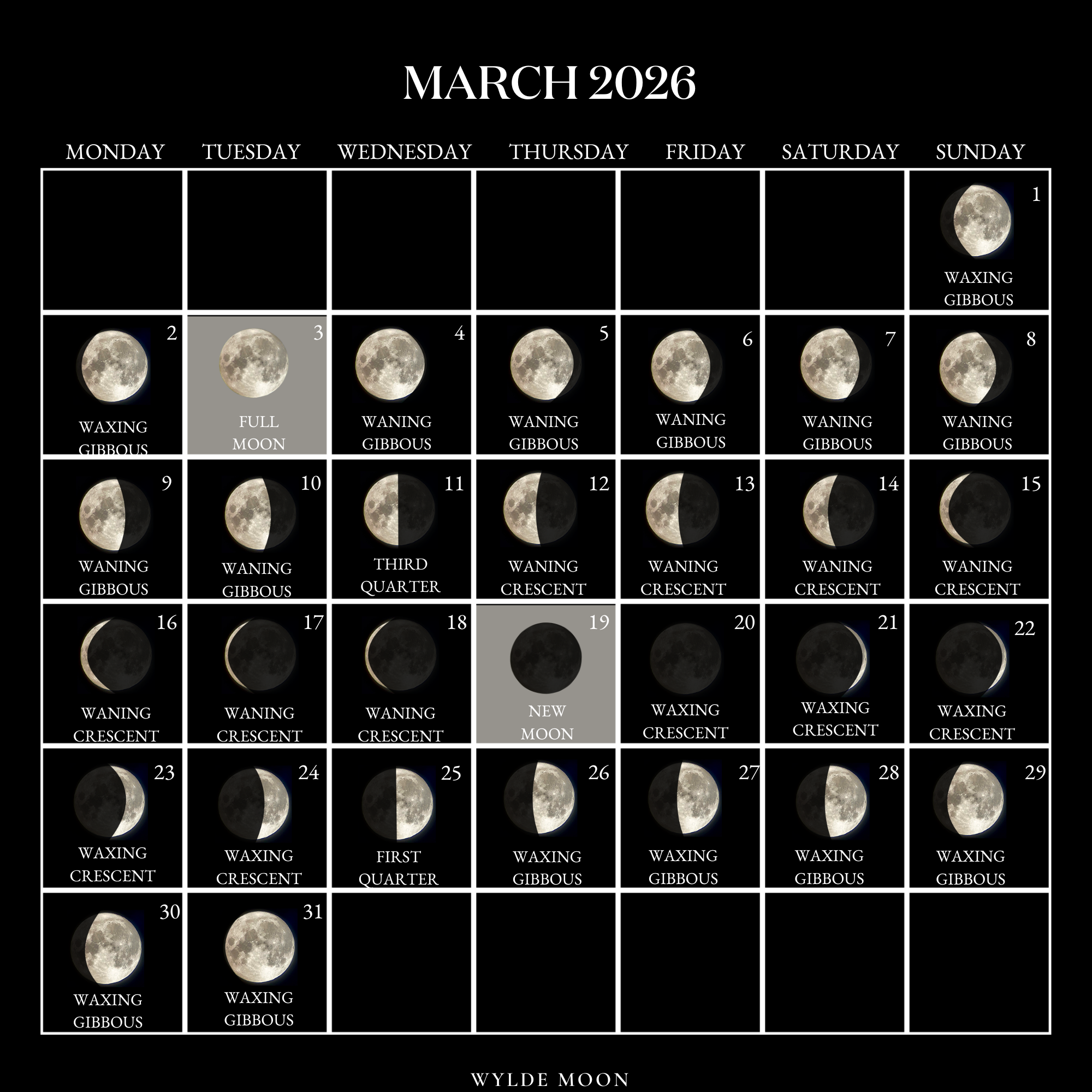
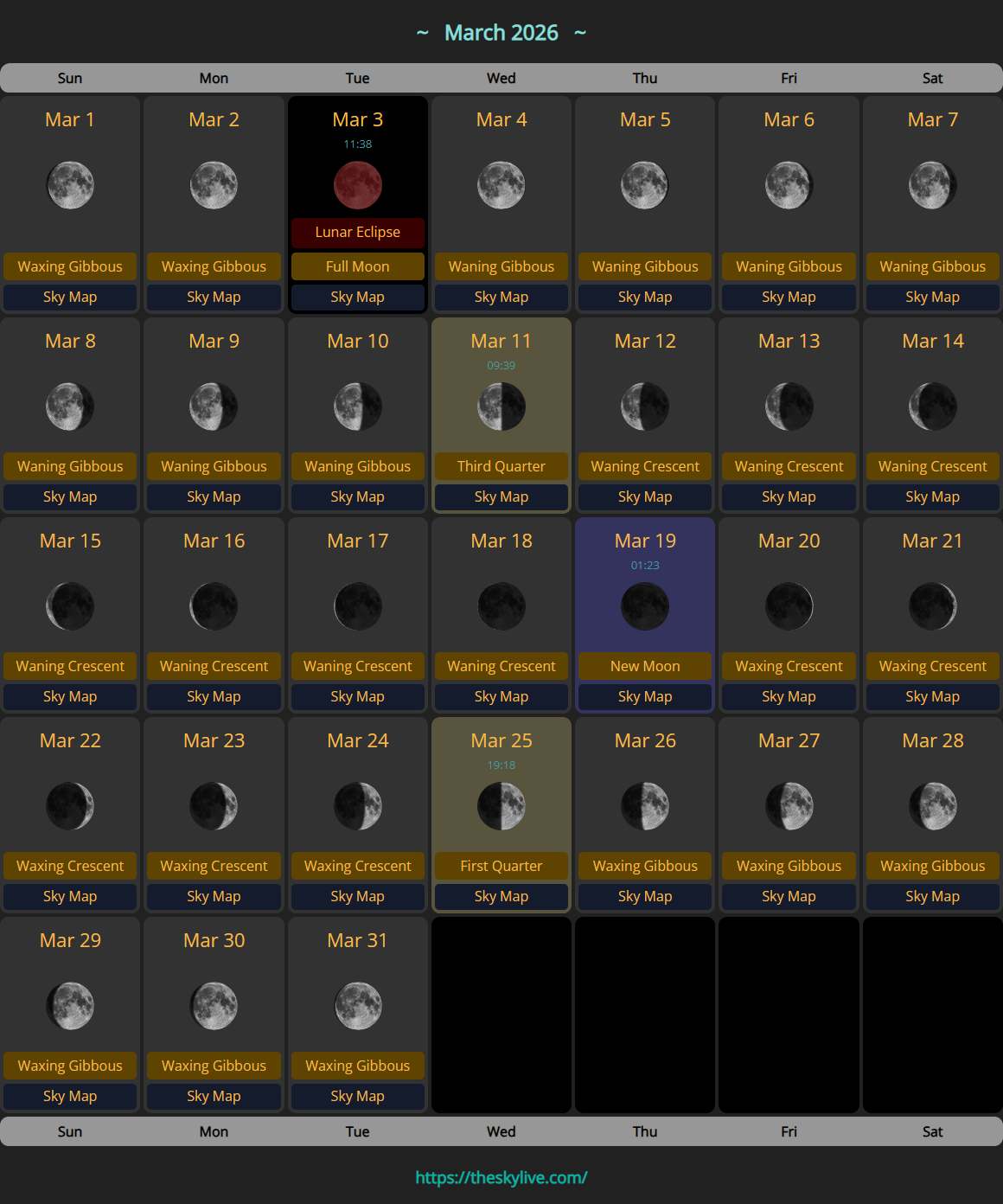
March 2026 Lunar Calendar: All Moon Phases
While the Full Moon and total lunar eclipse are the stars of March 2026, the month offers a complete cycle of lunar phases. Understanding these phases can help you connect with the natural rhythms of the sky throughout the month.
| Moon Phase | Date (2026) | Time (UTC) | Time (EST) | Traditional Name (Full Moon Only) |
|---|---|---|---|---|
| Full Moon | March 3 | 10:38 UTC | 5:38 AM EST | Worm Moon |
| Last Quarter Moon | March 11 | 00:03 UTC | 7:03 PM EST (March 10) | – |
| New Moon | March 18 | 17:34 UTC | 12:34 PM EST | – |
| First Quarter Moon | March 25 | 19:02 UTC | 2:02 PM EST | – |
Observing these different phases can be a fascinating way to track the Moon’s journey across the sky and deepen your connection with celestial cycles.
Unpacking the “Worm Moon”: History and Meaning
Every Full Moon has a traditional name, and the March Full Moon is famously known as the Worm Moon. But where did this unique and somewhat curious name originate?
Origins of the Name
The name “Worm Moon” is primarily attributed to Native American tribes, particularly those from the northern and eastern parts of the United States. It signifies the end of winter and the much-anticipated arrival of spring. As the ground begins to thaw after the long, cold months, earthworms start to emerge, signaling that the soil is ready for planting and that migratory birds, like robins, are returning to feast on them.
Other traditional names for the March Full Moon include:
- Crow Moon: Referring to the cawing of crows signaling the end of winter.
- Sap Moon: Marking the time when maple sap begins to flow.
- Crust Moon: From the crust on the snow that forms when it thaws by day and freezes by night.
- Lenten Moon: In some Christian traditions, falling during the period of Lent.
Regardless of the name, the message is clear: March’s Full Moon is a powerful symbol of renewal, awakening, and the promise of new life after winter’s dormancy.
Cultural and Astrological Significance
Beyond its astronomical beauty, the Full Moon, especially when accompanied by an eclipse, carries profound cultural and astrological weight.
- Ending Winter & New Beginnings: The Worm Moon embodies the transition from barrenness to fertility. It’s a time for shedding what no longer serves you and preparing for growth, much like the thawing earth.
- Introspection and Release: Full Moons are naturally periods of culmination and heightened energy. With the eclipse, this energy is amplified. It’s an ideal time for introspection, releasing old habits, or completing projects.
- Astrology – The Virgo Full Moon: The March 3, 2026 Full Moon occurs when the Sun is in Pisces and the Moon is in the opposing sign of Virgo. This Virgo Full Moon encourages us to focus on practical matters, organization, health, and service. With the lunar eclipse adding an extra layer of intensity, it suggests a powerful time for clearing out what’s not working, refining routines, and paying attention to details that lead to greater well-being. Eclipses are often seen as cosmic wildcards, bringing fated events, sudden changes, and accelerated growth.
- Emotional Amplification: Expect emotions to be running high around an eclipse. It’s a time for deep processing and revealing hidden truths. Be mindful of your reactions and seek constructive ways to channel this potent energy.
Whether you lean into the scientific, cultural, or astrological interpretations, the March 2026 Full Worm Moon with its total lunar eclipse is undoubtedly a moment of amplified energy and profound significance.
How to Best Observe the March 2026 Full Worm Moon & Total Lunar Eclipse
You’ve got the dates and times; now let’s talk about how to make the most of this spectacular event. Don’t just read about it; experience it firsthand!
- Find a Clear View: For the best experience, try to find a location away from city lights and tall buildings that might obstruct your view. A wide-open field, a park, or even your backyard with a clear horizon can work wonders.
- No Special Equipment Needed: One of the best things about a lunar eclipse is that you don’t need any special glasses or equipment to view it safely. Your naked eyes are perfectly fine!
- Binoculars or a Telescope for Detail: While not essential, a good pair of binoculars or a small telescope will greatly enhance your viewing experience, especially during the total eclipse. You’ll be able to see the subtle colors and textures on the Moon’s surface as it passes through Earth’s shadow.
- Check the Local Weather Forecast: This is perhaps the most critical step. Cloudy skies will unfortunately obscure your view. Keep an eye on the weather in the days leading up to March 3rd.
- Dress for the Night Air: Even if March brings hints of spring, early morning hours can still be chilly. Bundle up in layers to stay comfortable while you watch the show unfold.
- Embrace the Moment: Take some time to simply be present. Watch the Moon transform, appreciate the quiet of the early morning, and connect with the vastness of the cosmos. If you’re into photography, this is a fantastic opportunity for some unique astrophotography!
Looking Ahead: The April 2026 Full Moon
Once you’ve enjoyed the spectacle of the March Full Worm Moon and its total lunar eclipse, you might already be wondering about the next celestial event. The Full Moon in April 2026, known as the Pink Moon, will grace our skies on Wednesday, April 1, 2026. This name traditionally refers to the early spring flower, Wild Ground Phlox, which is one of the first widespread flowers of spring. So, keep your eyes on the skies, as the lunar journey continues!
Conclusion
The March 2026 Full Worm Moon, coupled with a magnificent Total Lunar Eclipse, promises to be one of the year’s most anticipated celestial events. It’s a powerful moment of transition, astronomical wonder, and symbolic renewal. Whether you’re an avid astronomer, an amateur stargazer, or simply someone who appreciates the beauty of the night sky, make sure to mark your calendar for March 3, 2026. Prepare to be amazed by the Moon’s dramatic transformation and the deep significance of this unique lunar event!
Frequently Asked Questions
What is the exact date and time of the Full Moon in March 2026?
The Full Moon in March 2026, known as the Worm Moon, will occur on Tuesday, March 3, 2026, reaching its peak illumination at 10:38 UTC. For the Eastern Standard Time (EST) zone in the USA, this will be at 5:38 AM EST on March 3rd.
What is the traditional name for the March 2026 Full Moon?
The traditional name for the March 2026 Full Moon is the ‘Worm Moon.’ This name originates from Native American traditions, signifying the thawing ground and the emergence of earthworms, which marks the beginning of spring.
Will there be a lunar eclipse in March 2026?
Yes, incredibly, the March 2026 Full Worm Moon will coincide with a Total Lunar Eclipse! This is a major celestial event where the Moon passes entirely into Earth’s shadow.
What does a Total Lunar Eclipse mean for observers?
During a Total Lunar Eclipse, the Moon often takes on a dramatic reddish or coppery hue, sometimes called a ‘Blood Moon.’ This happens because sunlight filtered through Earth’s atmosphere (the combined effect of all the world’s sunrises and sunsets) is cast upon the Moon. It’s completely safe to view directly without any special equipment.
Is the March 2026 Full Moon a Supermoon?
No, the March 2026 Full Moon is not classified as a Supermoon. A Supermoon occurs when a Full Moon coincides with the Moon’s closest approach to Earth (perigee), making it appear slightly larger and brighter than usual.
What is the astrological significance of the March 2026 Full Moon?
Astrologically, the March 3, 2026 Full Moon occurs with the Sun in Pisces and the Moon in Virgo. This Virgo Full Moon, amplified by the total lunar eclipse, highlights themes of practical action, self-improvement, health, and releasing what no longer serves our well-being. Eclipses often signify fated events, endings, and new beginnings.
Do I need special equipment to view the Full Moon or lunar eclipse?
No special equipment is needed to view the Full Moon or a total lunar eclipse safely. You can observe both with your naked eyes. However, binoculars or a small telescope can enhance the experience, allowing you to see more details and the subtle color changes during the eclipse.
