The March 2026 Full Moon: Date, Time, The Worm Moon, and a Total Lunar Eclipse You Can’t Miss!
Mark your calendars, skygazers! March 2026 isn’t just bringing us another beautiful Full Moon; it’s delivering a celestial double feature that promises to be truly unforgettable. On Tuesday, March 3, 2026, not only will the annual Worm Moon grace our skies, but it will also coincide with a spectacular Total Lunar Eclipse. This means the Moon will take on a dramatic “Blood Moon” hue, making it a must-see event for everyone across North and South America and beyond.
Are you ready to witness the exact moment of peak illumination and learn precisely when the eclipse will unfold? Do you want to understand the rich history behind the Worm Moon’s name and what makes a lunar eclipse so special? You’ve come to the right place. Let’s dive into all the essential details to ensure you don’t miss a single moment of this incredible cosmic display.
When to Witness the March 2026 Full Moon (and the Eclipse!)
Let’s get straight to the point. Knowing the precise date and time is crucial for planning your stargazing experience. This March, the Full Moon arrives early in the month, setting the stage for an early spring spectacle.

The Exact Moment: Date and Peak Time
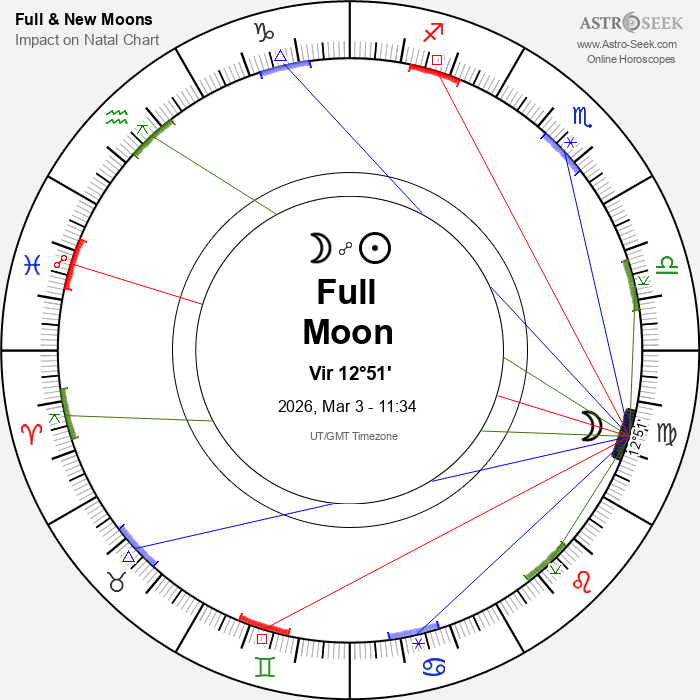
The March 2026 Full Moon reaches its peak illumination on Tuesday, March 3, 2026, at 11:37 AM UTC. For those of us in the United States, this translates to early morning hours, making it perfect for an inspiring pre-dawn or early morning viewing, especially for the accompanying eclipse.
| Event | Date | Time (UTC) | Time (EST) | Time (CST) | Time (MST) | Time (PST) |
|---|---|---|---|---|---|---|
| Full Moon Peak Illumination | March 3, 2026 | 11:37 AM | 6:37 AM | 5:37 AM | 4:37 AM | 3:37 AM |
Even though the peak illumination occurs in the morning, the Moon will appear full to the naked eye for approximately three days surrounding this precise moment. So, if you miss the exact peak, you’ll still have ample opportunity to appreciate its glorious glow.
Total Lunar Eclipse: A Spectacle You Won’t Forget
This is where March 2026 gets truly exciting! The Full Moon will pass directly through the Earth’s shadow, creating a Total Lunar Eclipse. Unlike solar eclipses, which require special eye protection, lunar eclipses are completely safe to view directly and offer a stunning transformation of our nearest celestial neighbor.
During a total lunar eclipse, the Moon doesn’t disappear; instead, it often takes on a striking reddish-orange hue, earning it the nickname “Blood Moon.” This happens because sunlight, filtered through Earth’s atmosphere, bends and scatters, allowing only the red light to reach and illuminate the Moon’s surface.
Key Timings for the March 2026 Total Lunar Eclipse (March 3, 2026)
The eclipse has several distinct phases, each offering its own unique visual experience:
| Eclipse Stage | Time (UTC) | Time (EST) | Time (CST) | Time (MST) | Time (PST) |
|---|---|---|---|---|---|
| Penumbral Eclipse Begins | 09:02 AM | 04:02 AM | 03:02 AM | 02:02 AM | 01:02 AM |
| Partial Eclipse Begins | 10:14 AM | 05:14 AM | 04:14 AM | 03:14 AM | 02:14 AM |
| Total Eclipse Begins | 11:18 AM | 06:18 AM | 05:18 AM | 04:18 AM | 03:18 AM |
| Maximum Eclipse | 11:37 AM | 06:37 AM | 05:37 AM | 04:37 AM | 03:37 AM |
| Total Eclipse Ends | 11:57 AM | 06:57 AM | 05:57 AM | 04:57 AM | 03:57 AM |
| Partial Eclipse Ends | 01:00 PM | 08:00 AM | 07:00 AM | 06:00 AM | 05:00 AM |
| Penumbral Eclipse Ends | 02:11 PM | 09:11 AM | 08:11 AM | 07:11 AM | 06:11 AM |
Visibility: The entirety of this Total Lunar Eclipse will be visible from North and South America, parts of Europe, and western Africa. For observers in the USA, the Moon will be relatively high in the western sky during the early morning hours, providing an excellent view of the entire event, from the subtle penumbral phase to the dramatic totality.
Understanding the “Worm Moon”: More Than Just a Name
Every Full Moon has a unique name, often rooted in the natural cycles and folklore of various cultures. The March Full Moon is traditionally known as the Worm Moon, and its origin tells a fascinating story of seasonal transition.
Origins of the Worm Moon Name
The most widely accepted origin of the “Worm Moon” comes from Native American traditions, particularly those of tribes in the northern and eastern parts of North America. As winter’s grip begins to loosen in March, the ground thaws, and the first signs of spring emerge. This is when earthworms start to reappear, wriggling up through the warming soil, signaling the return of robins and other birds.
For indigenous peoples, the sight of the worms was a crucial indicator. It meant the earth was awakening, and soon, the hunting and foraging seasons would become more fruitful. It was a sign of renewal, rebirth, and the end of the lean winter months.
Other Names for the March Full Moon
While “Worm Moon” is the most common, different cultures and regions had their own names for the March Full Moon, reflecting their unique observations of the season:

- Crow Moon: Named by some tribes for the cawing of crows, signaling the end of winter.
- Sap Moon / Sugar Moon: These names refer to the season for tapping maple trees for their sap, which is then boiled down to make syrup.
- Lenten Moon: In Christian tradition, this name is associated with the period of Lent, which often falls around March.
- Chaste Moon: Some European traditions called it the Chaste Moon, symbolizing purity and the awakening of nature.
These diverse names highlight humanity’s long-standing connection to the lunar cycle and its profound influence on daily life, agriculture, and spiritual practices.
The “Blood Moon” Connection
When a total lunar eclipse occurs, as it will this March, the Full Moon is often referred to as a “Blood Moon.” This dramatic moniker isn’t due to anything ominous, but rather the stunning visual effect created by Earth’s atmosphere. During totality, as the Earth passes directly between the Sun and the Moon, sunlight must first travel through our planet’s atmosphere to reach the Moon’s surface.
Our atmosphere scatters blue light more effectively than red light – which is why our sky is blue. The redder light, however, can pass through and is refracted (bent) onto the Moon. This results in the Moon appearing in shades of orange, deep red, or even brownish-red, depending on factors like dust, clouds, and volcanic ash in Earth’s atmosphere at the time of the eclipse. It’s an absolutely breathtaking sight, transforming the familiar silvery orb into a fiery spectacle.
The Full Lunar Cycle of March 2026: Every Phase Explained
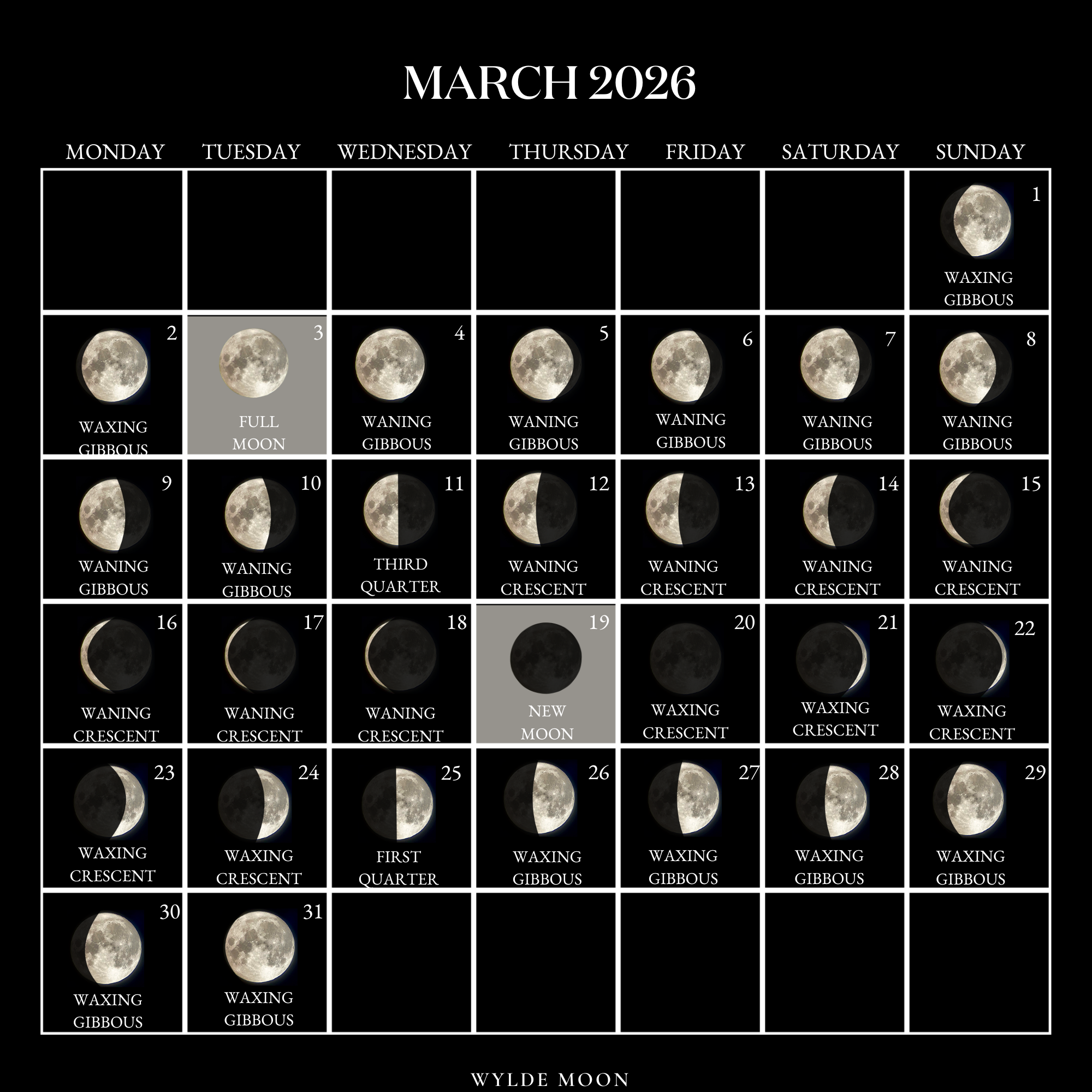
While the Full Moon and Total Lunar Eclipse are the undisputed highlights of March 2026, the entire month offers a fascinating journey through the Moon’s phases. Understanding these phases enriches your appreciation of our celestial companion and its consistent rhythm.
March 2026 Moon Phases at a Glance
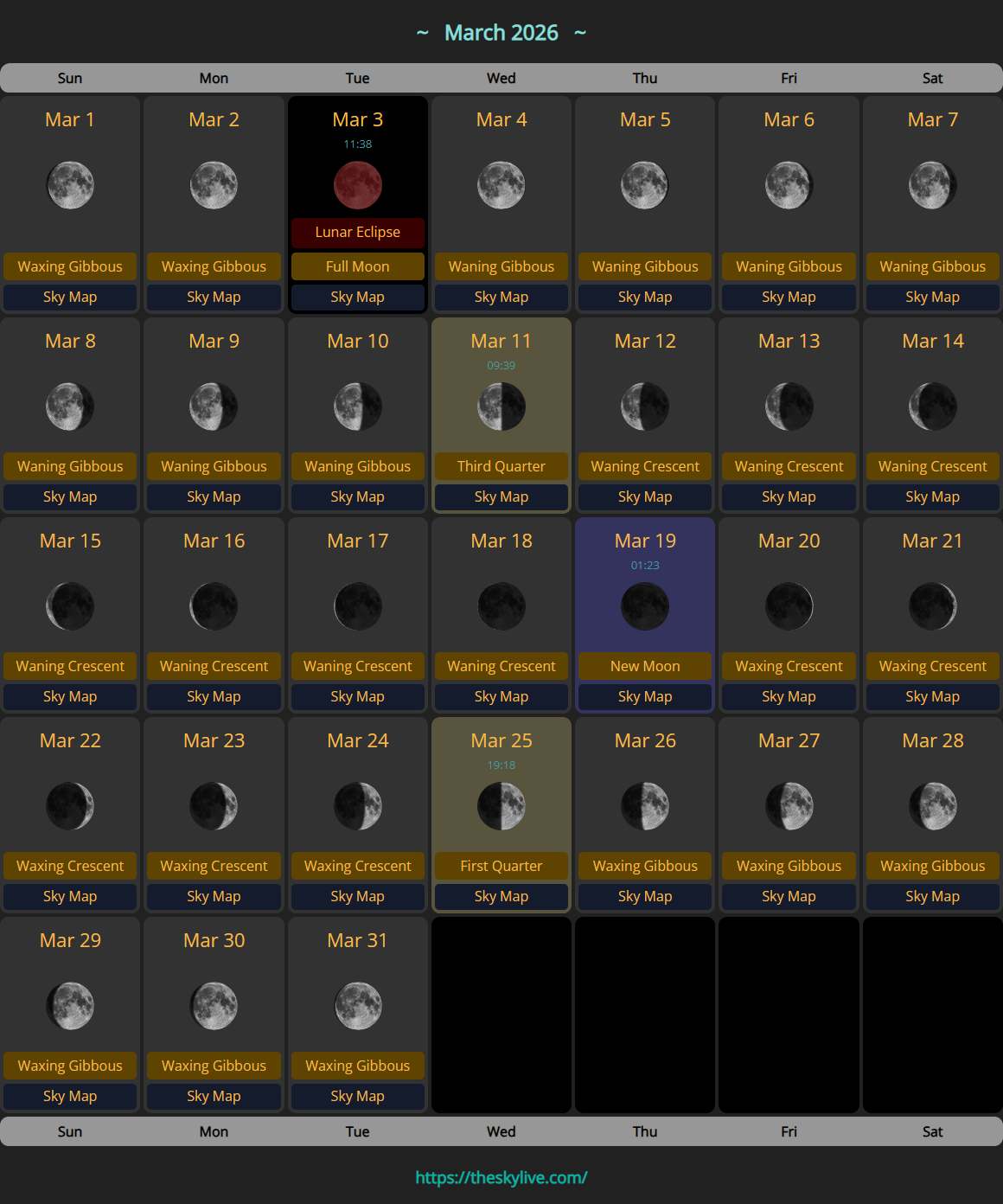
Here’s a detailed look at the major moon phases for March 2026, including their dates and precise UTC times:
| Moon Phase | Date | Time (UTC) | Approx. Illumination |
|---|---|---|---|
| Full Moon (Worm Moon / Total Lunar Eclipse) | March 3, 2026 | 11:37 AM | 100% |
| Last Quarter | March 11, 2026 | 07:05 PM | 50% |
| New Moon | March 19, 2026 | 06:26 PM | 0% |
| First Quarter | March 25, 2026 | 01:41 PM | 50% |
Beyond these main phases, the Moon continuously changes, waxing (growing larger) from New Moon to Full Moon, and waning (shrinking) from Full Moon to New Moon. Keep an eye out for the subtle beauty of the Waxing Crescent, Waxing Gibbous, Waning Gibbous, and Waning Crescent phases throughout the month.
What Each Phase Means
The Moon’s phases are determined by the changing angles at which we view its illuminated surface from Earth. Here’s a quick rundown:
- New Moon: The Moon is positioned between the Earth and the Sun, so its illuminated side faces away from us. It’s virtually invisible in the sky.
- Waxing Crescent: A sliver of the Moon becomes visible as it moves away from the Sun. The illuminated portion grows each night.
- First Quarter: Exactly half of the Moon is illuminated. It appears as a perfect D-shape in the Northern Hemisphere.
- Waxing Gibbous: More than half, but not all, of the Moon is illuminated. It continues to grow towards full.
- Full Moon: The entire face of the Moon is illuminated by the Sun, appearing as a perfect circle. This is when the Total Lunar Eclipse occurs!
- Waning Gibbous: The illumination begins to decrease after the Full Moon, but more than half is still visible.
- Last Quarter: Again, exactly half of the Moon is illuminated, but this time the opposite side from the First Quarter. It appears as a C-shape.
- Waning Crescent: Only a sliver of the Moon remains visible as it approaches the New Moon phase once more.
Why You Should Look Up: Observing the March Full Moon and Eclipse
This March, the celestial show isn’t just for seasoned astronomers. It’s a perfect opportunity for everyone – families, friends, or even a solo moment of reflection – to connect with the universe. You don’t need fancy equipment, just your eyes and a clear sky.
Preparing for the Eclipse: No Special Gear Needed!
One of the most beautiful aspects of a lunar eclipse is its accessibility. Unlike solar eclipses, where direct viewing can cause permanent eye damage, a lunar eclipse is perfectly safe to watch with the naked eye. Here’s how to make the most of it:
- Find a Clear View: Head outside to an open area with an unobstructed view of the western sky (for USA observers) during the early morning hours. Your backyard, a local park, or even a balcony can work.
- Minimize Light Pollution: While not as critical as for deep-sky objects, reducing light pollution will enhance the visual drama of the eclipse and the deep reddish hues.
- Get Comfortable: The eclipse will last for several hours. Bring a comfortable chair, a blanket, and a warm drink. Make it an experience!
- Binoculars (Optional, but Recommended): While not necessary, a pair of binoculars will offer a magnified view, revealing the Moon’s craters and surface details, and making the color changes during the eclipse even more striking.
- Share the Experience: Gather loved ones. Celestial events are always better when shared!
Capturing the Moment: Photography Tips
If you’re into photography, a lunar eclipse is a fantastic subject. Here are a few quick tips:
- Use a Tripod: Essential for steady shots, especially during the darker total phase.
- Telephoto Lens: If you have one, it will help fill the frame with the Moon.
- Manual Settings: Experiment with ISO, aperture, and shutter speed. Start with a low ISO (100-400), a relatively open aperture (f/5.6 or wider), and adjust shutter speed from fractions of a second (for the brighter partial phases) to several seconds (for totality).
- Shoot in RAW: This gives you more flexibility for post-processing.
- Practice First: Try shooting the Full Moon a night or two before the eclipse to get familiar with your camera settings.
Connecting with the Cosmos: Reflection and Rituals
Beyond the scientific wonder, the Full Moon, and especially a Blood Moon eclipse, holds deep significance for many cultures and individuals. It’s a powerful time for:
- Reflection: Take a moment to ponder your place in the universe, your goals, and your journey.
- Release: Full Moons are often seen as a time to release what no longer serves you. Write down anything you want to let go of and symbolically release it under the Moon’s glow.
- Setting Intentions: While the New Moon is typically for setting new intentions, the Full Moon can be a time to acknowledge progress or to set intentions for amplifying existing goals.
- Mindful Observation: Simply sit, watch, and be present with the celestial event. It’s a beautiful reminder of the natural rhythms that govern our world.
The Bigger Picture: 2026 Full Moons and Future Eclipses
The March 2026 Full Moon and its accompanying Total Lunar Eclipse are just one of many celestial wonders you can look forward to. The year 2026 promises several other captivating Full Moons, each with its own traditional name and unique charm. While the March event stands out due to the eclipse, remember to keep an eye on the sky throughout the year for the Pink Moon in April, the Flower Moon in May, and all the other lunar spectacles.
Total Lunar Eclipses are relatively common compared to Total Solar Eclipses, occurring at least twice a year on average. However, seeing one coincide with a traditionally named Full Moon, visible across such a wide region, is always a special treat. Mark your calendars for future eclipses and Full Moons, and continue to explore the endless wonders of our night sky.
Whether you’re an experienced astronomer or a curious newcomer, the March 2026 Full Worm Moon and Total Lunar Eclipse offer an incredible opportunity to connect with the cosmos. Don’t miss this chance to witness the Moon’s dramatic transformation and reflect on the ancient rhythms that continue to captivate us.
Frequently Asked Questions
What time is the Full Moon in March 2026?
The March 2026 Full Moon reaches peak illumination on Tuesday, March 3, 2026, at 11:37 AM UTC. This translates to 6:37 AM EST, 5:37 AM CST, 4:37 AM MST, and 3:37 AM PST in the United States.
What is the March 2026 Full Moon called?
The March 2026 Full Moon is traditionally known as the ‘Worm Moon.’ This name comes from Native American folklore, signaling the thawing ground and the emergence of earthworms as spring begins.
Will there be an eclipse during the March 2026 Full Moon?
Yes, incredibly, the March 3, 2026 Full Moon will coincide with a spectacular Total Lunar Eclipse. This is often referred to as a ‘Blood Moon’ due to the reddish hue the Moon takes on during totality.
Why is a lunar eclipse sometimes called a ‘Blood Moon’?
During a total lunar eclipse, the Earth passes directly between the Sun and the Moon. Sunlight, filtered and refracted by Earth’s atmosphere, scatters blue light more, allowing primarily red and orange light to reach and illuminate the Moon, making it appear reddish.
Do I need special equipment to watch the March 2026 lunar eclipse?
No, you do not need any special equipment. A lunar eclipse is completely safe to view with the naked eye. Binoculars or a small telescope can enhance the view of craters and color changes, but they are not required.
What causes the different moon phases?
The Moon’s phases are caused by the changing angles at which we view the Moon’s sunlit surface from Earth. As the Moon orbits Earth, different portions of its face are illuminated by the Sun, creating the familiar progression from New Moon to Full Moon and back again.
Where will the March 2026 Total Lunar Eclipse be visible?
The March 2026 Total Lunar Eclipse will be fully visible across North and South America, as well as parts of Europe and western Africa. Observers in the USA will have an excellent view of the entire event in the early morning hours.
