Your Essential Guide to March 2026 Public Holidays in India (for US Planners)
Planning a trip to India in March 2026? Or perhaps you’re managing business operations and need to understand the local calendar? Good call. India’s vibrant culture means a calendar packed with festivals and observances, and March 2026 is no exception. Knowing the public holidays isn’t just about avoiding closed banks; it’s about understanding potential travel disruptions, business closures, and immersing yourself respectfully in local customs.

Forget the generic lists. This isn’t just a calendar; it’s your go-to resource, specifically crafted to help you, the US-based traveler or business professional, navigate India’s March 2026 holidays with confidence. We’ll give you the definitive dates, dive into the cultural significance, and offer practical advice you won’t find anywhere else.
March 2026 Public Holidays in India: The Definitive List
India is a tapestry of cultures, and its holidays reflect this diversity. While there are a handful of national holidays observed nationwide, many others are state-specific. For March 2026, several significant national holidays will bring cities to a halt, or at least slow them down. Here’s a clear breakdown of what you need to know:
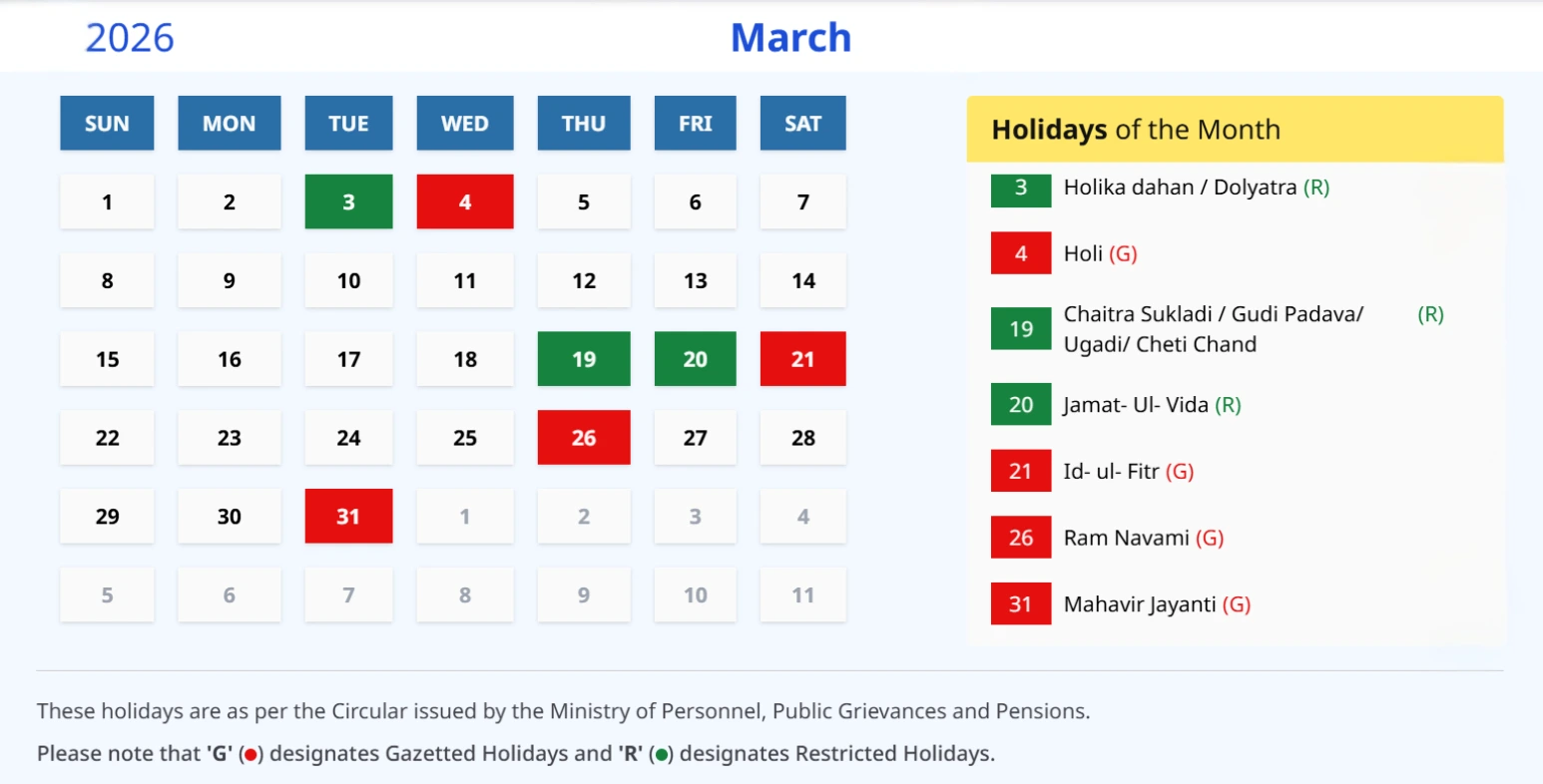
| Date | Day | Holiday Name | Type | Significance | Notes for Planners |
|---|---|---|---|---|---|
| March 4, 2026 | Wednesday | Holi | Gazetted (National) | Festival of Colors, celebrating spring, love, and the triumph of good over evil. | Major public holiday. Expect widespread closures, festive disruptions, and joyous celebrations. Be prepared for playful color throwing. |
| March 20, 2026 | Friday | March Equinox | Observance | Astronomical event marking the beginning of spring in the Northern Hemisphere. | Not a public holiday, but culturally significant in some contexts. No business impact. |
| March 21, 2026 | Saturday | Id-ul-Fitr | Gazetted (National) | Marks the end of Ramadan, the Islamic holy month of fasting. | Highly Tentative Date. Based on moon sighting; could shift by a day or two. Expect closures in Muslim-majority regions. |
| March 26, 2026 | Thursday | Rama Navami | Gazetted (National) | Celebrates the birth of Lord Rama, a principal deity of Hinduism. | Widespread observance, especially in North India. Expect some closures and religious events. |
| March 31, 2026 | Tuesday | Mahavir Jayanti | Gazetted (National) | Celebrates the birth of Mahavir, the 24th and last Tirthankara of Jainism. | Observed widely in states with significant Jain populations (e.g., Gujarat, Rajasthan). Limited impact nationwide but expect closures in these areas. |
Understanding India’s Holiday System: Gazetted vs. Restricted
Before you finalize those travel plans, it’s crucial to grasp the nuances of India’s holiday classifications. This isn’t just academic; it directly impacts what’s open, what’s closed, and what you can expect during your visit.
- Gazetted Holidays (Public Holidays): These are the big ones. Also known as National Holidays, these are generally observed across the entire country. Government offices, banks, and many private businesses will be closed. Transportation might be affected, and crowds will be common in popular tourist spots or religious sites. The holidays listed above are primarily Gazetted Holidays, meaning they’ll have a significant impact nationwide.
- Restricted Holidays (Optional Holidays): These are holidays for which employees can choose to take leave, typically limited to one or two per year. While businesses remain open, some staff might be absent. These often correspond to regional festivals or religious observances specific to certain communities. Unless you’re dealing with a highly localized business, these generally won’t impact your wider travel or business operations significantly.
- State-Specific Holidays: Beyond the Gazetted list, each Indian state has its own set of holidays, celebrating local deities, regional historical events, or harvest festivals. This is why you might see slight variations in holiday lists from different sources. If your travel or business is concentrated in a specific state (e.g., Maharashtra, Kerala, West Bengal), it’s vital to consult that state’s official holiday calendar for a complete picture.
Important Note on Lunar-Based Holidays: Dates Can Be Tentative
You might have noticed a “Highly Tentative Date” next to Id-ul-Fitr. This isn’t an error; it’s a critical detail when planning anything in India. Many major Indian festivals, particularly those following the Islamic or Hindu lunisolar calendars, do not have fixed Gregorian dates. Their exact timing depends on astronomical observations, often the sighting of the moon, or specific astrological calculations.
For example, Id-ul-Fitr is determined by the sighting of the new moon. While predictions are made well in advance, the official declaration can sometimes come just a day or two before the event, leading to a shift of plus or minus one day. This can be a huge factor if you’ve booked tight travel connections or critical business meetings. Always keep an eye on local news sources or official government announcements closer to the date for final confirmation.
Similarly, holidays like Holi and Rama Navami, while generally more fixed in the Hindu calendar, can sometimes have slight regional variations in observance dates, often by a day, based on local panchang (Hindu calendar) traditions or specific community practices. While our table reflects the most widely accepted dates for 2026, exercise flexibility.
Deep Dive into March 2026 Public Holidays: Significance & Celebrations
Knowing when a holiday is, is only half the battle. Understanding what it is and how it’s celebrated offers invaluable context for navigating India’s dynamic landscape. It helps you anticipate the mood, the crowds, and even how to participate respectfully.
Holi: The Festival of Colors (March 4th, 2026)
If you’re in India in early March, you can’t miss Holi. This isn’t just a festival; it’s an experience. Holi marks the arrival of spring, the triumph of good over evil, and is a day for forgetting grievances and celebrating with joy. The most iconic aspect is the throwing of colorful powders (gulal) and water at friends, family, and even strangers.
- Significance: Celebrates the victory of Prahlada over Holika (representing evil) and the eternal love of Radha and Krishna. It’s also a time to bid farewell to winter and welcome the vibrancy of spring.
- How it’s Celebrated:
- Holika Dahan: On the eve of Holi (March 3rd, 2026), bonfires are lit to symbolize the burning of evil.
- Rangwali Holi: The main day (March 4th, 2026) is pure revelry. People take to the streets, splashing each other with water guns and smearing colored powders. Expect music, dancing, and general merriment.
- Food & Drink: Special delicacies like gujiya (sweet dumplings), malpua (pancakes), and thandai (a refreshing milk-based drink, often infused with cannabis in some regions) are enjoyed.
- Regional Variations: While celebrated nationwide, Holi in places like Mathura, Vrindavan, and Barsana (Uttar Pradesh) is legendary, often extending for several days with unique traditions like ‘Lathmar Holi’ where women playfully beat men with sticks.
- Impact for You: While incredibly fun, be aware. Many businesses will be closed, especially on Rangwali Holi. Public transport might be limited, and streets will be crowded. If you don’t want to get covered in color, stay indoors or be prepared to join in!
Id-ul-Fitr: Celebrating the End of Ramadan (Tentative: March 21st, 2026)
Id-ul-Fitr, often simply called Eid, is one of the most significant festivals in the Islamic calendar. It marks the joyful conclusion of Ramadan, the month of fasting, reflection, and prayer.
- Significance: A celebration of gratitude to Allah for strength during Ramadan, emphasizing charity (Zakat al-Fitr), communal prayer, and feasting.
- How it’s Celebrated:
- Morning Prayers: Muslims gather in large congregations at mosques or open grounds for special prayers.
- Feasting & Family Visits: Families dress in new clothes, prepare elaborate meals, exchange gifts, and visit relatives and friends. The atmosphere is one of immense joy and community.
- Charity: Giving to the less fortunate is a cornerstone of Eid, ensuring everyone can participate in the celebrations.
- Impact for You: As a Gazetted Holiday, expect closures of government offices, banks, and many businesses, particularly in areas with significant Muslim populations (e.g., Uttar Pradesh, Bihar, West Bengal, Kerala, parts of Delhi). Travel may be busier around major cities. Respect local customs, especially around mosques and during prayer times.
Rama Navami: The Birth of Lord Rama (March 26th, 2026)
Rama Navami is a major Hindu festival celebrating the birth of Lord Rama, the seventh avatar of Vishnu and a central figure in the Hindu epic Ramayana. It’s a day of devotion, contemplation, and spiritual renewal.
- Significance: Honors Lord Rama, revered for his righteousness, courage, and adherence to Dharma (moral duty).
- How it’s Celebrated:
- Temple Visits & Prayers: Devotees visit temples, offer prayers, sing devotional songs (bhajans), and recite sacred texts from the Ramayana.
- Fasting: Many Hindus observe a fast on this day.
- Processions (Rath Yatra): In some regions, especially Ayodhya (Rama’s birthplace), elaborate processions with decorated chariots carrying idols of Rama, Sita, Lakshmana, and Hanuman are taken out.
- Impact for You: While a Gazetted Holiday, the impact on general business might be less disruptive than Holi or Eid, but still significant. Government offices and banks will be closed. Expect crowds around temples and potential local processions, especially in North India.
Mahavir Jayanti: A Jain Celebration (March 31st, 2026)
Mahavir Jayanti commemorates the birth of Mahavir, the 24th and last Tirthankara (spiritual teacher) of Jainism. His teachings of ahimsa (non-violence), truth, non-stealing, celibacy, and non-possession form the core of Jain philosophy.
- Significance: A day of spiritual reflection, prayer, and adherence to Mahavir’s principles.
- How it’s Celebrated:
- Processions & Temple Visits: Jains carry out elaborate processions with idols of Mahavir. Temples are decorated, and devotees offer prayers and perform rituals.
- Charity & Sermons: Charitable acts are common, and spiritual discourses are held, focusing on Mahavir’s teachings.
- Fasting: Many Jains observe fasts, emphasizing simplicity and austerity.
- Impact for You: While a Gazetted Holiday, its impact is more localized compared to Holi or Eid. Expect closures in areas with significant Jain communities (e.g., Gujarat, Rajasthan, parts of Maharashtra). Businesses might operate normally in other regions.
Other Notable Observances & State-Specific Holidays in March 2026
Beyond these national Gazetted holidays, March might also feature regional observances. For instance, some states might observe Bhagat Singh Martyrdom Day (March 23rd). These are typically state-specific Restricted Holidays or local observances. If your itinerary takes you to a particular state, it’s wise to cross-reference with their local government holiday calendars. For the most part, these won’t cause widespread disruptions for a US traveler unless you’re operating very locally within a specific region.
Planning Your Trip or Business in India During March 2026 (for US Travelers/Businesses)
Now that you have the dates and the context, let’s talk practicalities. How do these holidays impact your American plans for travel or business in India?
Travel Impact: What to Expect
March is a fantastic time to visit India, with pleasant weather before the summer heat. However, the holidays can add layers of complexity if not accounted for:
- Transportation: Expect increased demand for trains, buses, and flights around major holidays like Holi and Eid as people travel to their hometowns. Book well in advance! Local transport (taxis, auto-rickshaws) might be harder to find or surge-priced on actual festival days.
- Tourist Sites: Popular attractions might be more crowded. While historical sites usually remain open, expect longer lines. Government-run museums and monuments might have reduced hours or be closed on Gazetted Holidays.
- Accommodation: Hotels in festive areas (e.g., Mathura for Holi) will be booked solid and more expensive. Plan and book early.
- Crowds & Atmosphere: The atmosphere during festivals is incredibly vibrant and joyous. Embrace it! But also be mindful of large gatherings, especially in public spaces.
Business Implications: Office Closures & Work Schedules
For US businesses with operations or partners in India, holiday planning is crucial for maintaining productivity and meeting deadlines:
- Government & Banks: On Gazetted Holidays, all government offices, public sector undertakings, and banks will be closed. This means no administrative tasks, no financial transactions, and no official communication.
- Private Sector: Many private companies will also observe Gazetted Holidays. Communication might be slow or non-existent. For lunar-based holidays like Id-ul-Fitr, even if the date is tentative, many businesses will plan for closure on the expected day.
- Manufacturing & Logistics: Production and supply chain operations can be affected by labor absences and transport delays during major holidays. Factor these into your delivery schedules.
- Client & Partner Communication: Proactively inform your Indian counterparts of your expectations and ask about their holiday observance policies well in advance. Don’t schedule critical meetings on or immediately surrounding these dates.
Cultural Etiquette: Respecting Local Customs
As an international visitor, showing respect for local customs during holidays goes a long way:
- During Festivals: If you’re invited to participate in celebrations (like Holi), embrace it with an open mind. If you prefer not to, politely decline and ensure you understand local expectations (e.g., staying indoors during Holi revelry).
- Dress Code: Modest dress is always advisable in India, especially when visiting religious sites. During festivals, local wear is common, but comfort and respect are key.
- Food & Drink: During religious observances, be mindful of dietary restrictions (e.g., fasting during Rama Navami, no alcohol during some Hindu festivals).
- Greetings: Learn a few basic greetings like “Namaste” or “Eid Mubarak” (for Id-ul-Fitr). A little effort can foster goodwill.
Essential Tips for a Smooth March 2026 Visit
To ensure your March 2026 experience in India is productive and enjoyable, keep these pointers in mind:
- Book Everything Early: Flights, trains, and popular hotels will fill up fast around major holidays.
- Stay Flexible: Especially for lunar-based holidays, be prepared for slight date shifts. Have a backup plan if a business meeting needs to be rescheduled.
- Confirm Locally: Always double-check holiday observances with your hotel, local contacts, or official government websites closer to your travel date, especially for state-specific or tentative holidays.
- Carry Cash: While digital payments are widespread, smaller vendors or shops might prefer cash, especially during busy festival periods.
- Embrace the Experience: Indian festivals are incredible displays of culture and faith. If you have the chance to witness or participate, it will undoubtedly be a memorable part of your journey.
Key Takeaways for Navigating India’s March 2026 Holidays
Navigating India’s holiday calendar as an American requires a bit of foresight, but it’s entirely manageable. Here’s the condensed wisdom:
- March 2026 is bustling: Be prepared for major national holidays like Holi, Id-ul-Fitr, Rama Navami, and Mahavir Jayanti.
- Dates can vary: Especially for Id-ul-Fitr (moon sighting) and some regional observances. Always verify closer to the time.
- Impact is significant: Expect widespread closures for government offices and banks on Gazetted Holidays. Many private businesses will follow suit.
- Travel needs planning: Book transport and accommodation well in advance. Expect crowds and potential service disruptions.
- Culture matters: Understand the significance of each festival to navigate social situations respectfully and to enrich your experience.
By keeping these insights in mind, you’re not just avoiding roadblocks; you’re setting yourself up for a truly authentic and successful engagement with India in March 2026. Enjoy the vibrant celebrations and make the most of your time!
Frequently Asked Questions
What are the major public holidays in India during March 2026?
The major public holidays in India during March 2026 include Holi (March 4), Id-ul-Fitr (tentative: March 21), Rama Navami (March 26), and Mahavir Jayanti (March 31). Each of these is a Gazetted Holiday, meaning they are observed nationwide with government and many private offices closed.

Why are some holiday dates in India listed as ‘tentative,’ especially for Id-ul-Fitr?
Holidays like Id-ul-Fitr follow the Islamic lunar calendar, and their exact dates depend on the sighting of the new moon. While predictions are made, the official declaration can sometimes come just a day or two before the actual event, causing a potential shift of one day. Always check local news or official sources closer to the date for final confirmation.

How will Holi celebrations impact my travel plans in India in March 2026?
Holi (March 4, 2026) is a major festival of colors. Expect widespread closures of businesses, limited public transport, and crowded streets as people celebrate by throwing colored powders and water. If you plan to travel on this day, book everything well in advance and be prepared for festive disruptions or even participation in the celebrations if you wish!
Are all holidays in India observed nationwide, or are some state-specific?
India has both national (Gazetted) holidays, which are observed across the country, and numerous state-specific holidays that vary by region. While our list focuses on the major national holidays in March 2026, it’s always wise to consult the specific state’s official calendar if your travel or business is concentrated in a particular region.
What are the key differences between Gazetted and Restricted Holidays in India?
Gazetted Holidays (Public Holidays) are mandatory national holidays where government offices, banks, and many businesses close. Restricted Holidays (Optional Holidays) are typically community-specific observances where employees can choose to take leave, but businesses generally remain open. Gazetted Holidays will have a much more significant impact on your travel and business operations.
What should US travelers consider when planning business meetings around these holidays?
For US businesses, it’s crucial to avoid scheduling critical meetings on or immediately surrounding Gazetted Holidays. Government offices and banks will be closed, and many private sector contacts will also be observing the holidays. Communicate proactively with your Indian counterparts to understand their holiday schedule and factor in potential delays for administrative and logistical tasks.
Is March a good time to visit India despite the holidays?
Yes, March is generally considered an excellent time to visit India, offering pleasant weather before the summer heat. While holidays will mean some closures and increased crowds, they also offer a unique opportunity to experience India’s vibrant culture and festive spirit firsthand. Proper planning and flexibility will ensure a smooth and memorable trip.
