The Full Worm Blood Moon: March 2026’s Spectacular Total Lunar Eclipse
You’re here because you want to know the name of the full moon in March 2026. And I’ve got good news: not only will I tell you its traditional name, but I’ll also reveal why this particular full moon is going to be an absolutely unmissable celestial event. Get ready, because March 2026 doesn’t just bring us a full moon; it delivers a spectacular Total Lunar Eclipse, turning the moon into a dramatic ‘Blood Moon’ that will captivate stargazers across North America!

So, let’s cut right to it:
The Full Moon in March 2026 is traditionally known as the Worm Moon. It reaches its peak illumination on Tuesday, March 3, 2026, at approximately 6:38 AM Eastern Time (ET). But here’s the truly exciting part: on this very date, the Moon will also undergo a Total Lunar Eclipse, making it a rare and stunning ‘Worm Blood Moon’.
Mark Your Calendars: The March 2026 Full Moon Details
Imagine gazing up at the night sky as our lunar neighbor passes directly through Earth’s shadow, transforming from a bright orb into a ruddy, coppery sphere. That’s precisely what awaits us in March 2026. This isn’t just another full moon; it’s a celestial ballet that promises to be a memorable experience.
At a Glance: March 2026 Full Moon Essentials
| Aspect | Detail |
|---|---|
| Full Moon Name | Worm Moon |
| Date of Peak Illumination | Tuesday, March 3, 2026 |
| Time of Peak Illumination (ET) | 6:38 AM ET |
| Associated Celestial Event | Total Lunar Eclipse (Blood Moon) |
| Primary Visibility (Eclipse) | North America, South America, parts of Europe and Africa |
Why “Worm Moon”? Unearthing the Origins of March’s Full Moon Name
Before we dive deeper into the eclipse, let’s explore the traditional name of March’s full moon. The names we use for full moons today are largely derived from various cultures, most notably Native American tribes, colonial American settlers, and European folklore. These names often reflect the natural occurrences and seasonal changes specific to their respective times of year.
Native American Roots & Seasonal Shifts
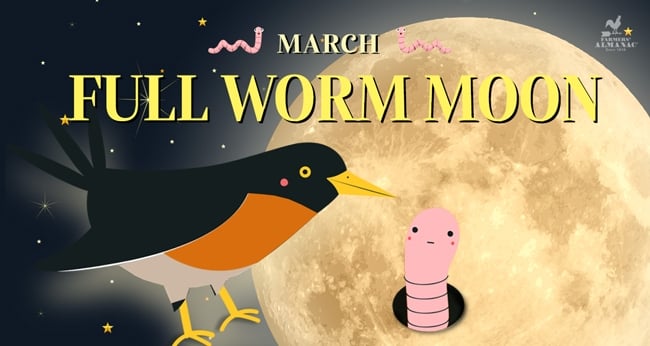
The name Worm Moon is widely attributed to the Native American tribes of the northern and eastern United States. As the snows of winter begin to melt and the ground thaws, earthworms start to emerge from the soil. This annual event signals the return of robins and other birds, an important sign of spring’s arrival and the renewed fertility of the land. For early peoples, observing these natural cues was crucial for survival, influencing their hunting, planting, and migratory patterns.
It’s a beautiful reminder of our deep connection to the Earth’s rhythms, even in our modern, often disconnected lives. The Worm Moon isn’t just a name; it’s a living calendar, a testament to observations passed down through generations.
Colonial & European Interpretations
While “Worm Moon” is the most common name, March’s full moon has also been known by other fascinating names across different cultures:
- Sap Moon: Some Native American tribes and colonial settlers in regions with maple trees used this name, signifying the time when maple sap begins to flow, perfect for making syrup.
- Crow Moon: This name emerged from the cawing of crows signaling the end of winter, a common sound as the land awakens.
- Lenten Moon: In Christian traditions, March’s full moon often falls during Lent, the period of fasting and reflection leading up to Easter.
- Chaste Moon: Medieval European traditions sometimes referred to it as the Chaste Moon, symbolizing purity and new beginnings after winter’s dormancy.
Each name paints a vivid picture of life dictated by the cycles of nature, offering a glimpse into the past and how our ancestors lived in harmony with the cosmos.
The Significance of Seasonal Names
These moon names aren’t just quaint relics; they represent humanity’s enduring efforts to understand and categorize the world around us. They provide a narrative of survival, celebration, and connection to the Earth. When we call the March full moon the Worm Moon, we are, in a small way, participating in an ancient tradition of observing and honoring our natural environment.
The Main Event: A Total Lunar Eclipse in March 2026
Now, let’s talk about the real showstopper: the Total Lunar Eclipse. On March 3, 2026, the Worm Moon will undergo a complete transformation, passing entirely into Earth’s darkest shadow (the umbra).
What is a total lunar eclipse? It happens when the Sun, Earth, and Moon align perfectly, with the Earth positioned directly between the Sun and the Moon. While the Earth blocks direct sunlight from reaching the Moon, some sunlight still filters through Earth’s atmosphere. Our atmosphere scatters blue light more effectively, allowing red and orange light to bend around the edges of the Earth and illuminate the Moon. This is why the Moon takes on a dramatic reddish-orange hue during totality, earning it the nickname Blood Moon.
Key Phases & Timings for the Total Lunar Eclipse (March 2026)
For those in North America, South America, and parts of Europe and Africa, this will be a spectacular event. The following table provides the timings for the various stages of the eclipse, focusing on visibility for US time zones. Remember, these times are approximate and can vary slightly by your exact location.
| Eclipse Phase | Universal Time (UT) | Eastern Time (ET) | Central Time (CT) | Mountain Time (MT) | Pacific Time (PT) |
|---|---|---|---|---|---|
| Penumbral Eclipse Begins | 04:22 UT | Dec 2, 11:22 PM | Dec 2, 10:22 PM | Dec 2, 09:22 PM | Dec 2, 08:22 PM |
| Partial Eclipse Begins | 05:39 UT | 00:39 AM ET | 11:39 PM CT (Mar 2) | 10:39 PM MT (Mar 2) | 09:39 PM PT (Mar 2) |
| Total Eclipse Begins | 06:40 UT | 01:40 AM ET | 00:40 AM CT | 11:40 PM MT (Mar 2) | 10:40 PM PT (Mar 2) |
| Maximum Eclipse | 07:37 UT | 02:37 AM ET | 01:37 AM CT | 00:37 AM MT | 11:37 PM PT (Mar 2) |
| Total Eclipse Ends | 08:34 UT | 03:34 AM ET | 02:34 AM CT | 01:34 AM MT | 00:34 AM PT |
| Partial Eclipse Ends | 09:35 UT | 04:35 AM ET | 03:35 AM CT | 02:35 AM MT | 01:35 AM PT |
| Penumbral Eclipse Ends | 10:52 UT | 05:52 AM ET | 04:52 AM CT | 03:52 AM MT | 02:52 AM PT |
Note: All times are for March 3, 2026, unless otherwise specified. Penumbral eclipse phases are subtle and often go unnoticed. The real spectacle begins with the partial and total phases.
Don’t Miss a Second: Best Viewing Times by US Time Zone
For observers in the United States, the eclipse will unfold during the late night of March 2nd and into the early morning hours of March 3rd, 2026. If you’re planning to watch, focus on the partial and total eclipse phases for the most dramatic views:
- Eastern Time (ET): Totality from 1:40 AM to 3:34 AM. Partial from 00:39 AM to 4:35 AM.
- Central Time (CT): Totality from 00:40 AM to 2:34 AM. Partial from 11:39 PM (Mar 2) to 3:35 AM.
- Mountain Time (MT): Totality from 11:40 PM (Mar 2) to 1:34 AM. Partial from 10:39 PM (Mar 2) to 2:35 AM.
- Pacific Time (PT): Totality from 10:40 PM (Mar 2) to 00:34 AM. Partial from 9:39 PM (Mar 2) to 1:35 AM.
No matter your time zone, set your alarms! The total phase is relatively brief but intensely rewarding. This is a genuinely rare opportunity to witness our planet’s shadow paint the Moon in hues of fiery red.
How to Observe the March 2026 Worm Blood Moon & Eclipse
One of the best things about a lunar eclipse is how accessible it is. Unlike a solar eclipse, you don’t need any special equipment to view it safely. Your own eyes are perfectly sufficient!

Preparation is Key: Your Eclipse Viewing Checklist
- Check the Weather: A clear sky is essential. Keep an eye on the forecast for March 2nd/3rd, 2026.
- Find a Dark Spot: While the moon is bright, a location away from excessive city lights will enhance the view of the eclipse, especially the subtle penumbral phases and the surrounding stars.
- Dress Warmly: March nights can still be chilly. Bundle up in layers, even if you’re just stepping into your backyard.
- Set Up Comfortably: If you plan to watch for an extended period, a reclining chair or blanket will make the experience much more enjoyable.
- Optional Equipment:
- Binoculars: Highly recommended! They will bring out the details of the Moon’s surface and enhance the coppery reds and oranges of totality.
- Small Telescope: For an even more magnified view, a telescope will reveal intricate lunar features even as the eclipse progresses.
- Camera: If you’re into astrophotography, prepare your camera gear (tripod, telephoto lens) in advance.
- Bring a Friend: Sharing the experience makes it even better!
What to Look For During the Eclipse
- Penumbral Phase: The Moon first enters Earth’s faint outer shadow. This is very subtle; you might notice a slight dimming on one edge of the Moon.
- Partial Phase: As the Moon moves into Earth’s darker inner shadow (the umbra), a noticeable bite will appear on the Moon’s disk, growing larger over time.
- Totality: The entire Moon is engulfed in the umbra. This is when the Moon glows in stunning shades of orange, red, or even brown. The exact color depends on factors like dust and clouds in Earth’s atmosphere during the eclipse.
- Shadow Progression: Pay attention to how the Earth’s curved shadow moves across the Moon. It’s a tangible demonstration of our planet’s spherical shape.
- Star Brightness: During totality, the sky will darken significantly, making fainter stars and constellations much more visible.
Safety First: Lunar Eclipse vs. Solar Eclipse
It’s crucial to remember that a lunar eclipse is completely safe to view directly with the naked eye. You do NOT need any special eye protection, unlike a solar eclipse. So relax, look up, and enjoy the cosmic display!
Beyond March: A Glimpse at the Other Full Moons of 2026
While the March 2026 Worm Blood Moon is undoubtedly a highlight, every full moon carries its own unique charm and traditional name. Here’s a quick overview of the other full moons gracing our skies in 2026:
Full Moon Names 2026 Calendar
| Month | Date (2026) | Traditional Name | Notes |
|---|---|---|---|
| January | January 3 | Wolf Moon | Supermoon |
| February | February 1 | Snow Moon | |
| March | March 3 | Worm Moon | Total Lunar Eclipse (Blood Moon) |
| April | April 1 | Pink Moon | |
| May | May 1 | Flower Moon | |
| May (2nd) | May 31 | Blue Moon | Seasonal Blue Moon |
| June | June 29 | Strawberry Moon | |
| July | July 29 | Buck Moon | |
| August | August 28 | Sturgeon Moon | |
| September | September 27 | Harvest Moon | Closest full moon to autumnal equinox |
| October | October 27 | Hunter’s Moon | |
| November | November 25 | Beaver Moon | |
| December | December 25 | Cold Moon | Christmas Full Moon |
Astrological & Spiritual Significance of the Worm Blood Moon
For those interested in astrology and spiritual practices, a full moon is always a powerful time. It represents culmination, release, and illumination. Energy peaks, bringing situations to a head and offering opportunities for clarity and emotional processing.
When a full moon is also a Total Lunar Eclipse, its astrological significance is amplified. Eclipses are often seen as cosmic wild cards, ushering in accelerated change, fated events, and significant shifts. They can mark dramatic endings and potent new beginnings, often forcing us to release what no longer serves us to make way for rapid growth.
The March 2026 Worm Blood Moon, occurring as the Earth thaws and life begins anew, might emphasize themes of:
- Deep Cleansing and Release: Just as worms aerate the soil, an eclipse can stir up buried emotions or old patterns, compelling us to release them for renewal.
- Hidden Truths Revealed: The ‘shadow’ aspect of the eclipse can bring subconscious matters to light.
- Transformative Growth: The ‘Blood Moon’ intensity suggests powerful, even dramatic, transformations.
- Connection to Nature’s Cycles: Reaffirming our place within the greater natural rhythm of birth, death, and rebirth.
Whether you approach it from a scientific, cultural, or spiritual perspective, the March 2026 Full Worm Blood Moon is poised to be a moment of profound observation and reflection.
Conclusion: Get Ready for a Spectacular Night (or Early Morning!)
So, there you have it. The full moon in March 2026 is indeed the Worm Moon, but it’s so much more than just a name. It’s a powerful celestial event, a Total Lunar Eclipse that will transform our night sky into a canvas of deep reds and oranges. From ancient traditions connecting us to the thawing earth to the awe-inspiring mechanics of our solar system, this Worm Blood Moon offers a rich tapestry of meaning and wonder.
Don’t let the early morning hours deter you. This is one of nature’s grandest shows, a chance to witness the cosmos in action. Set your alarms, find a comfortable spot, and prepare to be amazed by the Full Worm Blood Moon of March 2026. Happy stargazing!
n
Frequently Asked Questions
What is the name of the Full Moon in March 2026?
The Full Moon in March 2026 is traditionally known as the Worm Moon.
When is the Full Worm Moon in March 2026?
The Full Worm Moon in March 2026 will reach its peak illumination on Tuesday, March 3, 2026, at approximately 6:38 AM Eastern Time (ET).
Is there a lunar eclipse in March 2026?
Yes, the Full Worm Moon on March 3, 2026, will coincide with a Total Lunar Eclipse, making it a spectacular ‘Blood Moon’ event.
What does ‘Worm Moon’ mean?
The ‘Worm Moon’ name is believed to come from Native American traditions, marking the time when the ground thaws, and earthworms begin to emerge, signaling the return of spring and robins.
Where will the March 2026 Total Lunar Eclipse be visible?
The March 2026 Total Lunar Eclipse will be visible across North America, South America, and parts of Europe and Africa. Viewers in the USA will have an excellent view during the late night of March 2nd and early morning of March 3rd.
Do I need special equipment to view the March 2026 Lunar Eclipse?
No, you do not need any special eye protection or equipment to safely view a lunar eclipse. It is perfectly safe to watch with the naked eye. Binoculars or a small telescope can enhance the view of the Moon’s surface and colors.
What is a ‘Blood Moon’?
A ‘Blood Moon’ is the colloquial term for the reddish-orange hue the Moon takes on during a total lunar eclipse. This color occurs as sunlight filters through Earth’s atmosphere, scattering blue light and allowing red light to reach the Moon.
