March 2026 Full Moon: The Worm Moon, a Total Lunar Eclipse, and Your Ultimate Guide
Are you ready for a celestial event that combines ancient folklore with a breathtaking astronomical show? March 2026 isn’t just bringing us a full moon; it’s delivering a spectacular total lunar eclipse! If you’re looking for the definitive guide to the Full Moon Days in March 2026, you’ve landed in the right place.
Many calendars simply list a date. But I’m going to tell you exactly when to look up, what you’ll see, and why this particular full moon is so special. We’ll dive into the traditional name, the incredible lunar eclipse, and even touch on what this powerful celestial alignment might mean for you.
Forget generic lists. This is your comprehensive, human-first resource to understanding and experiencing March 2026’s lunar magic.
The March 2026 Full Moon: Date, Time, and a Celestial Spectacle
Let’s get straight to the point. You want to know when to mark your calendar.
When is the Full Moon in March 2026?
The Full Moon in March 2026, often known as the Worm Moon, reaches its peak illumination on Tuesday, March 3, 2026. For those of us in the Eastern Time (ET) zone, this moment of maximum fullness occurs at approximately 6:38 AM ET. Don’t worry if you’re not an early riser; the moon will appear full to the naked eye for roughly a day before and after this precise moment.
However, what makes this full moon truly extraordinary isn’t just its timing; it’s the celestial dance it performs.
The Unmissable Total Lunar Eclipse of March 3, 2026
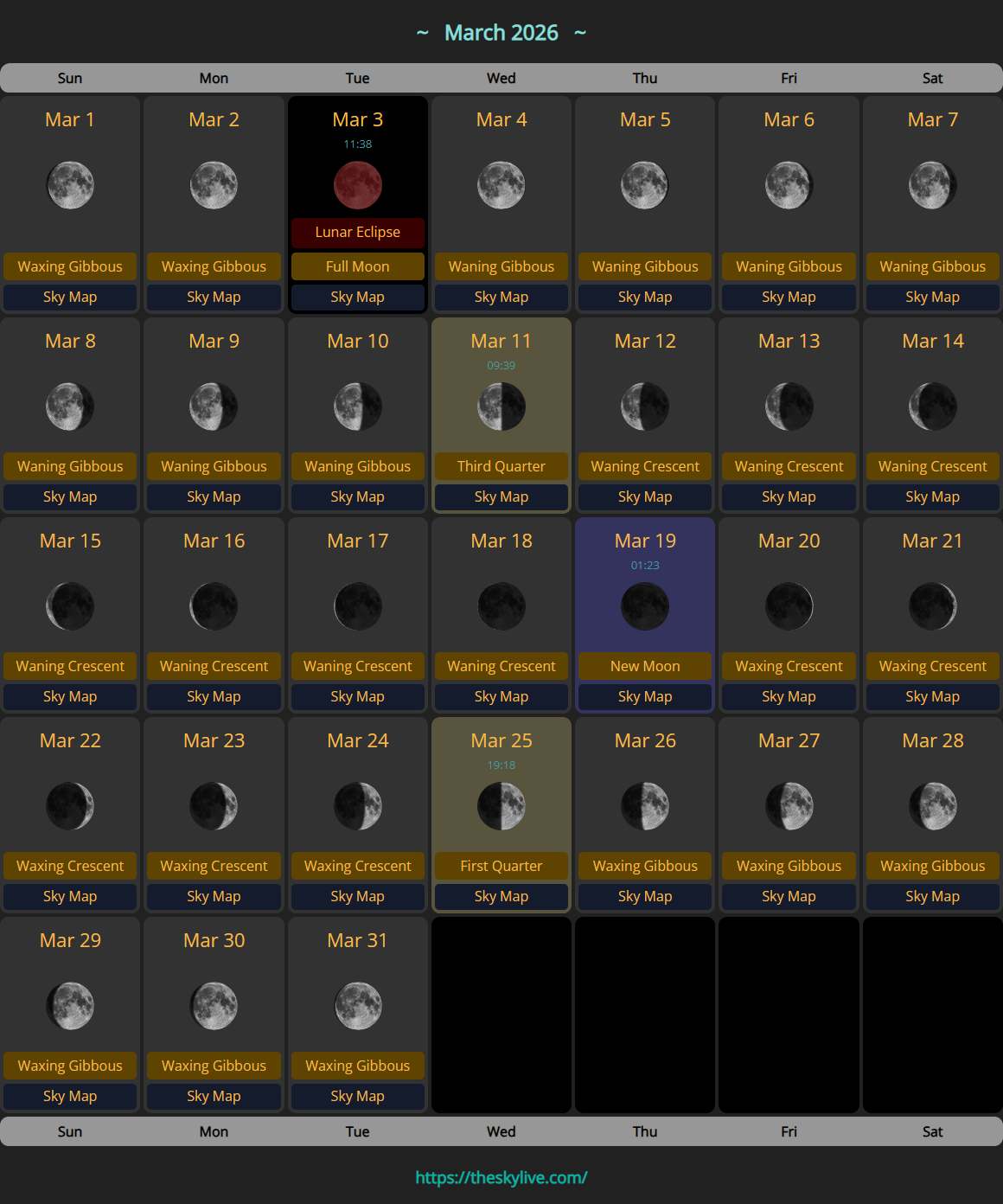
This isn’t just any full moon. The March 2026 Full Moon will be accompanied by a total lunar eclipse! That’s right, the moon will pass directly through the Earth’s shadow, casting a beautiful reddish hue across its surface. This phenomenon gives the March full moon an additional moniker: the ‘Blood Moon’. This event promises to be one of the year’s most captivating skywatching opportunities.
We’ll delve deeper into the eclipse details shortly, but for now, understand that March 3, 2026, is a date for every sky-gazer’s diary.
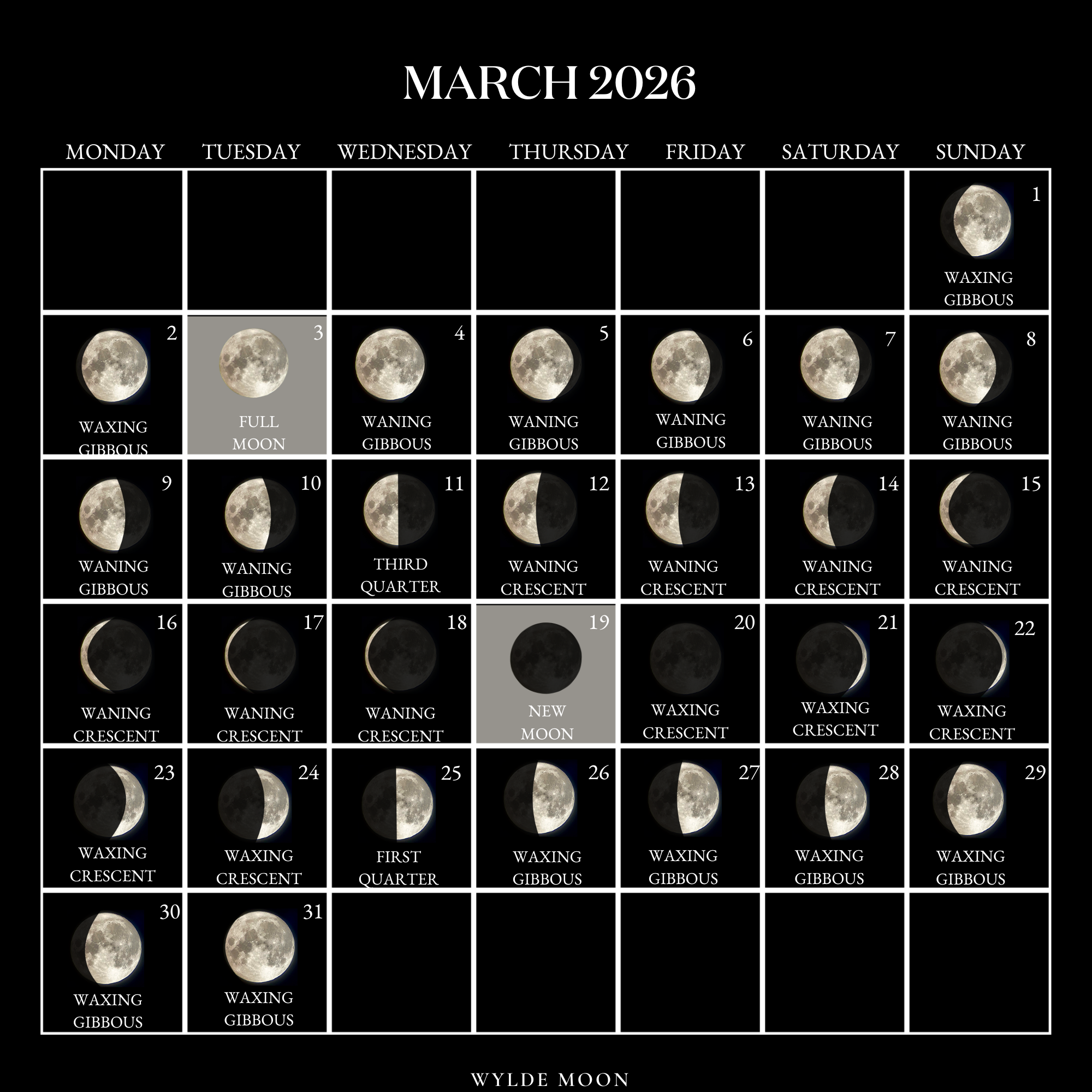
Your Complete March 2026 Moon Phase Calendar
While the full moon takes center stage, the lunar cycle is a continuous, fascinating journey. Knowing all the phases can help you plan everything from gardening to self-reflection. Here’s a detailed breakdown of all the moon phases for March 2026:
| Phase | Date (2026) | Time (ET) | Illumination (Approx.) | Significance / Notes |
|---|---|---|---|---|
| Waning Crescent | March 1 | All Day | < 50% | Preparing for the Full Moon energy build-up. |
| FULL MOON | March 3 | 6:38 AM | 100% | The Worm Moon. Coincides with a Total Lunar Eclipse! |
| Waning Gibbous | March 7 | ~5:00 PM | ~80% | Energy begins to recede; good for reflection. |
| Last Quarter | March 11 | 10:00 AM | 50% | Release and letting go, preparing for new beginnings. |
| Waning Crescent | March 15 | ~1:00 AM | ~20% | Introspection and rest. |
| New Moon | March 19 | 5:03 AM | 0% | Perfect for setting intentions and new starts. |
| Waxing Crescent | March 23 | ~10:00 AM | ~25% | Action and growth begin to build. |
| First Quarter | March 26 | 10:00 PM | 50% | Overcoming obstacles, pushing forward. |
| Waxing Gibbous | March 30 | ~2:00 AM | ~80% | Building towards the next full moon. |
Quick Tip: While the exact peak of a phase is a precise moment, the moon will *appear full or new or quarter for about a day either side of the listed time. The illumination percentages help guide your expectations for visibility.
Decoding the “Worm Moon”: Origins and Meanings
Every full moon has its own unique name, often rooted in the traditions and observations of indigenous cultures and early colonial settlers. The March full moon carries a particularly evocative name: the Worm Moon.
Why “Worm Moon”? Unearthing the Name’s Roots
The name “Worm Moon” is typically attributed to Native American tribes in the northern and eastern parts of the United States. It refers to the time of year when the ground begins to thaw after winter, and earthworms start to emerge, signaling the return of robins and other birds. It’s a powerful indicator of spring’s imminent arrival, a period of rebirth and awakening after the dormancy of winter.
Imagine the relief of seeing those first signs of life after a long, cold winter. The Worm Moon was a beacon of hope, a promise of fertile lands and renewed growth. It’s less about the worms themselves and more about what their appearance signifies: the turning of the seasons, the quickening of life, and the preparation for planting.
Alternative Names for the March Full Moon
Across different cultures and regions, the March full moon bore other meaningful names, reflecting distinct environmental changes and agricultural practices:
- Crow Moon: Named by some tribes for the cawing of crows signaling the end of winter.
- Sap Moon: Reflects the time when maple sap begins to flow, indicating the start of the maple sugaring season.
- Crust Moon: Refers to the crust that forms on top of the snow as it thaws by day and freezes by night.
- Chaste Moon: A European name, possibly linked to purity and the arrival of spring.
- Lenten Moon: Often associated with the Christian observance of Lent.
Regardless of the name, the underlying theme is consistent: March’s full moon heralds a transition, a moment between the old and the new, dark and light, winter and spring.
The Total Lunar Eclipse: What You Need to Know for March 3, 2026
This is where March 2026 gets truly exciting! The total lunar eclipse coinciding with the Full Worm Moon is a rare and beautiful spectacle that requires no special equipment to enjoy.
Understanding a Total Lunar Eclipse
A lunar eclipse occurs when the Earth passes directly between the Sun and the Moon, casting a shadow on the Moon. There are different types of lunar eclipses (penumbral, partial, total), but a total lunar eclipse is the most dramatic. During a total eclipse, the Moon is completely immersed in the Earth’s umbra (the darkest part of its shadow).
Why does it turn red? This happens because sunlight, scattered by Earth’s atmosphere, bends around the edges of our planet and hits the Moon. Blue light is scattered more efficiently by the atmosphere, leaving mostly red and orange light to reach the Moon’s surface. Think of it like all the sunsets and sunrises on Earth projecting onto the Moon simultaneously. It’s a stunning visual testament to our planet’s atmosphere.
Visibility and Timings for the March 2026 Eclipse (USA Focus)
The good news for most of North America, including the contiguous USA, is that this total lunar eclipse will be visible in its entirety or partially!
Here are the approximate key timings for the eclipse on March 3, 2026, in Eastern Time (ET). Note that these times will vary depending on your specific location across the US, so it’s always good to check local sources closer to the date.
| Event | Approximate Time (ET) | What You’ll See |
|---|---|---|
| Penumbral Eclipse Begins | 4:00 AM | Moon enters Earth’s faint outer shadow. Subtle darkening, often hard to notice. |
| Partial Eclipse Begins | 5:00 AM | Moon enters Earth’s dark inner shadow (umbra). A noticeable ‘bite’ appears on the Moon. |
| Total Eclipse Begins | 6:00 AM | Moon fully immersed in umbra. Begins to turn reddish-orange. This is the ‘Blood Moon’ phase. |
| Maximum Eclipse (Full Moon Peak) | 6:38 AM | Deepest red color, most dramatic view of the ‘Blood Moon’. |
| Total Eclipse Ends | 7:15 AM | Moon begins to exit the umbra, returning to its brighter white. |
| Partial Eclipse Ends | 8:15 AM | Moon fully exits the umbra, appearing white again. |
| Penumbral Eclipse Ends | 9:15 AM | Moon completely clear of Earth’s shadow. |
Given the timing, those on the East Coast will witness the initial phases and potentially the start of totality as the moon sets or as dawn breaks. The further west you are, the better your chances of seeing the entire total eclipse high in the sky before dawn. Be sure to check your local sunrise times!

How to Safely Observe the Lunar Eclipse (and the Full Moon)
Unlike solar eclipses, lunar eclipses are perfectly safe to view with the naked eye. You don’t need any special filters or glasses. Here’s how to make the most of it:
- Find a Dark Spot: While city lights won’t obscure the Moon entirely, a location away from excessive light pollution will enhance the colors and allow you to see more stars.
- Look East (or West, depending on time): As the eclipse progresses in the early morning, the moon will be descending towards the western horizon. During the full moon phase itself (even without the eclipse), it will rise in the east and set in the west.
- Binoculars or a Small Telescope: These are optional but highly recommended! They will magnify the view, allowing you to appreciate the subtle reddish hues and surface details of the Moon during totality.
- Dress Warmly: March mornings can still be chilly, especially if you’re out before dawn.
- Set Your Alarm: This is an early morning event for many in the USA. Don’t miss it!
- Check Local Times: Use a reliable astronomy app or website closer to the date to get exact timings for your specific city.
This is a truly magnificent display of our solar system in action, and one you won’t want to miss!
Astrological and Spiritual Significance of the March Full Moon
Beyond the scientific spectacle, full moons hold profound significance in many spiritual and astrological traditions. They are potent times for introspection, release, and culmination.

Full Moon Energy: Release and Illumination
The full moon is the peak of the lunar cycle, a moment of maximum illumination and energy. It’s traditionally seen as a time when:
- Things Come to Light: Secrets are revealed, clarity emerges, and truths become undeniable.
- Completion and Culmination: Projects, goals, or intentions set during the New Moon reach their peak or conclusion.
- Emotional Intensity: Emotions can run high. It’s a powerful time for processing feelings.
- Release and Letting Go: The intense energy makes it an ideal time to release what no longer serves you—old habits, negative patterns, or limiting beliefs.
With the added drama of a total lunar eclipse, these energies are amplified. Eclipses are often seen as cosmic wildcards, accelerating changes and bringing fated events into play. They demand that we pay attention to what needs to be released or transformed in our lives.
The March 2026 Full Moon in Astrology (Pisces/Virgo Axis Context)
The March 2026 Full Moon will occur on the Pisces/Virgo axis. While exact degrees would require a precise astrological chart, we can speak to the general energies.

- Pisces Energy (Sun): Pisces is a water sign, deeply intuitive, compassionate, artistic, and spiritual. It governs dreams, mysticism, escapism, and unconditional love.
- Virgo Energy (Moon): Virgo is an Earth sign, known for its practicality, meticulousness, service, health, and desire for order. It rules routines, details, and analytical thought.
A full moon here creates a tension between these two opposing energies. We are called to find a balance between:
- Idealism (Pisces) vs. Realism (Virgo): How do we bring our spiritual visions into practical reality?
- Chaos/Flow (Pisces) vs. Order/Structure (Virgo): Where can we surrender to the flow, and where do we need to implement discipline?
- Intuition/Spirituality (Pisces) vs. Logic/Health (Virgo): How do we honor our spiritual needs while maintaining physical well-being and practical duties?
This Full Worm Moon, with its eclipse, asks us to release perfectionism and over-analysis (Virgo shadow) to embrace greater compassion and spiritual understanding (Pisces light), or vice-versa, bringing structure to our dreams. It’s a powerful time to heal, integrate, and find balance between our inner spiritual world and our outer physical reality.
Rituals and Practices for the Full Worm Moon
Harness the potent energy of this unique full moon and lunar eclipse:
- Eclipse Release Ceremony: Write down what you wish to release from your life – old habits, fears, resentments. As the eclipse peaks, safely burn the paper (if appropriate) or tear it up, visualizing these things leaving your energetic field.
- Meditate and Journal: Take time for quiet reflection. What has come to light for you since the last New Moon? What truths are undeniable? How can you find balance between the Piscean and Virgoan energies in your life?
- Nature Connection: Go outside and observe the moon (if visible where you are during the eclipse, or simply in its fullness). Reflect on the emerging signs of spring and the resilience of nature.
- Cleanse and Clear: Use the full moon’s amplifying energy for a deep physical and energetic cleanse. Declutter your space, take a purifying bath, and cleanse your crystals under the moonlight.
- Set New Intentions (Post-Eclipse): While the New Moon is ideal for setting intentions, the eclipse provides a powerful opportunity for recalibration*. After releasing, what new, aligned intentions are you ready to manifest as spring begins?
Beyond March: Key Full Moons of 2026
While March’s full moon is exceptional, 2026 holds many more lunar delights. Here’s a brief look at some other notable full moons throughout the year to keep on your radar:
| Month | Date (2026) | Traditional Name | Notes |
|---|---|---|---|
| January | January 3 | Wolf Moon | First full moon of the year. |
| February | February 1 | Snow Moon | Often the heaviest snowfall month. |
| April | April 1 | Pink Moon | Named after the wild ground phlox. |
| May | May 1 | Flower Moon | Peak of spring blooms. |
| June | May 31 | Strawberry Moon | Short harvesting season for strawberries. |
| July | July 30 | Buck Moon | New antlers emerge on bucks. |
| August | August 29 | Sturgeon Moon | Large fish caught in the Great Lakes. |
| September | September 28 | Harvest Moon | Close to the autumnal equinox, aiding harvest. |
| October | October 27 | Hunter’s Moon | Time for hunting in preparation for winter. |
| November | November 26 | Beaver Moon | Beavers preparing for winter. |
| December | December 26 | Cold Moon | Arriving with the frigid temperatures of winter. |
Each full moon offers a unique opportunity to connect with nature’s rhythms and reflect on your own journey.
Planning Your Month Around the Lunar Cycle
Understanding the lunar phases isn’t just for astronomers or astrologers; it’s a powerful tool for personal planning and productivity. The moon influences tides, and some believe it influences us too.
How Moon Phases Can Influence Your Daily Life
While scientific evidence for direct human behavior correlation is limited, many people report feeling a distinct energetic shift with each lunar phase:
- New Moon (March 19, 2026): This is a quiet, introspective time. Ideal for setting new intentions, planting seeds for future projects, and quiet planning.
- Waxing Moon (March 19 – March 3, 2026, then March 19 – March 31): As the moon grows, so does energy. This is a period for taking action, pushing forward with projects, and building momentum.
- Full Moon (March 3, 2026): Peak energy, culmination, and emotional intensity. Great for celebrating achievements, releasing what no longer serves you, and deep reflection.
- Waning Moon (March 3 – March 19, 2026): As the moon shrinks, energy recedes. This is a time for winding down, completing tasks, clearing out, and letting go. It’s excellent for decluttering, reviewing progress, and self-care.
By aligning your personal rhythms with the moon’s cycle, you might find a more natural flow to your efforts and greater harmony in your life.
Making the Most of March 2026’s Celestial Events
With a total lunar eclipse and the herald of spring, March 2026 is a truly dynamic month. Here’s how to make it count:
- Observe the Eclipse: Prioritize setting your alarm for March 3rd! Even if you only catch a portion, it will be a memorable experience.
- Connect with Nature: As the Worm Moon signals spring, take walks, notice the subtle changes in nature, and feel the shift in seasons.
- Reflect and Release: Use the powerful full moon and eclipse energy to honestly assess what needs to be released from your life to make space for new growth.
- Plan Your Intentions: With the New Moon mid-month, you have a perfect opportunity to set fresh intentions for the new spring season, building on what you’ve released during the eclipse.
March 2026 promises not just a full moon, but a cosmic event that invites us to look up, look within, and embrace the beautiful cycles of change. Enjoy the show!
Frequently Asked Questions
When exactly is the Full Moon in March 2026?
The Full Moon in March 2026, known as the Worm Moon, will reach its peak illumination on Tuesday, March 3, 2026, at approximately 6:38 AM Eastern Time (ET).
What is special about the March 2026 Full Moon?
This Full Moon is incredibly special because it coincides with a total lunar eclipse! The Moon will pass directly through Earth’s shadow, turning a beautiful reddish hue, often referred to as a ‘Blood Moon’.
What is the ‘Worm Moon’?
The ‘Worm Moon’ is the traditional name for the March full moon, originating from Native American tribes. It signifies the time when the ground thaws after winter, and earthworms begin to emerge, heralding the return of robins and the arrival of spring.
Will the total lunar eclipse be visible in the USA?
Yes, the total lunar eclipse on March 3, 2026, will be visible in its entirety or partially across most of North America, including the contiguous USA. Timings will vary by region, with Eastern parts seeing earlier phases and Western parts potentially witnessing the full totality before dawn.
What’s the astrological significance of the March 2026 Full Moon?
The March 2026 Full Moon occurs on the Pisces/Virgo axis. It brings a powerful culmination and release energy, urging us to balance intuition and spirituality (Pisces) with practicality and order (Virgo). The eclipse amplifies these themes, pushing for significant personal transformation and clarity.
How can I best observe the full moon and lunar eclipse?
You don’t need special equipment; the lunar eclipse is safe to view with the naked eye. Find a spot away from excessive light pollution. Binoculars or a small telescope will enhance the view of the Moon’s reddish hues. Remember to dress warmly as it will be an early morning event for many!
Are there other significant moon phases in March 2026?
Yes, March 2026 also features a New Moon on March 19. This is an ideal time for setting new intentions and starting fresh projects, following the powerful release energy of the Full Moon and lunar eclipse.
