Your Ultimate Guide to Kalnirnay March 2026 with Tithi for the USA
Are you residing in the USA, yet seeking to deeply connect with your Hindu heritage? Do you want to meticulously plan for festivals, fasts, and auspicious timings in March 2026, just as you would with a traditional Kalnirnay calendar? You’re in the right place. While many resources focus on India, this guide is crafted specifically for you – a practitioner in the United States.
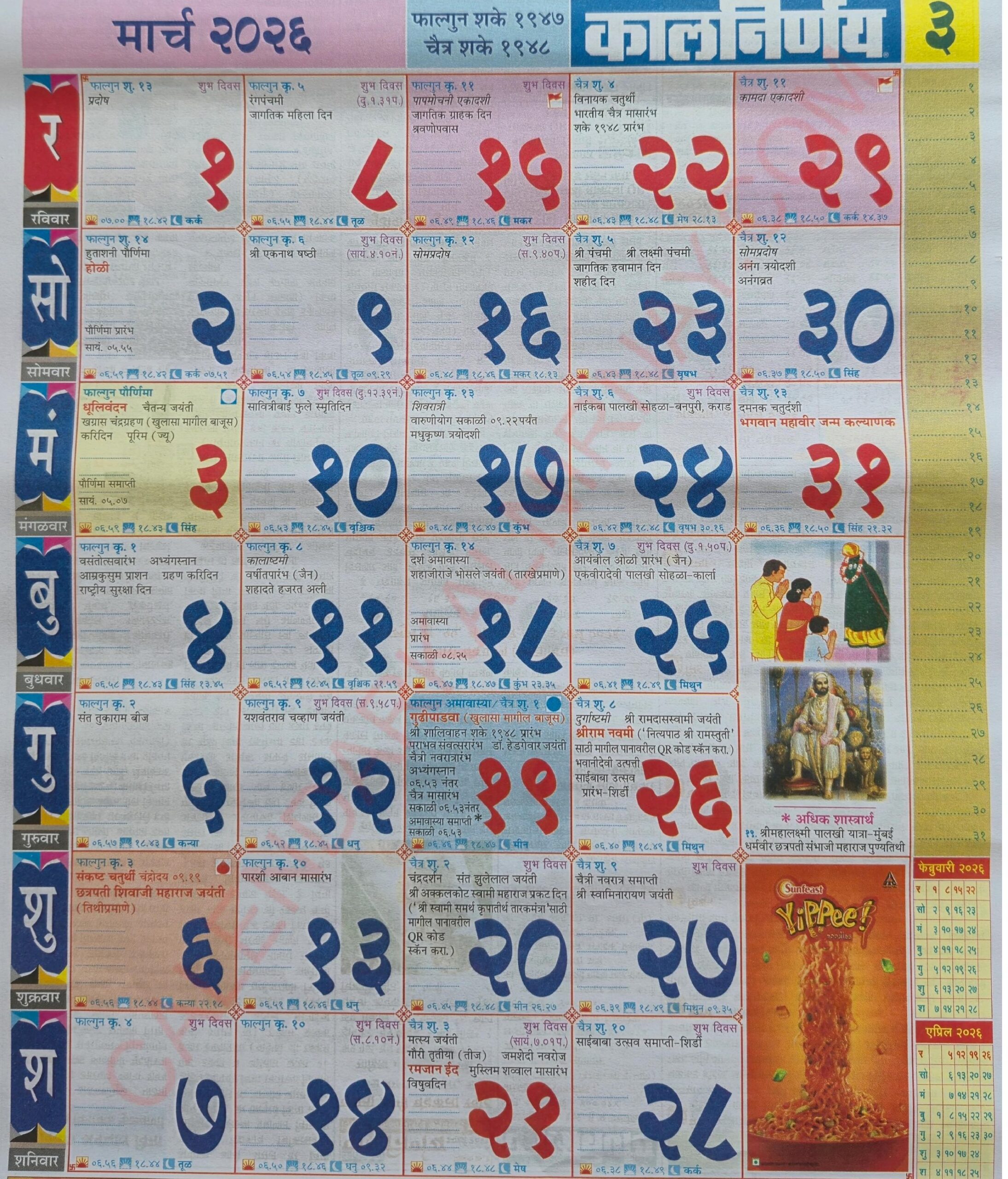
March 2026 is a vibrant month, heralding major festivals like Holi and the Hindu New Year (Gudi Padwa/Ugadi/Chaitra Shukladi). Understanding the Kalnirnay calendar, especially its Tithi system, is crucial for accurate observance. We’ll demystify these concepts and provide a clear, actionable calendar, keeping your US location in mind.
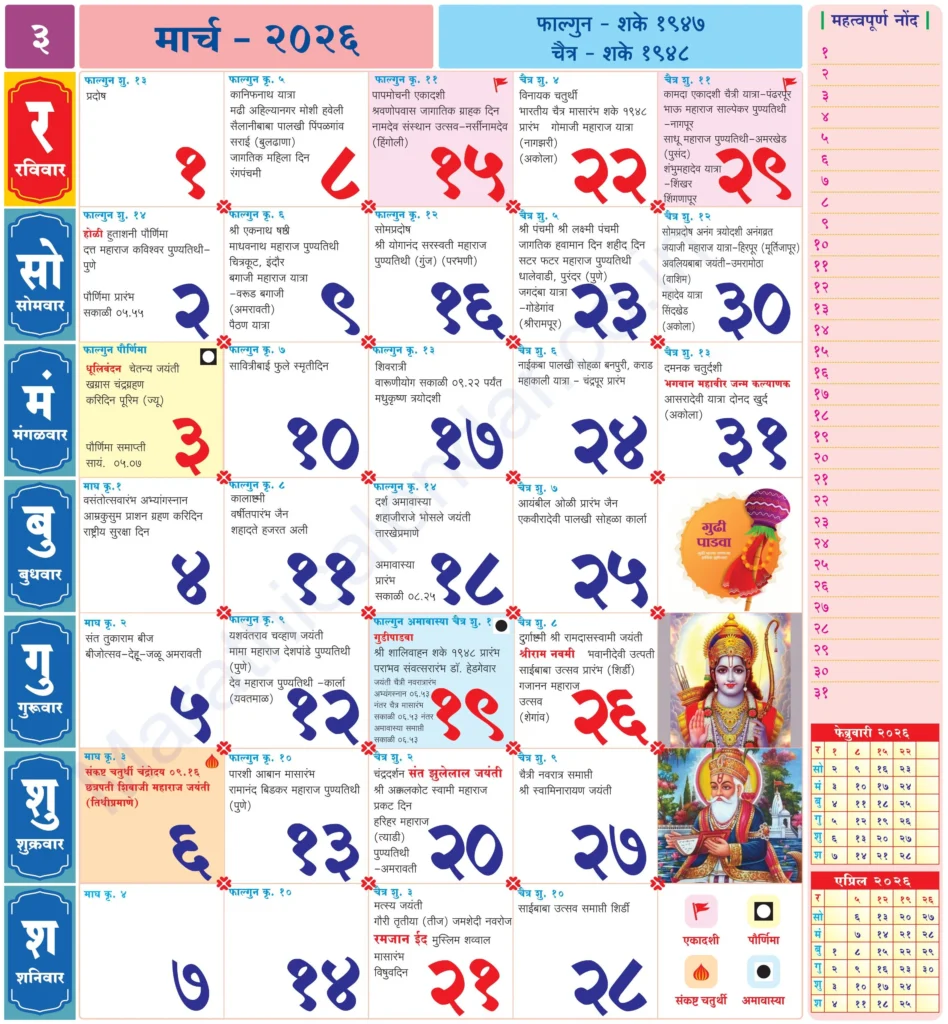
What is Kalnirnay and Why is it Essential?
For millions globally, particularly those with roots in India, Kalnirnay isn’t just a calendar – it’s an institution. It’s a household staple, a trusted companion that bridges the gap between the solar Gregorian calendar and the intricate lunar-solar Hindu calendar system. But what makes it so indispensable?
More Than Just a Datebook: The Legacy of Kalnirnay
Originating in Maharashtra, India, Kalnirnay has evolved into one of the world’s largest-selling almanacs. Its significance lies in its comprehensive integration of various calendar systems and essential astrological data. It provides:
- Gregorian Dates: For universal understanding.
- Hindu Lunar Dates (Tithis): Critical for religious observances.
- Festivals and Holidays: Both national and regional, Hindu and sometimes other faiths.
- Auspicious Timings (Muhurat): For ceremonies, new ventures, or travel.
- Daily Panchang Details: Beyond Tithi, including Nakshatra, Yoga, and Karana.
- Astrological Insights: Often including daily horoscopes or planetary positions.
For someone in the USA, owning a Kalnirnay is a tangible link to culture and tradition, providing a familiar framework for religious and social planning.
The Backbone of Hindu Planning: Panchang Elements Explained
The core of Kalnirnay is the Panchang, a Sanskrit term meaning ‘five limbs’ (Pancha = five, Anga = limb). These five elements are fundamental to Vedic astrology and timing, offering a daily snapshot of cosmic energies. While Kalnirnay provides all five, for March 2026, our primary focus will be on the Tithi.
- Tithi (Lunar Day): The angular distance between the Sun and the Moon. There are 30 Tithis in a lunar month, each roughly 19 to 26 hours long, varying significantly. They are critical for determining festival dates and auspicious timings.
- Nakshatra (Lunar Mansion): The position of the Moon in one of 27 constellations.
- Yoga (Lunar Conjunction): A calculation based on the combined longitudes of the Sun and Moon.
- Karana (Half Lunar Day): Half of a Tithi. There are 11 Karanas.
- Vaar (Weekday): The day of the week, with planetary associations.
Understanding Tithi: The Heart of the Hindu Calendar
When you look for ‘Kalnirnay with Tithi’, you’re asking for the soul of the Hindu calendar. Unlike the fixed 24-hour solar day, Tithis are dynamic, making them a crucial element for precise religious timing.
Tithi Basics: Lunar Days Unpacked
A Tithi represents one-thirtieth of a lunar month. It’s the time it takes for the longitudinal angle between the Sun and the Moon to increase by 12 degrees. Because the speeds of the Sun and Moon vary, the duration of a Tithi isn’t constant. Some Tithis can be shorter than a standard day, while others can be longer, sometimes spanning across two Gregorian calendar days or even ending and restarting within a single day. This fluidity is why traditional calendars like Kalnirnay are so vital.
Tithis are further grouped into two Pakshas (fortnights):
- Shukla Paksha (Waxing Moon): The bright half, from New Moon (Amavasya) to Full Moon (Purnima). Tithis are counted as Pratipada to Purnima.
- Krishna Paksha (Waning Moon): The dark half, from Full Moon (Purnima) to New Moon (Amavasya). Tithis are counted as Pratipada to Amavasya.
Why Tithis Matter for Your Observances
Every major Hindu festival, fast, and ritual is tied to a specific Tithi. For instance, Holi falls on the Phalguna Purnima (the Full Moon of the Phalguna month), and Gudi Padwa on the Chaitra Shukla Pratipada (the first Tithi of the waxing moon in the Chaitra month). Ignoring Tithis means misaligning with the traditional timing of these sacred events.
For those in the USA, this becomes even more critical due to time zone differences. A Tithi might begin or end differently in New York compared to Mumbai, impacting the start or end of a fasting period or the auspicious window for a puja.
March 2026 Kalnirnay Calendar with Tithi (USA Focus)
Here’s your comprehensive guide to March 2026, integrating Gregorian dates with critical Hindu Tithis and observances. This table is designed to give you a clear overview, with notes on significance relevant for your planning in the USA.
| Gregorian Date | Day | Hindu Month / Paksha | Tithi (Key) | Major Festival / Observance | Significance / Notes for USA |
|---|---|---|---|---|---|
| March 1 | Sunday | Phalguna / Shukla | Purnima ends | Start of the day in USA likely still Phalguna Purnima. | |
| March 2 | Monday | Phalguna / Shukla | Purnima | Holika Dahan, Phalguna Purnima Vrat | Celebration of good over evil. Bonfires lit after sunset (time zone sensitive). |
| March 3 | Tuesday | Phalguna / Krishna | Pratipada | Holi (Rangwali Holi) | Festival of colors, joy, and new beginnings. Social gatherings. |
| March 4 | Wednesday | Phalguna / Krishna | Dwitiya | Post-Holi celebrations continue. | |
| March 5 | Thursday | Phalguna / Krishna | Tritiya | ||
| March 6 | Friday | Phalguna / Krishna | Chaturthi | Sankashti Chaturthi | Fast observed for Lord Ganesha. Moonrise timings are crucial (local USA time). |
| March 7 | Saturday | Phalguna / Krishna | Panchami | ||
| March 8 | Sunday | Phalguna / Krishna | Shashti | ||
| March 9 | Monday | Phalguna / Krishna | Saptami | ||
| March 10 | Tuesday | Phalguna / Krishna | Ashtami | ||
| March 11 | Wednesday | Phalguna / Krishna | Navami | ||
| March 12 | Thursday | Phalguna / Krishna | Dashami | ||
| March 13 | Friday | Phalguna / Krishna | Ekadashi | Ekadashi Tithi begins, fasting may start for some. | |
| March 14 | Saturday | Phalguna / Krishna | Dwadashi | Parana (breaking fast) for previous Ekadashi. | |
| March 15 | Sunday | Phalguna / Krishna | Trayodashi / Chaturdashi | Papmochani Ekadashi | Important fasting day to cleanse sins. Specific Parana rules apply for March 16. |
| March 16 | Monday | Phalguna / Krishna | Amavasya | New Moon (Amavasya). Day for ancestral rites (Pitru Tarpan). | |
| March 17 | Tuesday | Chaitra / Shukla | Pratipada | The start of the new lunar month Chaitra. | |
| March 18 | Wednesday | Chaitra / Shukla | Pratipada / Dwitiya | ||
| March 19 | Thursday | Chaitra / Shukla | Pratipada | Gudi Padwa / Ugadi / Chaitra Shukladi (Hindu New Year – Vikram Samvat 2083 & Saka Samvat 1947) | Auspicious start to the Hindu New Year. Celebrated with specific rituals in different regions. |
| March 20 | Friday | Chaitra / Shukla | Dwitiya | ||
| March 21 | Saturday | Chaitra / Shukla | Tritiya | ||
| March 22 | Sunday | Chaitra / Shukla | Chaturthi | ||
| March 23 | Monday | Chaitra / Shukla | Panchami | ||
| March 24 | Tuesday | Chaitra / Shukla | Shashti | ||
| March 25 | Wednesday | Chaitra / Shukla | Saptami | ||
| March 26 | Thursday | Chaitra / Shukla | Ashtami | ||
| March 27 | Friday | Chaitra / Shukla | Navami | Rama Navami is usually celebrated on Chaitra Shukla Navami, but this is early in the Chaitra month for 2026. Check full 2026 calendar for exact Rama Navami date (often in April). | |
| March 28 | Saturday | Chaitra / Shukla | Dashami | ||
| March 29 | Sunday | Chaitra / Shukla | Ekadashi | Another Ekadashi Tithi begins. | |
| March 30 | Monday | Chaitra / Shukla | Dwadashi | Parana for previous Ekadashi. | |
| March 31 | Tuesday | Chaitra / Shukla | Trayodashi |
Disclaimer: This table provides key Tithis and observances based on general Hindu calendar principles for March 2026. Exact start and end times of Tithis, and thus festival observances, can vary by a few hours depending on your specific location and local sunrise/sunset/moonrise timings within the USA. Always consult a local Hindu temple or a trusted Panchang for precise local timings.

Navigating Time Zones: Using Kalnirnay in the USA
This is arguably the most critical aspect for anyone following a Hindu calendar outside India. A Tithi, like an astronomical event, starts and ends at a specific moment in universal time. How that moment translates to your local clock in New York, Chicago, Denver, or Los Angeles makes all the difference.
- Local Panchang is Key: While this guide gives you the big picture, for strict observances like fasting (e.g., Sankashti Chaturthi moonrise, Ekadashi Parana), you absolutely need a Panchang calculated for your specific US city or time zone. Many online Hindu calendar tools allow you to input your location.
- The ‘Sunrise Rule’: Often, a festival or fast is observed on the Gregorian day during which a significant portion of the auspicious Tithi prevails at sunrise. However, there are exceptions, especially for specific vratas.
- Consult Local Temples: Your nearest Hindu temple is an invaluable resource. They often publish calendars adjusted for local timings and can clarify any ambiguities.
Key Hindu Festivals and Observances in March 2026
March 2026 is a month of significant transitions, marking the end of the Hindu year in some traditions and the beginning of a new one in others. Here’s a closer look at the major events:

Holi: The Festival of Colors (Phalguna Purnima)
Observed primarily on March 2nd (Holika Dahan) and March 3rd (Rangwali Holi), this joyous festival celebrates the triumph of good over evil. Holika Dahan involves lighting bonfires, symbolizing the burning of the demon Holika. The next day, Rangwali Holi, is a vibrant celebration where people playfully drench each other with colored powders and water, sharing sweets and good cheer. For those in the USA, local communities often organize events on the nearest weekend, but the spiritual observance remains tied to the Tithi.
Gudi Padwa / Ugadi / Chaitra Shukladi: Hindu New Year
Mark your calendars for March 19th, 2026, as this day ushers in the Hindu New Year for many traditions across India and by extension, for followers in the USA. This day is known by different names depending on the region:
- Gudi Padwa: Celebrated mainly in Maharashtra, featuring the raising of a ‘Gudi’ (a decorated stick with a kalash and cloth) symbolizing victory and prosperity.
- Ugadi: Observed in Karnataka, Andhra Pradesh, and Telangana, marked by special dishes like ‘Ugadi Pachadi’ (a mix of six tastes) and spiritual reflection.
- Chaitra Shukladi: The general term for the beginning of the Chaitra Shukla Pratipada, signifying the start of Vikram Samvat 2083 and Saka Samvat 1947.
This is a day for new beginnings, house cleaning, festive meals, and visiting temples. It’s a powerful time to set intentions for the year ahead.
Papmochani Ekadashi: Cleansing Fast
Falling on March 15th, 2026, this Ekadashi is significant for spiritual cleansing. Ekadashi means the eleventh day of each lunar fortnight. Observing a fast on this day is believed to absolve sins and grant spiritual merit. The fast typically involves abstaining from grains, legumes, and certain spices. The ‘Parana’ (breaking of the fast) occurs the following day, March 16th, within a specific window of time after sunrise. Again, local US timings for sunrise and Tithi end are crucial.
Other Significant Tithis and Dates
- Sankashti Chaturthi (March 6th): Dedicated to Lord Ganesha, observed with fasting until moonrise. Devotees break their fast only after sighting and worshipping the moon.
- Amavasya (March 16th): The New Moon day. Often considered inauspicious for starting new ventures, but significant for performing ancestral rites (Pitru Tarpan).
- Purnima (March 2nd): The Full Moon day. Generally auspicious, and marks the end of the Phalguna month in this case, culminating in Holika Dahan.
Practical Tips for Using Your Kalnirnay Calendar in the USA
Embracing your heritage from thousands of miles away requires a little planning. Here’s how to make your Kalnirnay calendar a powerful tool in your US home:
Planning Puja and Rituals
For specific pujas or rituals, the Tithi, Nakshatra, and often the Muhurat (auspicious time) are paramount. While a general Kalnirnay might provide timings for India, you’ll need to adjust for your local US time zone. Use online Panchang calculators or consult with your local temple priest for precise timings for your location. This ensures your offerings and prayers align with the cosmic energies traditionally observed.
Fasting and Dietary Observances
Days like Ekadashi and Sankashti Chaturthi require strict adherence to fasting rules. Knowing the exact start and end of the Tithi, and critical events like moonrise for Sankashti, is vital. Don’t rely solely on a general calendar; cross-reference with a US-specific Panchang tool or temple calendar to ensure you begin and break your fast correctly.
Connecting with Local Temples and Communities
The best way to stay connected and accurately observe festivals in the USA is through your local Hindu temple or cultural community. They are usually well-versed in adjusting traditional calendars for American time zones and often organize communal celebrations for major festivals, making it easier to participate and feel connected.
Digital Tools and Resources
The digital age offers incredible convenience. Many reputable websites and apps provide Hindu calendars with Tithi information that can be customized for your specific location in the USA. These can be excellent supplements to your physical Kalnirnay, offering real-time adjustments and reminders. Look for features that allow you to set your city for accurate Panchang calculations.
Beyond March 2026: The Enduring Value of Kalnirnay
A Lifelong Connection to Heritage
The Kalnirnay calendar isn’t just for one month or one year; it’s a timeless guide that helps you maintain a profound connection to your cultural and spiritual roots, no matter where you live. It’s a reminder of cycles, traditions, and the rich tapestry of Hindu life.
Planning Your Year Ahead
Once you understand how to effectively use Kalnirnay and Tithis for March 2026, you’ll be empowered to plan your entire year. You can anticipate future festivals, plan auspicious events, and deepen your spiritual practice with confidence and accuracy.
Embrace the depth and precision of the Kalnirnay calendar. For March 2026, and every month thereafter, let it be your trusted companion in navigating your spiritual journey from the heart of the USA.
Frequently Asked Questions
What exactly is Kalnirnay?
Kalnirnay is a renowned Indian almanac (Panchang) that integrates Gregorian dates with the intricate Hindu lunar-solar calendar system. It provides details on Tithis, Nakshatras, festivals, auspicious timings (Muhurats), and cultural information, making it a comprehensive guide for Hindu daily life and observances.
How do Tithis affect daily life and religious observances?
Tithis are lunar days, varying in duration, and are crucial for determining the timing of Hindu festivals, fasts, and auspicious periods for rituals, ceremonies, and new ventures. Most Hindu observances are strictly tied to specific Tithis rather than Gregorian dates, making their accurate identification vital for practitioners.
Why is a USA-focused Kalnirnay guide important?
Due to significant time zone differences, the exact start and end times of Tithis and other Panchang elements will vary greatly between India and different regions within the USA. A USA-focused guide helps individuals adjust these timings for their local observance, ensuring accuracy in planning festivals, fasts, and pujas according to traditional Hindu principles.
How do I convert Kalnirnay dates to my local US time?
While general Kalnirnay calendars provide timings for India, for precise local observances in the USA, you should use online Panchang calculators or apps that allow you to input your specific US city/location. These tools automatically adjust Tithi start/end times, sunrise/sunset, and moonrise for your local time zone. Consulting a local Hindu temple’s calendar is also highly recommended.
What are the major Hindu festivals in March 2026 according to Kalnirnay?
In March 2026, key Hindu festivals include Holika Dahan (March 2nd) and Holi (March 3rd), celebrating the triumph of good over evil with bonfires and colors. The Hindu New Year (Vikram Samvat 2083 and Saka Samvat 1947) is celebrated on March 19th, known as Gudi Padwa in Maharashtra and Ugadi in Southern India. Papmochani Ekadashi, an important fasting day, falls on March 15th.
Can I use Kalnirnay for auspicious timings for personal events?
Yes, Kalnirnay typically includes sections on auspicious timings (Muhurats) for events like weddings, housewarmings, starting a business, or travel. However, for precise personal events in the USA, it’s best to consult an astrologer or a detailed local Panchang that can calculate Muhurats specifically for your location, birth chart, and the nature of the event.
Where can I get a physical Kalnirnay calendar in the USA?
Physical Kalnirnay calendars are often available at Indian grocery stores, religious bookstores, or Hindu temples in areas with significant Indian diaspora populations across the USA. Many online retailers also ship Kalnirnay calendars directly to the US.
