Your Essential 2026 Telugu Calendar Guide: March & April Unveiled
Feeling a disconnect from your roots, or simply trying to plan around crucial Telugu festivals and auspicious days in 2026 from your home in the USA? I get it. Keeping track of the Telugu calendar can feel like a complex puzzle, especially when navigating time zones and cultural nuances.
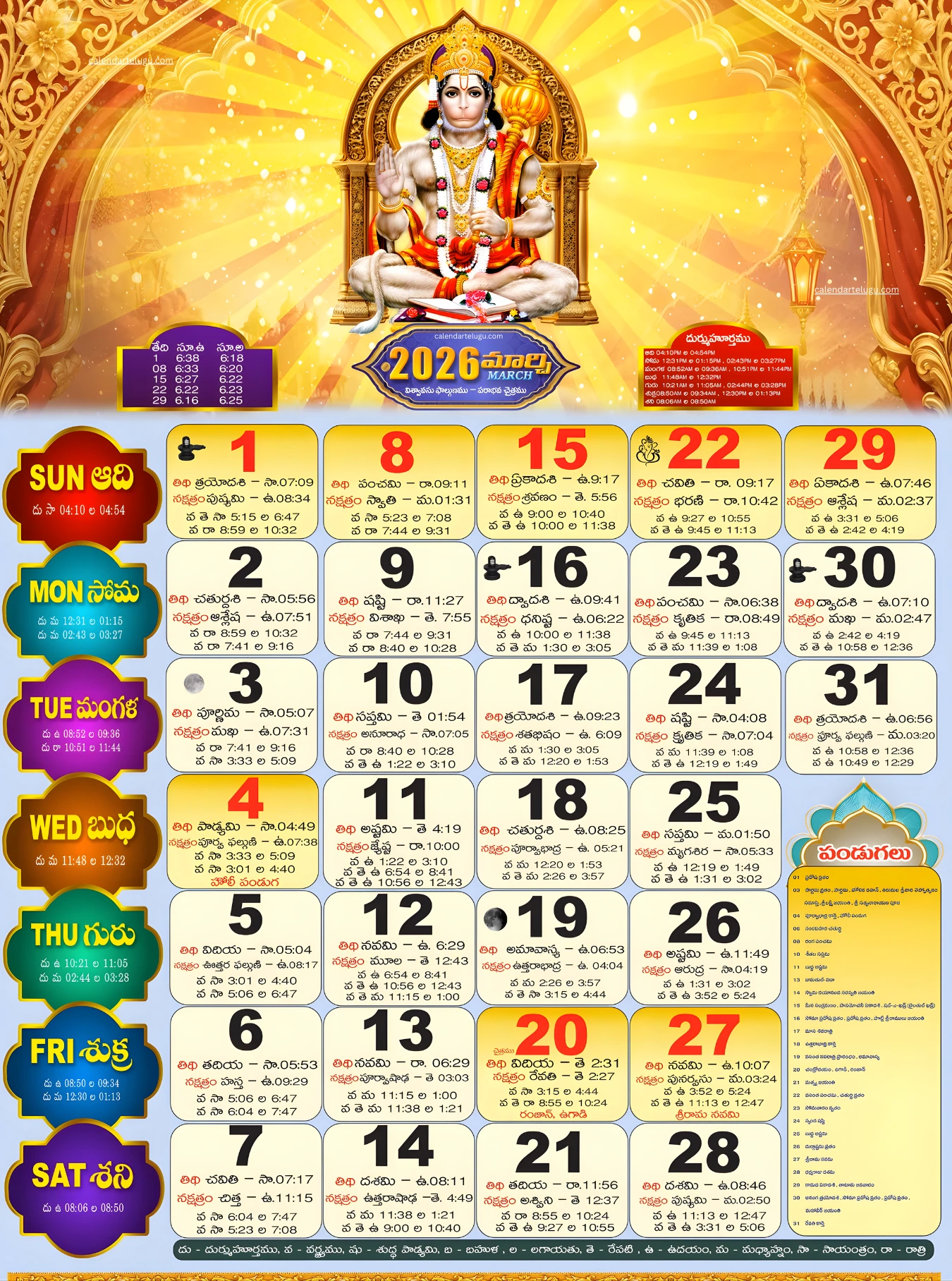
But what if you had a clear, human-friendly guide that breaks down March and April 2026, highlighting every significant festival, vrata, and auspicious moment? A guide that not only gives you the dates but also explains their importance, helping you connect deeper with your heritage, wherever you are.
That’s exactly what this article is for. We’re diving into March and April 2026 – two months packed with spiritual significance, cultural celebrations, and the arrival of the Telugu New Year. Let’s make planning and celebrating your Telugu traditions effortless.
Why March and April 2026 are Crucial in the Telugu Calendar
March and April are not just any months in the Telugu calendar; they are a period of profound transition and new beginnings. These months typically span the end of Phalgunam, the entirety of Chaitram, and the beginning of Vaisakham – three pivotal Telugu masams (lunar months). This period marks the spiritual climax of the Hindu lunar year with festivals like Maha Shivaratri and Holi, and then heralds the grand arrival of the Telugu New Year, Ugadi, which falls in Chaitram.
For many Telugu families, especially those living abroad, these months are a critical time for spiritual observance, family gatherings, and reinforcing cultural identity. Missing these dates means missing out on vital connections to tradition and spiritual well-being.
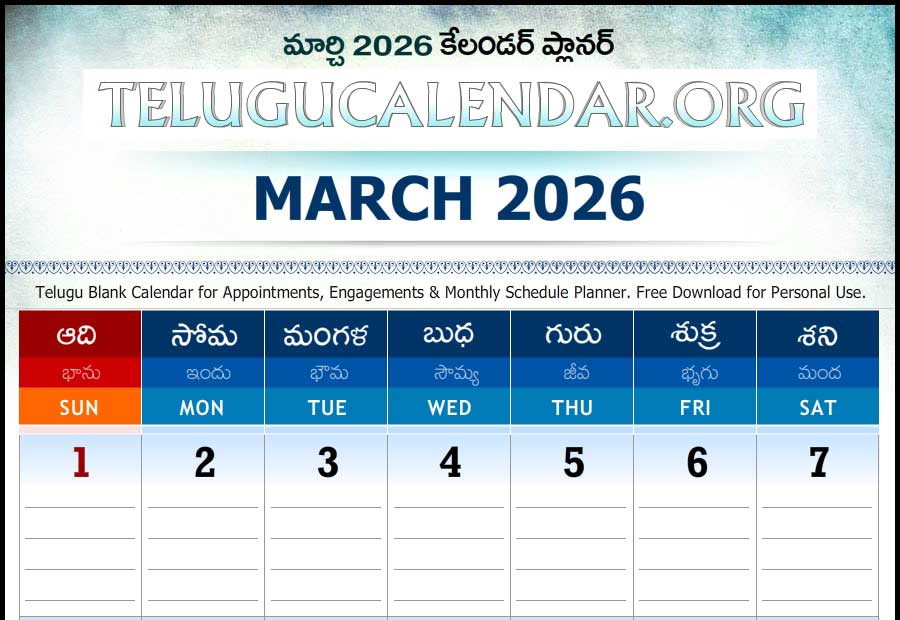
Decoding the Telugu Calendar: A Quick Primer for March & April 2026
Before we dive into the specific dates, let’s quickly demystify the core components of the Telugu calendar (Panchangam). Understanding these basics will make your 2026 planning much clearer.
What is a Telugu Panchangam?
A Panchangam is essentially a Hindu almanac, a daily ready reckoner that provides astrological information. The word ‘Panchangam’ literally means ‘five limbs’ (Pancha = five, Anga = limb). These five limbs are:
- Tithi: The lunar day. There are 30 Tithis in a lunar month, divided into two fortnights (Pakshas) – the waxing moon (Shukla Paksha) and the waning moon (Krishna Paksha). Each Tithi has its own unique energy and significance.
- Nakshatram: The lunar mansion or constellation. There are 27 Nakshatrams, each associated with specific characteristics and influences.
- Vara: The day of the week (e.g., Sunday, Monday).
- Yoga: A specific astrological combination derived from the Sun and Moon’s longitudes.
- Karana: Half of a Tithi, offering further detail on auspiciousness.
While a full understanding of all five can be complex, for day-to-day planning and festival observation, the Tithi and Nakshatram are usually the most relevant components. The Telugu calendar strictly follows these lunar calculations, which is why its dates often don’t align perfectly with the Gregorian calendar.
March 2026 Telugu Calendar: Festivals, Vratas, and Auspicious Days
March 2026 is a powerful month in the Telugu calendar, marking the transition from the old lunar year’s conclusion (Phalgunam) into the beginning of the new year (Chaitram) with the auspicious festival of Ugadi. It’s a time for reflection, devotion, and celebration.
Key Festivals and Vratas in March 2026
Here’s a snapshot of the most important dates for March 2026, allowing you to plan your observations and celebrations:
| Gregorian Date | Telugu Date | Festival/Vrata | Significance |
|---|---|---|---|
| March 14, 2026 (Sat) | Phalgunam Purnima (Shukla Paksha) | Holi / Holika Dahan / Kamadahana | Celebrates the triumph of good over evil. Holika Dahan signifies burning away negativity. Kamadahana is particularly observed in South India. |
| March 17, 2026 (Tue) | Krishna Paksha Trayodashi | Maha Shivaratri | The Great Night of Shiva, commemorating the convergence of Shiva and Shakti. Devotees observe fasts and perform pujas to Lord Shiva. |
| March 20, 2026 (Fri) | Chaitra Shukla Pratipada | Ugadi (Telugu New Year) | The most significant festival for Telugus, marking the beginning of the new lunar year. Celebrated with special foods (Ugadi Pachadi), home decorations, and family gatherings. |
| March 28, 2026 (Sat) | Chaitra Shukla Navami | Sri Rama Navami | Celebrates the birth of Lord Rama. Devotees observe fasts, recite prayers, and attend special ceremonies. Temples perform Kalyanotsavam (celestial wedding). |
| March 30, 2026 (Mon) | Chaitra Krishna Trayodashi | Soma Pradosh Vrat | A sacred fast observed on the 13th lunar day (Trayodashi) that falls on a Monday (Soma-var). Dedicated to Lord Shiva and Parvati for blessings and wish fulfillment. |
Ugadi (March 20, 2026): The Dawn of a New Year
This isn’t just a festival; it’s a cultural reset. Ugadi, or Yugadi, marks the beginning of the new year for Telugus. It’s a day of deep spiritual significance, celebrated with the ritualistic consumption of Ugadi Pachadi – a unique concoction of six tastes (sweet, sour, salty, bitter, pungent, and spicy) symbolizing life’s varied experiences. Homes are adorned with mango leaves and flowers, and families gather for feasts. It’s also traditional to listen to the Panchanga Sravanam (recitation of the year’s astrological predictions) in temples or at home.
Sri Rama Navami (March 28, 2026): The Birth of an Ideal King
Falling nine days after Ugadi, Sri Rama Navami celebrates the birth of Lord Rama, the seventh avatar of Vishnu. Devotees offer prayers, fast, and read from the Ramayana. Temples host elaborate ceremonies, including the ceremonial wedding of Rama and Sita (Kalyanotsavam), reminding us of dharma, duty, and sacrifice.
Auspicious Timings (Muhurats) in March 2026
While specific Muhurats require precise astrological calculations based on location, generally, the Shukla Paksha (waxing moon fortnight) after Ugadi is considered highly auspicious for new beginnings. Days without specific festival obligations or significant planetary afflictions are often suitable for starting ventures, purchasing assets, or performing ceremonies. Always consult a local Panchangam for granular details adapted to your US time zone.
April 2026 Telugu Calendar: Welcoming the New Year & Spring Festivities
April continues the spiritual journey initiated in March, moving further into the Chaitram and eventually into the Vaisakham masam. It’s a month dotted with important festivals, particularly those dedicated to Hanuman and Vishnu, maintaining the momentum of the new year’s spiritual fervor.
Key Festivals and Vratas in April 2026
Here are the important dates for April 2026, ensuring you don’t miss any key observations:
| Gregorian Date | Telugu Date | Festival/Vrata | Significance |
|---|---|---|---|
| April 2, 2026 (Thu) | Chaitra Purnima (Shukla Paksha) | Hanuman Jayanti | Celebrates the birth of Lord Hanuman. Devotees visit Hanuman temples, apply sindoor, and offer prayers for strength, courage, and protection. |
| April 5, 2026 (Sun) | Chaitra Krishna Chaturthi | Vikata Sankashtahara Chaturthi | A monthly fast dedicated to Lord Ganesha, observed to overcome obstacles and for prosperity. Fasting and praying to the moon are common. |
| April 13, 2026 (Mon) | Vaisakha Krishna Ekadashi | Varuthini Ekadashi | A significant fasting day dedicated to Lord Vishnu. Observing this Ekadashi is believed to grant salvation and alleviate sins. |
| April 21, 2026 (Tue) | Vaisakha Shukla Tritiya | Akshaya Tritiya | An extremely auspicious day for new ventures, marriages, starting businesses, and charity. It’s believed that anything started or acquired on this day will bring lasting prosperity. |
Hanuman Jayanti (April 2, 2026): The Epitome of Devotion
This day celebrates the birth of Lord Hanuman, the ardent devotee of Lord Rama, known for his strength, devotion, and selfless service. Devotees visit temples, offer special prayers, and recite the Hanuman Chalisa to seek his blessings for courage and protection. It’s a powerful day to invoke inner strength.
Akshaya Tritiya (April 21, 2026): Unending Prosperity
Meaning ‘the third day that never diminishes,’ Akshaya Tritiya is considered one of the most auspicious days in the Hindu calendar. It’s believed that any good deed performed or any new venture started on this day will yield endless benefits. Many people buy gold, make investments, or initiate important projects, trusting in its eternal prosperity.
Auspicious Timings (Muhurats) in April 2026
April, especially with the occurrence of Akshaya Tritiya, is a highly favored month for significant life events. Days during the Shukla Paksha (waxing moon) of Vaisakham, particularly when combined with favorable Nakshatrams, are generally deemed auspicious for weddings, housewarmings, business inaugurations, and other important ceremonies. As always, for personalized and precise timings, consulting a local astrologer or detailed Panchangam is recommended.
Bridging the Continents: Using the Telugu Calendar in the USA
Living in the United States while trying to follow a lunar calendar based on Indian time can present unique challenges. But with a little awareness, you can seamlessly integrate these traditions into your life.
Time Zone Considerations: Adjusting for IST vs. US Time
This is perhaps the biggest hurdle. Most Telugu calendars are calculated based on Indian Standard Time (IST). When observing fasts, performing pujas, or noting specific Tithi beginnings/ends, you absolutely must adjust for your local time zone (EST, CST, MST, PST). A Tithi that begins at 6 AM IST might begin the previous evening or later the same day in your US time zone. Apps and online resources that allow you to set your location are invaluable here.

My personal tip: If a festival starts on a specific Tithi, I often aim to observe it from the moment that Tithi begins in my local time, even if it means starting the previous evening for some rituals, or carrying it over into the next Gregorian day if the Tithi extends late. When in doubt, err on the side of caution and follow what local Telugu temples in your area observe.
Connecting with Heritage: Tips for NRIs
- Engage with Local Temples: Most major US cities have Hindu temples that observe Telugu festivals. Participate in their community events, pujas, and cultural programs. It’s a fantastic way to connect with fellow Telugus and receive guidance on local observances.
- Family Traditions: Even if you can’t be with extended family in India, recreate family traditions at home. Prepare traditional dishes, decorate your home, and involve your children to pass on the cultural legacy.
- Online Resources and Communities: Join online Telugu communities, watch live streams of temple events from India, and use reliable calendar apps (without specific links, just a general mention) that allow time zone adjustments.
Planning Ahead: Maximizing Your 2026 Telugu Calendar Experience
Having a clear understanding of the 2026 Telugu calendar for March and April isn’t just about marking dates; it’s about intentional living and cultural preservation. Here’s how you can make the most of it:
- Mark Your Calendars Early: Integrate these important Telugu dates into your primary digital or physical calendar well in advance. This helps avoid conflicts with work, school, or other commitments.
- Educate Your Family: Share the significance of these festivals with younger generations. Explain the stories, the rituals, and the ‘why’ behind each celebration to foster a deeper appreciation for their heritage.
- Prepare in Advance: For festivals like Ugadi, which involve special ingredients for Pachadi or specific decorations, plan your shopping and preparations ahead of time.
- Prioritize Spiritual Growth: Use these auspicious days as opportunities for personal reflection, meditation, prayer, and acts of charity.
The Spiritual & Cultural Tapestry of Telugu Months (Phalgunam, Chaitram, Vaisakham)
Understanding the general ‘flavor’ of these months adds another layer to your calendar experience:
- Phalgunam (ends mid-March): The final month of the Hindu lunar year. It’s a time of winding down, concluding cycles, and celebrated with joyous festivals like Holi, marking the triumph of good and the arrival of spring. Spiritually, it’s a period for introspection before the new year’s energetic beginning.
- Chaitram (mid-March to mid-April): The inaugural month of the Telugu New Year, beginning with Ugadi. It’s brimming with fresh energy, new beginnings, and vibrant celebrations like Sri Rama Navami. This month is highly auspicious for new ventures, spiritual practices, and setting intentions for the year ahead.
- Vaisakham (mid-April onwards): The second month of the new year, continuing the energetic flow of Chaitram. It’s often associated with harvest festivals and is considered very sacred, particularly for acts of charity (danam) and worship of Vishnu. Akshaya Tritiya falls in this month, signifying unending prosperity.
There you have it – your definitive guide to the 2026 Telugu Calendar for March and April. From the vibrant celebrations of Ugadi to the sacred observances of Maha Shivaratri and Hanuman Jayanti, these two months are truly a cornerstone of Telugu culture and spirituality.
By using this guide, you’re not just marking dates; you’re actively engaging with your heritage, deepening your spiritual practice, and ensuring that the rich traditions of the Telugu people thrive, no matter where you call home. Embrace the rhythm of the lunar calendar and let it enrich your life in 2026!
Frequently Asked Questions
What is the significance of Ugadi in 2026?
Ugadi, falling on March 20, 2026, marks the Telugu New Year. It’s a day of new beginnings, celebrated with traditional customs like preparing Ugadi Pachadi (a symbolic dish of six tastes) and listening to the Panchanga Sravanam (annual astrological predictions). It signifies hope, renewal, and embracing life’s varied experiences.
How do I adjust Telugu calendar dates for my US time zone?
Telugu calendar dates are primarily based on Indian Standard Time (IST). To observe festivals or Tithis in the USA, you must convert the IST timings to your local time zone (e.g., EST, CST, PST). Many reliable online Telugu calendar apps and websites allow you to set your location to get accurate local timings. It’s often best to check with local Telugu temples in your area for their observed timings.

What are the main festivals in March 2026 according to the Telugu calendar?
March 2026 is rich with festivals. Key observances include Holika Dahan/Holi (March 14), Maha Shivaratri (March 17), Ugadi (March 20), Sri Rama Navami (March 28), and Soma Pradosh Vrat (March 30). These mark significant spiritual and cultural milestones, from celebrating the triumph of good over evil to welcoming the Telugu New Year.
What are the main festivals in April 2026 according to the Telugu calendar?
April 2026 continues the festive spirit with several important dates. Notable festivals include Hanuman Jayanti (April 2), Vikata Sankashtahara Chaturthi (April 5), Varuthini Ekadashi (April 13), and Akshaya Tritiya (April 21). These days are dedicated to deities like Lord Hanuman, Lord Ganesha, and Lord Vishnu, focusing on strength, obstacle removal, and prosperity.
What is a Panchangam and why is it important?
A Panchangam is a traditional Hindu almanac, vital for the Telugu calendar. It comprises five key elements: Tithi (lunar day), Nakshatram (lunar mansion), Vara (weekday), Yoga, and Karana. It’s important because it provides auspicious timings, daily astrological insights, and dictates the exact dates and times for festivals, vratas, and ceremonies, guiding practitioners in their daily and spiritual lives.
Are there any specific auspicious days for weddings or new ventures in March/April 2026?
Yes, March and April 2026 offer auspicious periods. The Shukla Paksha (waxing moon) after Ugadi (late March) and the entire month of Vaisakham (mid-April onwards), particularly Akshaya Tritiya (April 21), are generally considered highly favorable for new ventures, business inaugurations, and marriages. However, for precise, personalized Muhurats (auspicious timings) tailored to your specific needs and location, it’s always recommended to consult a local astrologer.
