Your Essential Guide to the 2026 March Tamil Calendar: Dates, Festivals & Auspicious Times
Ever found yourself looking at a calendar, trying to figure out the best day for a new venture, a family event, or just to understand the rhythm of your cultural heritage? For those following the Tamil calendar, March 2026 isn’t just another month; it’s a period rich with traditional timings, significant festivals, and auspicious moments.
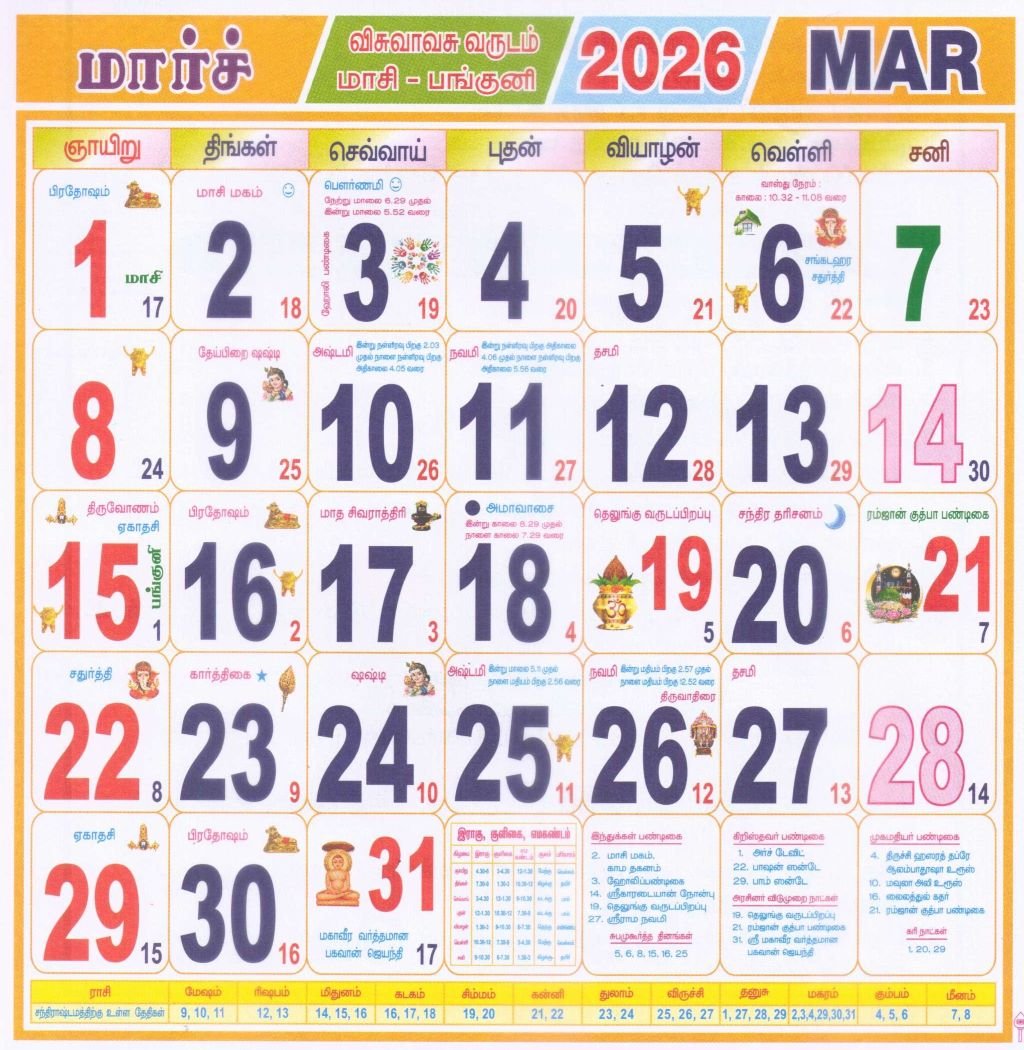
This guide cuts through the confusion, offering you a clear, human-friendly breakdown of the 2026 March Tamil Calendar. Forget generic date lists; we’re diving into the ‘why’ behind the ‘what’, giving you the knowledge to confidently plan your month, embrace cultural practices, and make the most of every day.
Whether you’re planning a wedding, starting a new business, or simply curious about auspicious times like Nalla Neram, this is your definitive resource. Let’s make March 2026 a month of informed decisions and meaningful connections.
Understanding the Tamil Calendar System: A Quick Primer
Before we dive into the specifics of March 2026, let’s quickly grasp the fundamentals of the Tamil calendar. Unlike the purely solar Gregorian calendar, the Tamil calendar is a lunisolar system. This means it tracks both the sun’s movements (determining the year and the progression through zodiac signs, called Rasi) and the moon’s phases (influencing months and key timings like Thithi).
The Tamil year begins in mid-April (Chithirai month), so March 2026 will span parts of two Tamil months: Maasi (the 11th month) and Panguni (the 12th month). This overlap is crucial for understanding daily panchangam and festival dates.
Key elements that define each day in the Tamil calendar and impact its auspiciousness include:
- Thithi (Lunar Day): There are 15 Thithis in each lunar fortnight (waxing and waning moon).
- Nakshatra (Star): The position of the moon in one of the 27 lunar mansions.
- Yogam (Combination): A specific planetary combination.
- Karanam (Half-Thithi): Half of a Thithi, there are 11 Karanams.
These elements, calculated precisely, dictate the daily ‘Panchangam’ – the five limbs of the day, guiding rituals, ceremonies, and daily activities.
March 2026 at a Glance: Key Tamil Dates and Gregorian Equivalents
Here’s a detailed look at March 2026, mapping out the Gregorian dates with their corresponding Tamil dates and significant events. This table is your go-to reference for navigating the month.
| Gregorian Date | Day of Week | Tamil Month & Date | Key Significance/Festival |
|---|---|---|---|
| March 1, 2026 | Sunday | Maasi 17 | Maasi Sunday (Amavasya) |
| March 2, 2026 | Monday | Maasi 18 | Start of Shukla Paksha |
| March 3, 2026 | Tuesday | Maasi 19 | |
| March 4, 2026 | Wednesday | Maasi 20 | |
| March 5, 2026 | Thursday | Maasi 21 | |
| March 6, 2026 | Friday | Maasi 22 | |
| March 7, 2026 | Saturday | Maasi 23 | |
| March 8, 2026 | Sunday | Maasi 24 | |
| March 9, 2026 | Monday | Maasi 25 | |
| March 10, 2026 | Tuesday | Maasi 26 | |
| March 11, 2026 | Wednesday | Maasi 27 | |
| March 12, 2026 | Thursday | Maasi 28 | |
| March 13, 2026 | Friday | Maasi 29 | Maasi Pournami (Full Moon) |
| March 14, 2026 | Saturday | Maasi 30 | |
| March 15, 2026 | Sunday | Panguni 1 | Beginning of Panguni Month |
| March 16, 2026 | Monday | Panguni 2 | |
| March 17, 2026 | Tuesday | Panguni 3 | |
| March 18, 2026 | Wednesday | Panguni 4 | |
| March 19, 2026 | Thursday | Panguni 5 | |
| March 20, 2026 | Friday | Panguni 6 | |
| March 21, 2026 | Saturday | Panguni 7 | |
| March 22, 2026 | Sunday | Panguni 8 | |
| March 23, 2026 | Monday | Panguni 9 | |
| March 24, 2026 | Tuesday | Panguni 10 | |
| March 25, 2026 | Wednesday | Panguni 11 | |
| March 26, 2026 | Thursday | Panguni 12 | |
| March 27, 2026 | Friday | Panguni 13 | |
| March 28, 2026 | Saturday | Panguni 14 | |
| March 29, 2026 | Sunday | Panguni 15 | |
| March 30, 2026 | Monday | Panguni 16 | |
| March 31, 2026 | Tuesday | Panguni 17 |
Auspicious & Inauspicious Timings for March 2026
In Tamil culture, specific daily timings hold immense importance. Knowing these can help you align your activities with the cosmic flow, maximizing positive outcomes and minimizing negative influences. Let’s break down the key timings for March 2026.
What is Nalla Neram (Auspicious Time)?
Nalla Neram, literally meaning ‘good time’, refers to periods considered highly auspicious for initiating important tasks. These are the golden windows for starting new ventures, signing contracts, performing pujas, undertaking travel, or celebrating significant life events. The Nalla Neram is calculated based on planetary positions and other astrological factors for each day.
| Day of Week | Morning Nalla Neram | Evening Nalla Neram |
|---|---|---|
| Sunday | 7:00 AM – 8:00 AM | 2:30 PM – 3:30 PM |
| Monday | 6:00 AM – 7:00 AM | 1:30 PM – 2:30 PM |
| Tuesday | 9:00 AM – 10:00 AM | 3:30 PM – 4:30 PM |
| Wednesday | 7:30 AM – 8:30 AM | 12:00 PM – 1:00 PM |
| Thursday | 10:00 AM – 11:00 AM | 4:30 PM – 5:30 PM |
| Friday | 9:30 AM – 10:30 AM | 2:00 PM – 3:00 PM |
| Saturday | 8:00 AM – 9:00 AM | 1:00 PM – 2:00 PM |
Note: These are general Nalla Neram timings. Specific planetary positions for your location can slightly alter these.
What is Rahu Kalam (Inauspicious Time)?
On the flip side, Rahu Kalam is an inauspicious period each day, considered unfavorable for starting new ventures, journeys, or any significant undertakings. It’s associated with the shadow planet Rahu, believed to bring obstacles and delays. While daily routines are fine, it’s wise to avoid commencing anything important during Rahu Kalam.
| Day of Week | Rahu Kalam |
|---|---|
| Sunday | 4:30 PM – 6:00 PM |
| Monday | 7:30 AM – 9:00 AM |
| Tuesday | 3:00 PM – 4:30 PM |
| Wednesday | 12:00 PM – 1:30 PM |
| Thursday | 1:30 PM – 3:00 PM |
| Friday | 10:30 AM – 12:00 PM |
| Saturday | 9:00 AM – 10:30 AM |
Yema Kandam & Kuligai: Other Important Timings
Beyond Nalla Neram and Rahu Kalam, two other important daily periods are Yema Kandam and Kuligai. Yema Kandam is considered inauspicious for starting new journeys, as it is believed to bring delays or accidents. Kuligai, while not as intensely inauspicious as Rahu Kalam, is generally avoided for auspicious beginnings, but can be suitable for repetitive tasks or those you wish to re-occur.

| Day of Week | Yema Kandam | Kuligai |
|---|---|---|
| Sunday | 12:00 PM – 1:30 PM | 3:00 PM – 4:30 PM |
| Monday | 10:30 AM – 12:00 PM | 1:30 PM – 3:00 PM |
| Tuesday | 9:00 AM – 10:30 AM | 12:00 PM – 1:30 PM |
| Wednesday | 7:30 AM – 9:00 AM | 10:30 AM – 12:00 PM |
| Thursday | 6:00 AM – 7:30 AM | 9:00 AM – 10:30 AM |
| Friday | 3:00 PM – 4:30 PM | 7:30 AM – 9:00 AM |
| Saturday | 1:30 PM – 3:00 PM | 6:00 AM – 7:30 AM |
Major Festivals and Observances in March 2026 (Tamil Calendar)
March, spanning parts of Maasi and Panguni, is a relatively calm month for major Tamil festivals compared to some others, but still holds significant days for spiritual observance. The highlight for March 2026 will be the transition into Panguni, a month known for its vibrant temple festivals, particularly those dedicated to Lord Muruga and Lord Shiva.
While Panguni Uthiram, a very prominent festival, typically falls in late March or early April, for 2026, it is expected in April. However, the lead-up and preparatory rituals might commence in late March. It’s always wise to check local temple calendars for precise dates.
Here are some general observances and their significance during March 2026:
- Maasi Amavasya (March 1, 2026): This new moon day in the month of Maasi is highly significant for performing ancestral rites (Tarpanam) and offering prayers to departed souls. Many devotees observe fasts and visit temples.
- Maasi Pournami (March 13, 2026): The full moon day in Maasi. Full moon days are generally considered auspicious for prayers, meditation, and performing religious ceremonies.
- Ekadasi Vratam: There will be two Ekadasi fasts in March 2026 – one in the Shukla Paksha (waxing moon) and one in the Krishna Paksha (waning moon). Ekadasi is observed by fasting and praying to Lord Vishnu for spiritual purification and blessings.
- Pradosham: These bi-monthly periods, occurring on the 13th lunar day (Thrayodashi) of both the waxing and waning moon, are extremely sacred for worshipping Lord Shiva. Devotees fast and visit Shiva temples during the evening hours.
Subha Muhurtham Dates for March 2026: Planning Your Milestones
Subha Muhurtham refers to the most auspicious time (or date) to begin important life events or undertakings. These moments are meticulously calculated by astrologers based on various factors like Thithi, Nakshatra, Yogam, Karanam, and planetary positions, ensuring the celestial energies are most favorable. Planning significant events during a Subha Muhurtham is believed to bring success, harmony, and prosperity.
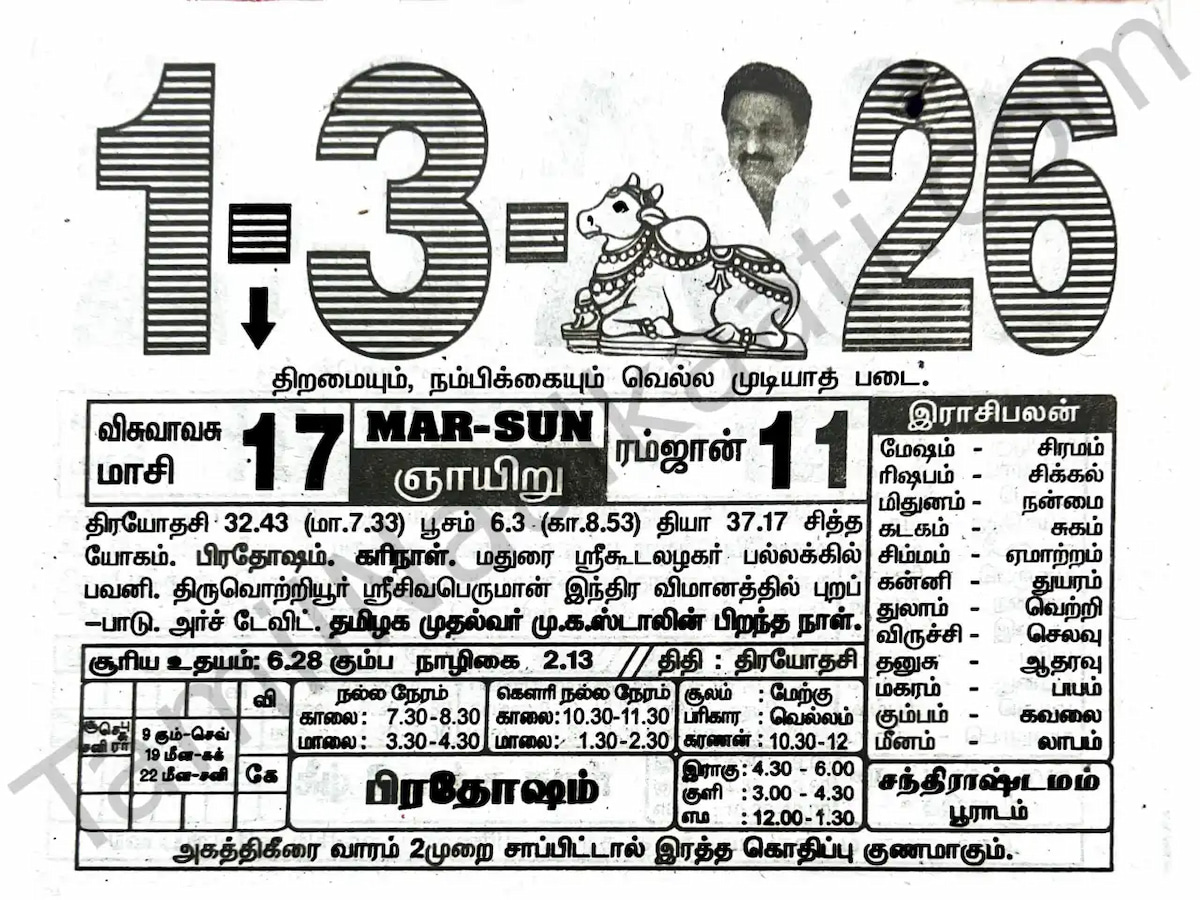
In March 2026, with the transition from Maasi to Panguni, there will be specific dates considered suitable for different types of events. Here’s a general guide; however, always consult with a local priest or astrologer for personalized Muhurtham dates based on your specific birth details and location.
| Gregorian Date (2026) | Tamil Date | Type of Auspicious Event | General Muhurtham Window |
|---|---|---|---|
| March 5 | Maasi 21 | Starting New Ventures, Property Deals | Morning (Post-Rahu Kalam) |
| March 10 | Maasi 26 | Marriage, Engagement | Morning (Pre-Nalla Neram) |
| March 17 | Panguni 3 | Grihapravesam (Housewarming) | Morning/Afternoon |
| March 22 | Panguni 8 | Naming Ceremonies, Annaprasanam | Morning (Nalla Neram) |
| March 26 | Panguni 12 | Initiating Education/Learning | Late Morning |
Disclaimer: These are general auspicious dates. For critical life events like weddings, always consult a qualified astrologer for a personalized Muhurtham based on individual horoscopes and local Panchangam.
Daily Panchangam Highlights for March 2026
The term ‘Panchangam’ means ‘five limbs’ and refers to the five key astrological attributes of the day: Thithi, Nakshatra, Yogam, Karanam, and Var (weekday). Every day in March 2026 will have a unique combination of these, dictating its overall nature and suitability for various activities.
- Thithi: As discussed, 15 Thithis per lunar fortnight. Some Thithis are considered more auspicious for specific tasks than others (e.g., Dwitiya for new beginnings, Panchami for celebrations).
- Nakshatram: Each day is associated with one of the 27 Nakshatras. Each Nakshatra has its own characteristics, influencing mood, events, and suitability for certain actions (e.g., Rohini for stability, Punarvasu for renewal).
- Yogam: There are 27 Yogams, each with a unique effect. Some are favorable for auspicious acts, while others might suggest caution.
- Karanam: 11 Karanams, each lasting half a Thithi. Like Yogam, they subtly influence the day’s energies.
While providing a daily breakdown of all five elements for March 2026 would be extensive, understanding their existence empowers you to look up daily Panchangam details if you need specific guidance for a particular day. Many online Tamil calendars offer this granular information.

Integrating the Tamil Calendar into Your Daily Life (Practical Tips)
Living in the USA, integrating a traditional calendar like the Tamil calendar might seem daunting, but it’s entirely doable and can add a rich layer of cultural connection and mindful planning to your life. Here are some practical tips:
- Use Digital Resources: Leverage mobile apps and websites that provide daily Tamil calendar information, Nalla Neram, and Rahu Kalam. Many allow you to set your location for accurate timings.
- Plan Important Tasks Around Nalla Neram: For significant meetings, project launches, signing documents, or even important personal conversations, try to schedule them within the Nalla Neram window. This isn’t about superstition; it’s about aligning with perceived positive energies for better outcomes.
- Avoid Inauspicious Times for Beginnings: If you can, avoid starting new ventures, significant travel, or making major purchases during Rahu Kalam and Yema Kandam. Daily routine tasks are perfectly fine.
- Mark Festival Dates: Integrate Tamil festival dates into your primary Gregorian calendar or planner. This helps you prepare for celebrations, fasts, or temple visits.
- Connect with Community: If you’re in the USA, connecting with local Tamil cultural organizations or temples can provide excellent support, community, and specific guidance on observances for your region.
- Educate Your Family: Share the knowledge with your children and family. Understanding the calendar fosters cultural appreciation and helps pass on traditions.
- Practice Mindful Observance: The Tamil calendar isn’t just a schedule; it’s a reflection of ancient wisdom. Even if you can’t observe every custom, understanding the reasons behind them can bring a deeper sense of purpose to your actions.
Conclusion: Embracing the Rhythm of the Tamil Calendar
The 2026 March Tamil Calendar is more than just a list of dates. It’s a profound system deeply interwoven with culture, astrology, and spiritual practices. By understanding its nuances – from the transition of months like Maasi and Panguni to the significance of Nalla Neram and the avoidance of Rahu Kalam – you gain a powerful tool for mindful living.

We hope this guide has demystified March 2026 for you, providing clear insights into its key dates, auspicious timings, and important observances. May you use this knowledge to plan your month effectively, celebrate your heritage, and invite prosperity into your life. Embrace the ancient rhythm, and let it guide you through a purposeful and fulfilling March!
Frequently Asked Questions
What are the key Tamil months overlapping with March 2026?
March 2026 will overlap with two Tamil months: the latter half of Maasi (the 11th month) and the beginning of Panguni (the 12th month). Panguni is a significant month known for many temple festivals, including the lead-up to Panguni Uthiram.
What is Nalla Neram and how can I use it in March 2026?
Nalla Neram (auspicious time) is a daily period considered highly favorable for starting new ventures, signing important documents, traveling, or performing ceremonies. For March 2026, refer to the daily Nalla Neram table provided in this guide to plan your significant activities for maximum positive energy.
What is Rahu Kalam and what should I avoid during it?
Rahu Kalam is an inauspicious daily period, associated with the shadow planet Rahu, believed to bring obstacles or delays. During March 2026, it’s generally advised to avoid starting new ventures, making major purchases, or embarking on important journeys during Rahu Kalam. Routine daily tasks are typically fine.
Are there any major Tamil festivals in March 2026?
March 2026 includes Maasi Amavasya (new moon) and Maasi Pournami (full moon), which are important for ancestral rites and prayers. While Panguni Uthiram, a major festival, is expected in April 2026, the month of Panguni itself, starting mid-March, sets the stage for many temple festivals and spiritual observances.
What are Subha Muhurtham dates used for in March 2026?
Subha Muhurtham dates are specifically calculated auspicious times for significant life events such as weddings, engagements, housewarming (Grihapravesam), or starting a new business. While general dates are provided, it’s always recommended to consult a local astrologer for personalized Muhurtham timings based on your individual horoscope and location.
How does the Tamil calendar differ from the Gregorian calendar?
The Gregorian calendar is purely solar, tracking Earth’s orbit around the sun. The Tamil calendar is lunisolar, meaning it accounts for both the sun’s movements (for years and zodiac signs) and the moon’s phases (for months and daily timings like Thithi and Nakshatra). This dual tracking provides a deeper astrological and cultural significance to each day.
